

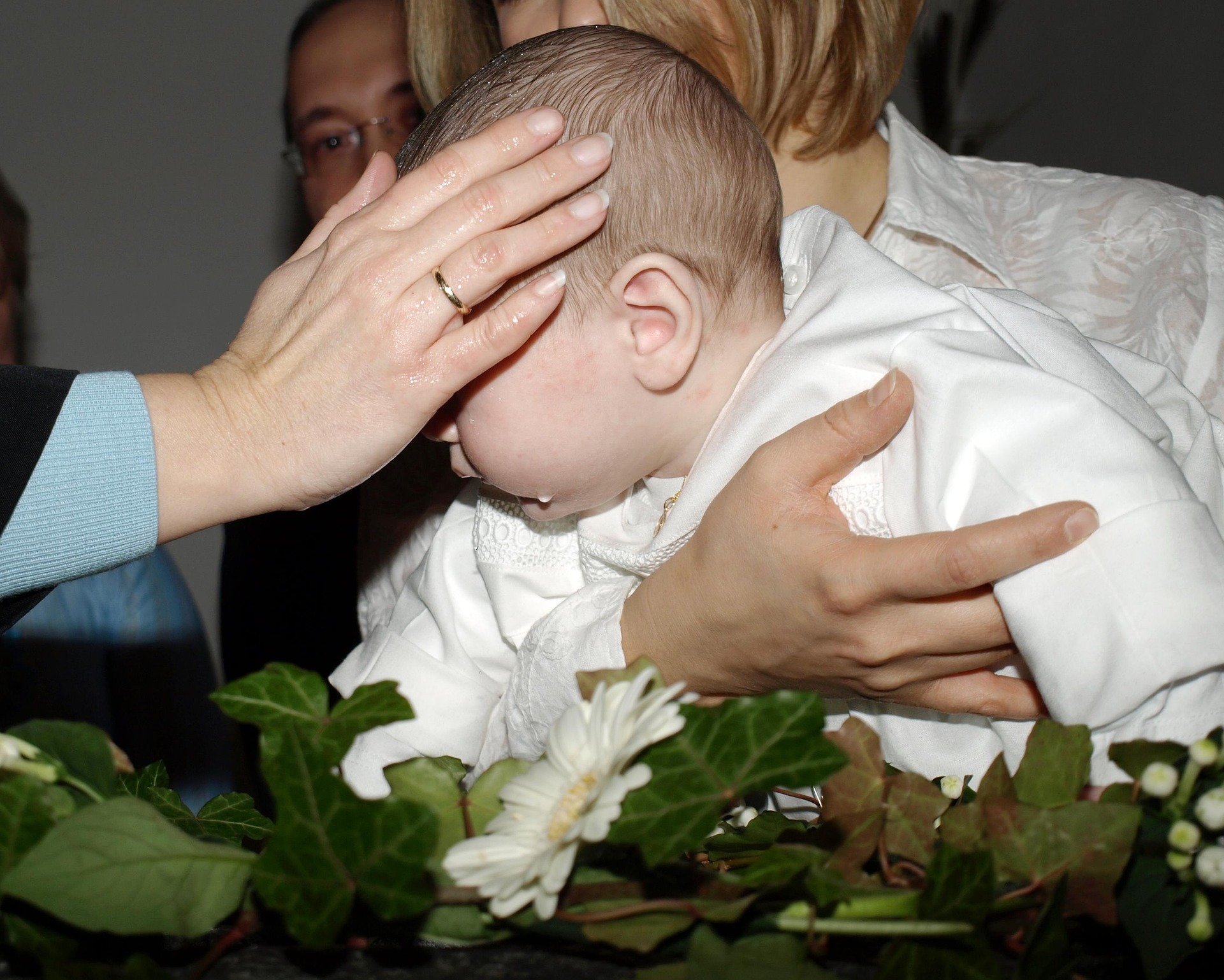
Christening vs baptism is a question people often ask when planning a family event, or just trying to sort out what these two closely-related terms actually mean. In practice, they overlap a great deal: many people use the words interchangeably, and in casual conversation there is no meaningful difference. But there are real theological and traditional distinctions in the christening vs baptism comparison that are worth knowing, especially if you are planning a ceremony or attending one for the first time.
Table of Contents
Untangling christening vs baptism
Christening vs baptism comes down to scope. Baptism is the Christian sacrament (or ordinance, depending on the denomination) of initiation into the faith, marked by the use of water and a specific baptismal formula invoking the Father, Son, and Holy Spirit. Christening is a broader ceremony that includes baptism but also formally gives the person their name, typically an infant’s Christian name given in front of family and godparents.
Put simply: every christening includes a baptism, but not every baptism is a christening. Adult believers being baptized by full immersion in a Baptist church are not being christened, even though they are being baptized. In the christening vs baptism framework, christening is a specific traditional form that historically included both the naming and the sacramental initiation as a single family ceremony.
What is baptism?
Baptism is the Christian rite of initiation, practiced across nearly every Christian denomination in some form. Water is central to the ceremony: it is either sprinkled on the person’s head (aspersion), poured over them (affusion), or the person is fully submerged (immersion), depending on the tradition. The officiant recites the Trinitarian formula from Matthew 28:19: “in the name of the Father, and of the Son, and of the Holy Spirit.”
Theologically, baptism symbolizes cleansing from sin, spiritual rebirth, and initiation into the Christian community. In the sacramental traditions (Catholic, Orthodox, Anglican, Lutheran, Methodist), baptism is a sacrament that conveys grace and is often understood as essential for salvation. In the ordinance traditions (Baptist, most non-denominational churches), baptism is a public profession of faith rather than a sacramental act. Britannica’s overview of baptism covers the theological variations in more depth if you want the historical background.
On the christening vs baptism spectrum, baptism is the theological core: the water, the words, and the initiation into faith. Everything else that happens at a christening (godparents, naming, gowns, cake) is layered on top of that religious rite.
What is christening?
Christening, in strict traditional usage, refers to the ceremony in which an infant (occasionally an older child or adult) is baptized and formally given their Christian name. The English word derives from Old English “cristnian,” meaning “to make Christian.” Historically, giving a child their name at baptism was so intertwined with the rite that the two acts became a single ceremony called a christening.
A traditional christening includes elements beyond the baptism itself: the choice of godparents who commit to supporting the child’s spiritual formation, a white christening gown (a tradition dating back centuries), a family gathering, sometimes a christening cake, and the formal presentation of the child under their given name. In many families, especially in Britain and in Anglican or Catholic contexts, “christening” is the everyday word for what a theologian would technically call “infant baptism.”
In the christening vs baptism vocabulary, “christening” is the more culturally-loaded word: it evokes the family gathering, the outfit, the godparents, the reception, and the ceremonial presentation of the name. “Baptism” is the more theologically-loaded term, focused on the sacramental or ordinance meaning of the rite itself.
Christening vs baptism: what actually distinguishes them
When you look at christening vs baptism side by side, five practical distinctions do most of the work:
- Scope of the ceremony. Baptism is the specific religious rite involving water and the baptismal formula. Christening is a broader ceremony that includes baptism plus the formal naming of the person.
- Typical age of the person. Christenings are almost always for infants or young children. Baptisms can be at any age and are commonly performed on adults in denominations that practice believer’s baptism.
- Denominational usage. “Christening” is a common word in Anglican, Catholic, and other traditions with infant baptism. “Baptism” is used across every Christian denomination that practices the rite.
- The naming element. A christening includes the formal presentation of the person’s Christian name, often chosen with the family and blessed by the officiant. A baptism does not necessarily include a naming component – the person already has their name.
- Cultural weight. “Christening” carries strong cultural and family associations: godparents, white gowns, cakes, receptions. “Baptism” reads as more theological in tone, focused on the sacramental or ordinance meaning.
How different denominations handle christening vs baptism
Denominational practice significantly shapes the christening vs baptism conversation, because different Christian traditions understand the rite in different ways:
- Catholic: Infant baptism is standard practice, typically performed by pouring water over the child’s head. The ceremony is called a “baptism” in official language and often a “christening” in family and cultural usage. Godparents are required.
- Anglican / Episcopal: Infant baptism, usually called a “christening” in the UK and in many Commonwealth countries. Baptism is one of the two sacraments recognized. Godparents are traditional and encouraged.
- Orthodox: Infant baptism performed by triple full immersion. The ceremony also includes chrismation (anointing) immediately after the baptism. The word “christening” is used less often; “baptism” is standard.
- Lutheran: Infant baptism is practiced. “Baptism” is the more common term in official language, though “christening” appears in family and cultural usage.
- Methodist: Infant baptism practiced, called either “baptism” or “christening” depending on the congregation.
- Presbyterian and Reformed: Infant baptism practiced, typically called “baptism.”
- Baptist: Believer’s baptism only. Infants and young children are not baptized. Baptism is by full immersion, performed after the person publicly professes their faith. “Christening” is not part of Baptist vocabulary because there is no infant ceremony to name.
- Pentecostal and non-denominational: Usually believer’s baptism, similar to Baptist practice. No infant christening.
- Quaker and Salvation Army: No water baptism at all. Both traditions dispense with the outward rite in favor of an inward spiritual baptism, so neither “baptism” nor “christening” describes a physical ceremony.
The christening vs baptism vocabulary you hear depends heavily on which tradition someone was raised in, and the same physical ceremony may be described in either word by families of the same denomination.
Christening vs baptism in the modern day
In modern usage, the christening vs baptism distinction has softened considerably. In most casual conversation, and even in many church bulletins and invitations, the two words are used interchangeably. A family who calls their event a “christening” and one who calls it a “baptism” may be planning identical ceremonies at the same church.
A few contemporary trends have complicated the picture. Some non-religious families now hold “naming ceremonies” (sometimes called secular christenings) that borrow the format of a traditional christening – godparents, gathering, cake, formal presentation of the name – without the religious content. These are technically not baptisms at all, though they are still sometimes called christenings in casual speech. Ships and buildings are also “christened” in a naming ceremony that has no religious content, which is another echo of the naming aspect of the original church rite.
In practical terms, if you are attending a family event described as either a christening or a baptism, expect a similar occasion: water, godparents, a service, and a gathering afterward. The christening vs baptism naming choice usually reflects the family’s tradition or region more than any deep theological point.
Frequently asked questions
Is a christening the same as a baptism?
In modern casual usage, yes. Most people use the words interchangeably, and most church ceremonies described as a christening are, technically, an infant baptism with the naming aspect included. Where the christening vs baptism distinction still matters is in strict theological or denominational language: baptism is the sacramental rite, and christening is the broader traditional ceremony that includes the baptism plus the naming of the person.
Do you have to be a member of the church to be christened or baptized?
Practices vary by denomination and by individual church. Most Catholic and Anglican churches will baptize any infant whose parents commit to raising the child in the faith, though some ask for pre-baptism preparation classes. Believer’s baptism churches (Baptist, most non-denominational) baptize anyone who professes faith, but there is no infant option. If you are planning a ceremony, the safest step is to ask the specific church for their requirements well in advance.
What is a secular christening?
A secular christening (also called a naming ceremony or civil naming ceremony) is a non-religious ceremony that borrows the format of a traditional christening: family gathering, godparents (sometimes called “guide parents” or “sponsors”), formal presentation of the name, cake, and celebration. There is no religious content, no water baptism, and no church officiant. It is a modern option for families who want the community and celebration of a christening without the religious dimension. In strict theological language it is not a christening at all, since the word originally meant “to make Christian,” but the term has spread widely in casual usage.
How to think about the two
The christening vs baptism question does not have one clean answer, because the two words overlap significantly in modern usage. If you are talking about theology or comparing across denominations, baptism is the more precise word: it names the sacramental or ordinance rite that involves water and the Trinitarian formula. If you are talking about a specific ceremony in the Anglican or Catholic infant-baptism tradition, especially in the UK, christening is the everyday word and it carries the fuller cultural weight of the family celebration. In casual conversation, either word works. Match the term to the audience and the setting, and the christening vs baptism naming choice usually settles itself.

