

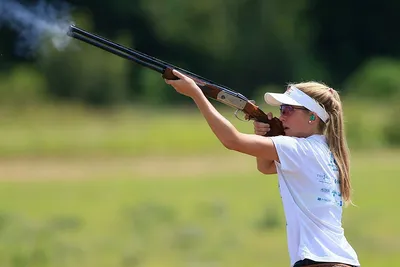
The difference between trap vs skeet defines two of the most popular clay target shooting sports, each with distinct field layouts, shooting mechanics, and target presentations. While both trap vs skeet involve shooting clay targets with shotguns, the sports train different skills and appeal to different shooter preferences. Understanding trap vs skeet helps beginners choose which discipline to pursue and helps experienced shooters decide between competing in each sport.
Table of Contents
What is Trap Shooting?
Trap shooting is a clay target sport where a single trap machine launches targets from one position while shooters fire from five different posts arranged in an arc 16 yards behind the trap house. All targets are launched away from the shooters in a rising trajectory, but the trap machine oscillates left to right randomly, changing the angle at which each target flies. Shooters fire five targets at each post, then rotate to the next position, completing a 25-target round after cycling through all five posts.
Every trap field is standardized, meaning the same target presentations occur at every trap range worldwide. According to the National Skeet Shooting Association’s overview of trap and skeet differences, trap’s standardized format makes it ideal for building consistency and measurable skill progression.
Trap emphasizes consistency and precise shot placement since all targets fly away from the shooter in a rising trajectory. The main challenge is leading the target – calculating how far in front of the moving clay to aim so your shot pattern intersects it. Because targets always rise and move away, trap shooters develop a specific leading technique that differs from other clay sports. Trap’s standardized setup and repetitive presentations make it excellent for improving consistency and measurable skill progression.
What is Skeet Shooting?
Skeet shooting uses a fixed eight-station semicircular field with two trap houses – a high house launching targets about 10 feet above ground and a low house launching targets about 3 feet above ground. Targets from each house always fly at the same angle and height, but shooters change position to engage targets from different angles – incoming targets at some stations, outgoing at others, and crossing targets at mid-field. Shooters fire singles and doubles at designated stations for a total of 25 targets per round. Like trap, every skeet field is standardized worldwide, providing identical target presentations at all ranges.
Skeet demands more shooting variety than trap since the fixed target presentations combined with changing shooter positions create incoming, outgoing, and crossing shots. At some stations, shooters face targets flying toward them – a completely different technique than trap’s away targets. This variety trains more comprehensive shotgun skills compared to trap’s single-direction specialization. Skeet’s standardized format makes it popular for competitive shooting and training consistency in multiple shooting positions.
Trap vs Skeet: Core Differences
| Feature | Trap | Skeet |
|---|---|---|
| Trap House Setup | Single trap house | Two trap houses (high and low) |
| Shooter Positions | Five posts in arc behind trap | Eight stations in semicircle |
| Targets Per Round | 25 targets | 25 targets |
| Target Direction | All rising and away | Incoming, outgoing, crossing |
| Target Elevation Change | Consistent rise | Fixed height from each house |
| Target Angle Variety | Limited (away only) | Extensive (all angles) |
| Trap Oscillation | Random left-to-right movement | Fixed angles; no oscillation |
| Leading Requirement | Lead ahead of rising target | Lead varies by station/angle |
| Skill Focus | Consistency, precision, long-range leads | Versatility, multiple positions, varied angles |
| Best For | Hunters, consistency builders | Competitive shooters, skill variety |
Shooting Technique Differences
The fundamental shooting technique differs significantly between trap vs skeet due to target direction. Trap shooters focus on one primary technique – mounting the shotgun, acquiring the target, calculating lead, and swinging through the clay to break it. All targets fly away at varying speeds, so trap shooters develop expertise in leading away targets at specific distances. This repetitive, consistent technique builds precision and improves long-range shooting skills applicable to hunting situations.
Skeet shooters must master multiple techniques since targets approach from different angles at each station. At some stations, shooters engage incoming targets (leading differently than away targets), at others they shoot crossing targets (requiring a smooth swing to track the lateral flight), and at others they face outgoing targets. This variety between trap vs skeet means skeet demands more complete shotgun skills – shooters must be comfortable mounting and engaging targets from any angle. Skeet’s versatility transfers better to hunting situations where game appears from unpredictable angles.
Field Layout and Standardization
Both trap vs skeet use standardized field layouts, but the difference between trap vs skeet becomes obvious on the course. Trap fields are arranged in a straight line arc with five posts behind a single trap house. Every trap field worldwide uses identical spacing – the 16-yard line, post positions, and trap house location never change. This standardization means a shooter’s technique developed at one trap range transfers perfectly to any other trap range.
Skeet fields use a semicircular layout with eight stations equally spaced around the circle perimeter, the high house on one end and low house on the opposite end. Like trap, skeet fields are universally standardized – every skeet range has identical target presentations. The difference between trap vs skeet in terms of standardization is that both offer predictable environments, but trap emphasizes one skill (leading away targets) while skeet emphasizes multiple skills (engaging targets from all angles).
Frequently Asked Questions
Which is easier – trap or skeet?
Most beginners find trap easier initially because all targets fly the same direction – away from the shooter in a rising trajectory. Trap requires learning to lead away targets, a straightforward technique once mastered. Skeet’s varied target angles make it more complex for beginners since shooters must learn different techniques for incoming, outgoing, and crossing targets. However, skeet better prepares hunters for real hunting situations where game approaches from unpredictable directions.
Can you use the same shotgun for both trap and skeet?
Yes. Both trap vs skeet use standard 12-gauge shotguns, and the same gun performs reasonably in both sports. Many shooters own different shotguns optimized for each sport – trap guns favor tight choke tubes for long-range precision while skeet guns often use more open chokes for closer targets. But it’s entirely possible to shoot both sports with a single versatile shotgun by adjusting choke tubes between disciplines.
Which sport improves hunting skills better?
Skeet better develops hunting skills because it trains shooters to engage targets from all angles, simulating real hunting situations where game appears unpredictably. Trap’s away-only targets don’t train the incoming and crossing shots common in field hunting. However, trap’s consistency training and long-range lead development teach precision valuable for hunting at extended distances. Many serious hunters practice both – trap for range and precision, skeet for versatility and varied angles.
Choosing Your Clay Shooting Sport
Your choice between trap vs skeet depends on your goals and preferences. Choose trap if you prefer straightforward, consistent shooting; want to build precision on away targets; enjoy repetitive practice that builds muscle memory; or are transitioning to hunting upland game that flushes away from you. Trap’s standardized presentations and single technique focus make it ideal for measurable improvement and competitive consistency testing. If you’re interested in exploring other clay shooting disciplines, sporting clays vs skeet offers another comparison that includes the third major clay sport.
Choose skeet if you enjoy varied shooting angles, want to develop comprehensive shotgun skills, prefer dynamic challenge over repetition, or hunt situations requiring shots from multiple angles. Skeet’s variety keeps the sport engaging long-term since no two stations feel identical. The difference between trap vs skeet ultimately comes down to whether you want focused specialization (trap) or well-rounded skill development (skeet). Most clay shooters eventually try both and find they complement each other in developing complete shotgun proficiency.

