

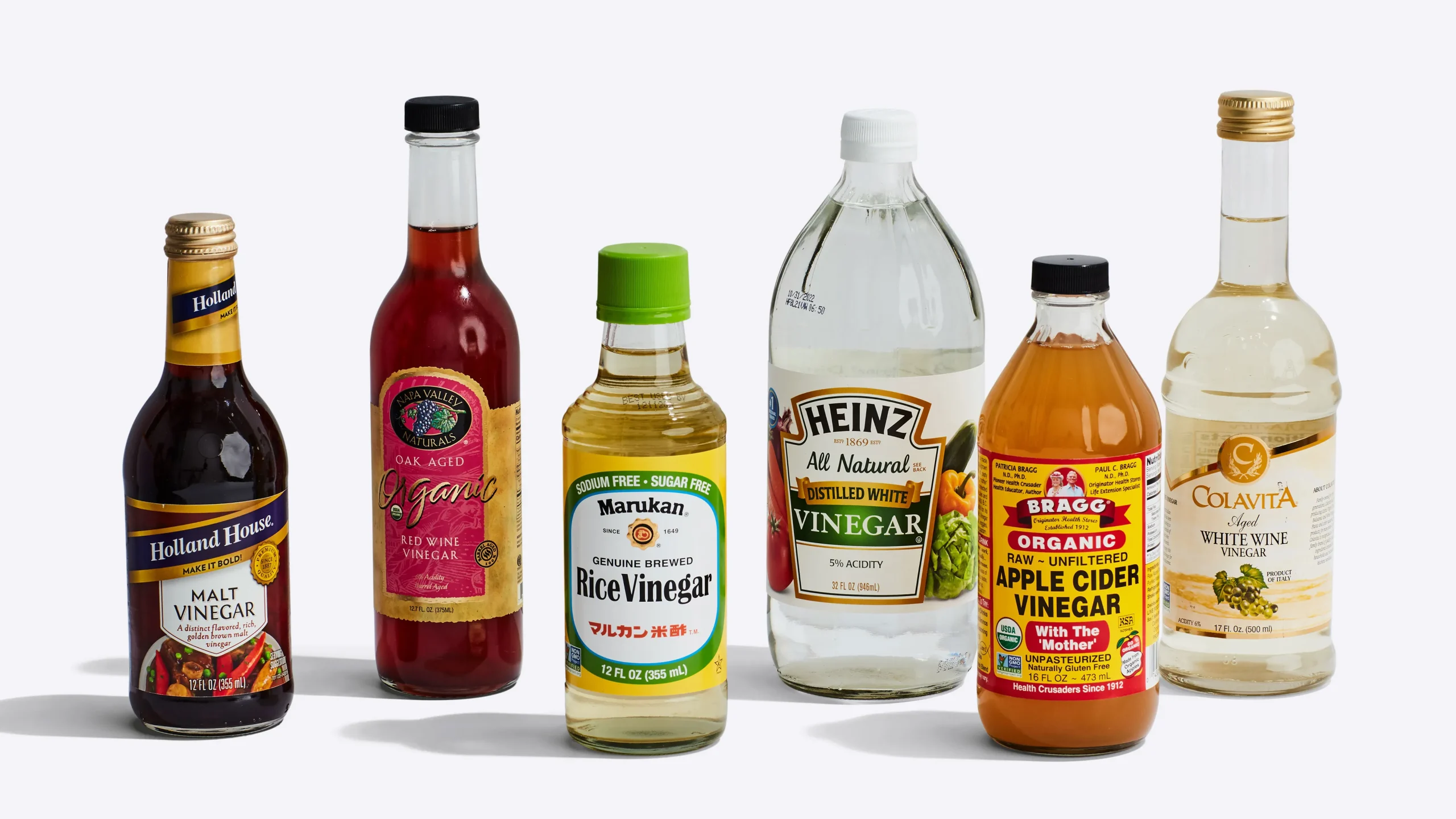
The difference between apple cider vinegar and white vinegar starts with their source ingredients and extends to their practical applications. While both are common pantry staples, apple cider vinegar versus white vinegar represent distinct products with different nutritional profiles, uses, and flavor characteristics that affect everything from cooking to cleaning. Understanding these differences helps you choose the right vinegar for your specific needs.
Table of Contents
What is apple cider vinegar?
Apple cider vinegar is made through a two-step fermentation process starting with apple juice. First, yeast converts the apple juice sugars into alcohol, creating cider. Then, bacteria (Acetobacter) convert the alcohol into acetic acid, producing the finished vinegar. The result contains 5-6% acetic acid and a rich brown color that signals the presence of the “mother” – a collection of beneficial enzymes, bacteria, and proteins that give raw and organic apple cider vinegar its distinctive health-promoting reputation.
Raw apple cider vinegar contains potassium, vitamins, minerals, and probiotics that many people seek out for wellness purposes. The pH of apple cider vinegar typically ranges from 2.8 to 3.5, making it moderately acidic but less harsh than some alternatives. Most people recognize apple cider vinegar by its amber color and distinct fruity, slightly sweet taste that comes from its apple origins.
What is white vinegar?
White vinegar, also called distilled vinegar, is made from grains like corn or barley that are fermented with added sugars and yeast. The fermentation process is similar to apple cider vinegar – yeast converts sugars to alcohol, then bacteria convert alcohol to acetic acid – but the starting ingredients and processing are more industrial and standardized. The result is a clear, colorless liquid with 5-10% acetic acid content, making it significantly more acidic than apple cider vinegar despite sometimes having the same percentage label.
Unlike apple cider vinegar, white vinegar contains no vitamins, minerals, or beneficial enzymes because it undergoes distillation that removes these compounds. The pH of standard white vinegar ranges from 2.5 to 2.7, creating a sharper, more pungent vinegar that many people find too harsh for drinking but ideal for cleaning and pickling applications. Apple cider vinegar versus white vinegar is fundamentally a comparison between a nutrient-rich, mild-tasting product and a pure, acidic solution.
Key differences: apple cider vinegar versus white vinegar
While apple cider vinegar and white vinegar share similar acetic acid percentages, the differences run deep. Apple cider vinegar versus white vinegar involves distinct production methods, nutritional profiles, and optimal applications. The comparison reveals why choosing between them depends entirely on your intended purpose.
| Characteristic | Apple Cider Vinegar | White Vinegar |
| Acetic acid content | 5-6% | 5-10% |
| pH level | 2.8-3.5 (milder) | 2.5-2.7 (more acidic) |
| Color | Amber/brown | Clear/colorless |
| Source ingredient | Apple juice | Grain or corn with added sugar |
| Contains “mother” | Yes (raw/organic versions) | No |
| Nutritional content | Potassium, vitamins, minerals, probiotics | None |
| Taste | Fruity, slightly sweet | Sharp, pungent |
| Best for | Cooking, beverages, wellness | Cleaning, pickling, industrial use |
Practical uses: apple cider vinegar versus white vinegar
Apple cider vinegar versus white vinegar shows clear separation in kitchen and household applications. Apple cider vinegar works best in cooking, salad dressings, marinades, and beverages because its fruity taste complements food. The mild flavor makes it popular for health tonics that people consume daily. You’ll find it in recipes for glazes, sauces, and pickling where the apple flavor adds complexity. Like the difference between dry wine and sweet wine, understanding how fermentation affects flavor helps you select the right ingredient for your purpose. Many wellness enthusiasts drink diluted apple cider vinegar as a morning tonic, though scientific evidence remains limited.
White vinegar dominates cleaning, laundry, and industrial applications because its high acidity and lack of odor-causing compounds make it superior for these tasks. A solution of white vinegar and water cleans windows without streaking, cuts through grease, and disinfects surfaces. Pickling professionals often prefer white vinegar because it doesn’t alter the color of vegetables and its stronger acetic acid content ensures better preservation. For food preservation and heavy-duty cleaning, apple cider vinegar versus white vinegar isn’t really a choice – white vinegar performs better every time.
Storage and shelf life
Both apple cider vinegar and white vinegar last indefinitely when stored properly in cool, dark pantries with caps tightly closed. Unopened bottles remain safe and maintain quality for 5+ years. Once opened, both vinegars stay safe to consume indefinitely due to their high acidity, but optimal quality persists for about two years. Refrigeration isn’t necessary, though some people refrigerate after opening to slow any separation. The acetic acid in apple cider vinegar versus white vinegar acts as a natural preservative, making these products virtually impossible to spoil in home conditions.
Health considerations
This article is educational and does not replace professional medical advice. Any decisions about using vinegar for health purposes should involve consultation with a qualified healthcare professional using current medical guidelines.
Apple cider vinegar versus white vinegar shows a significant difference in nutritional content. Apple cider vinegar contains potassium and other minerals that appeal to health-conscious consumers, while white vinegar contains no nutritional value. Many people believe apple cider vinegar offers health benefits like improved digestion, blood sugar regulation, or weight management, though scientific research remains inconclusive about most claims. The “mother” found in raw apple cider vinegar contains probiotics that some people believe support gut health, but these benefits haven’t been definitively proven in rigorous studies.
Both vinegars are acidic enough to potentially damage tooth enamel if consumed undiluted. Anyone considering apple cider vinegar versus white vinegar for health purposes should dilute them in water and limit consumption. People with certain medical conditions, taking medications, or with existing digestive issues should consult their doctor before adding vinegar to their wellness routine. White vinegar has no known health benefits when consumed, making it purely a household and cooking ingredient without wellness applications.
Frequently asked questions
Can you substitute apple cider vinegar for white vinegar in recipes?
Substituting apple cider vinegar versus white vinegar depends on the recipe. Apple cider vinegar works in dishes where you want fruity complexity – try it in vinaigrettes, glazes, and BBQ sauces. However, for recipes requiring white vinegar’s sharp bite and colorless clarity (like pickling or precise baking), substituting apple cider vinegar might affect results. White vinegar, conversely, will taste too harsh if substituted into recipes designed for apple cider vinegar’s mellow sweetness. When you must choose between them mid-recipe, consider whether the vinegar’s flavor matters to the final dish.
Which vinegar should I buy for cleaning?
For cleaning, white vinegar is the clear choice. Its higher acidity cuts through grease and mineral deposits more effectively than apple cider vinegar. The colorless nature of white vinegar prevents any staining that apple cider vinegar’s brown tint might leave on surfaces. Mixing white vinegar with baking soda creates an effective, natural cleaning paste for tough jobs. Apple cider vinegar versus white vinegar for cleaning really isn’t a comparison – white vinegar wins decisively for household and laundry applications.
Is one vinegar healthier than the other?
Apple cider vinegar contains more nutrients than white vinegar, including potassium and the beneficial “mother” in raw versions. However, the nutritional amounts are small, and scientific evidence for significant health benefits remains limited. White vinegar has no nutritional value and isn’t intended for health applications. If you’re choosing apple cider vinegar versus white vinegar primarily for health reasons, apple cider vinegar offers more nutritional compounds, but neither should replace proper medical treatment or nutrition from whole foods. Both products suit different purposes better than serving as health supplements.
Making your choice
Deciding between apple cider vinegar versus white vinegar depends entirely on your intended use. For cooking, salad dressings, marinades, and any application where flavor matters, apple cider vinegar brings fruity complexity that enhances dishes. Its nutrient content and milder pH make it preferable for people consuming vinegar as a wellness tonic. For cleaning, pickling, disinfecting, and removing mineral deposits, white vinegar’s superior acidity and colorless nature make it the professional choice. Many households benefit from keeping both products on hand – apple cider vinegar in the kitchen for culinary applications and white vinegar under the sink for cleaning tasks. Understanding the difference between apple cider vinegar and white vinegar ensures you get the product best suited to your specific needs.
Visit Consumer Reports’ guide to vinegar production for detailed information on quality standards and what to look for when selecting vinegar products for your kitchen and home.

