

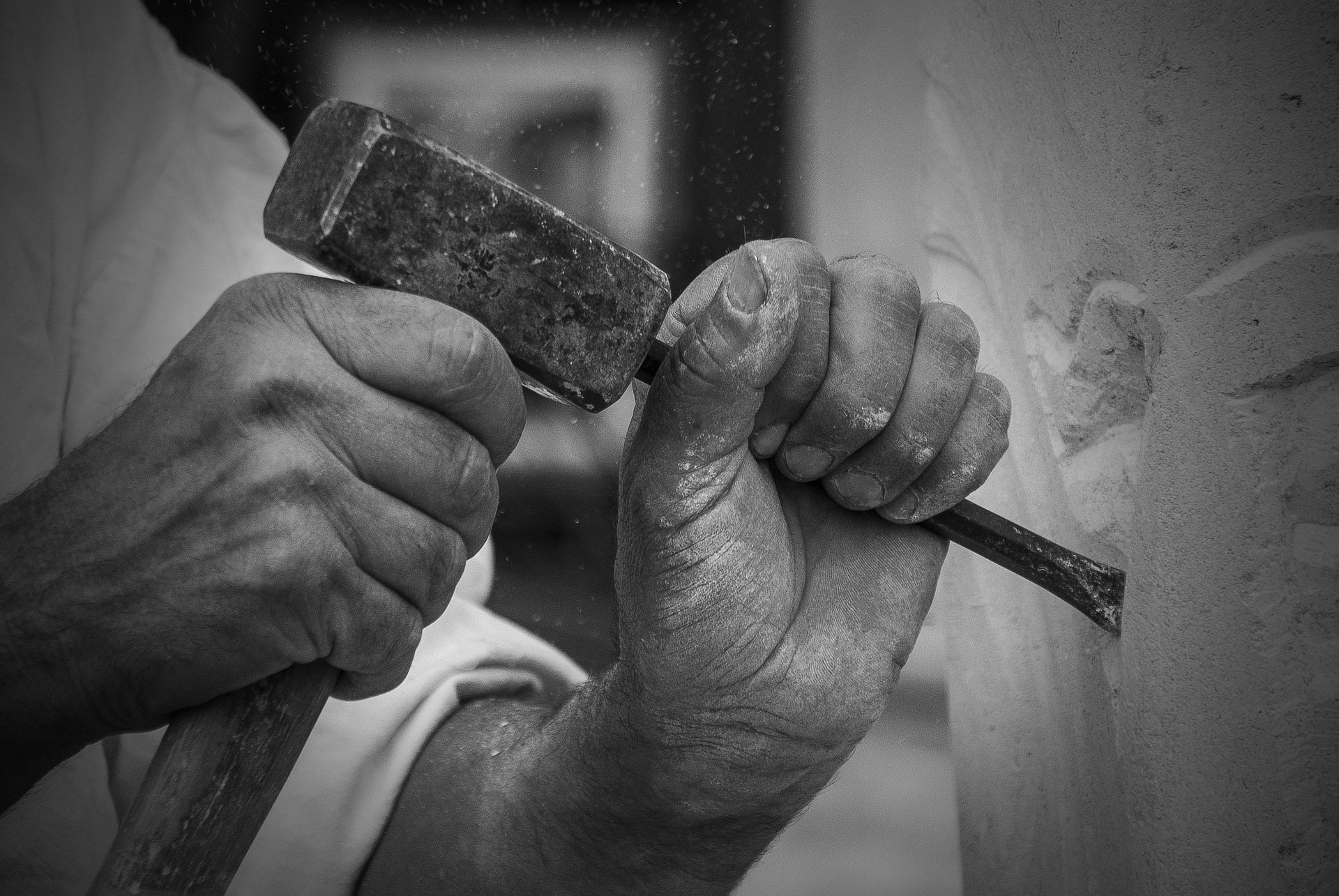
The terms freemason and mason are often confused, yet they represent fundamentally different professions and organizations with distinct histories. A mason is a skilled tradesperson who works with stone, brick, or concrete to construct buildings, while a freemason is a member of an international fraternal organization focused on moral and spiritual development. Understanding freemason and mason differences requires examining both historical context and modern definitions, as these terms evolved from shared roots into entirely separate meanings.
Table of Contents
What is a mason?
A mason, or stonemason, is a craftsperson trained in the ancient art of cutting, shaping, and placing stone to construct buildings, walls, and monuments. Masons have existed since humans began working with stone – they built Stonehenge, the Egyptian Pyramids, King Solomon’s Temple, and medieval cathedrals that still stand today. The craft requires years of apprenticeship to master techniques for shaping different types of stone, understanding load-bearing structures, and executing precision work that ensures buildings remain structurally sound for centuries.
Modern masons work with stone, brick, concrete, and masonry materials to construct homes, commercial buildings, decorative walls, and restoration projects. The profession demands physical skill, mathematical understanding, and artistic sensibility. A skilled mason can identify stone types, predict how materials will weather, and create structures that balance beauty with functionality. Today’s masons are still called “stonemasons” when working primarily with stone, distinguishing them from the historical freemason and mason confusion that arose when the fraternal organization appropriated the craft’s terminology.
What is a freemason?
A freemason is a member of a fraternal organization that emerged during the late 16th and early 17th centuries in Scotland and England, evolving from guilds of stonemasons. Unlike working masons who build structures, freemasons focus on philosophical, moral, and spiritual development using stonecutting as a metaphorical framework. The organization emphasizes brotherhood, charitable work, and the pursuit of knowledge through a series of symbolic rituals and degrees of initiation.
Freemasonry operates through local organizations called lodges, each governed by elected officers and structured hierarchies. Members progress through different degrees – Entered Apprentice, Fellowcraft, and Master Mason – learning the organization’s principles and values through symbolic ceremonies based on stonecutting and architecture. Freemasons and masons are connected only by history and metaphor; modern freemasons are not stonemasons. The fraternity includes business leaders, professionals, and community members united by shared values rather than shared craft. Freemasonry exists in countries worldwide with millions of members participating in social, charitable, and philanthropic activities.
Historical evolution: freemason and mason
The history of freemason and mason begins with stonemasons’ guilds during the medieval period. Stone masons formed organized guilds to protect their craft, regulate apprenticeships, and maintain quality standards across their work. These guilds were hierarchical, with apprentices learning under master craftsmen through years of hands-on training. The term “freemason” originally referred to masons with enough skill and reputation to travel between different construction projects, particularly cathedral builders. Stonemasons developed secret signs and passwords to identify master craftsmen and maintain guild solidarity.
Over time, especially during the 17th century, these working guilds began accepting non-masons – merchants, scholars, and men of standing in their communities. As the organization shifted from a purely craft-based guild to a social and philosophical fraternity, the distinction between working masons and freemasons widened. By the 18th century, freemason and mason represented entirely separate identities: one a profession, the other an intellectual and philanthropic organization. The fraternal organization retained the stonemason’s terminology, rituals, and symbolism, but transformed them into metaphors for personal and moral development rather than practical building techniques.
Key differences: freemason and mason
The distinction between freemason and mason encompasses professional, organizational, and philosophical dimensions. While both share historical roots in medieval stone-cutting craft, they evolved into completely different pursuits. The comparison clarifies why confusing freemason and mason terminology reflects a misunderstanding of both the profession and the organization.
| Aspect | Mason (Stonemason) | Freemason |
| Primary focus | Cutting and placing stone in buildings | Moral and spiritual development |
| Type of work | Physical craft and construction | Intellectual and philanthropic |
| Training method | Apprenticeship under craftsmen | Symbolic ritual initiation |
| Organization | Individual trade professionals | Fraternal lodges with hierarchies |
| Purpose | Construction and structural integrity | Brotherhood, charity, self-improvement |
| Modern status | Active profession worldwide | Fraternal organization, social club |
| Membership basis | Professional skill and training | Voluntary membership and belief in organization’s values |
| Observable activity | Constructing buildings and structures | Ritual ceremonies and community service |
Modern context and common misconceptions
Today, confusion between freemason and mason often arises because people assume the fraternal organization continues the stonemason profession. This misconception is reinforced by Masonic symbolism featuring tools like compasses, squares, and hammers – implements of stone work. In reality, modern freemasons include accountants, lawyers, physicians, teachers, and businessmen with no connection to stone construction. The organization preserved the language and symbolism of stonecutting as metaphors, not as descriptions of what members actually do.
Masons practicing today are tradespeople working in construction and stonecraft, nothing more. They do not typically hold memberships in Masonic lodges, and Masons who are also Freemasons are rare and coincidental. Understanding freemason and mason as distinct categories prevents perpetuating false associations. The stonemason profession stands on its own merits as a skilled trade requiring years of training. The Freemason fraternity stands on its own as a philanthropic organization. Both respect their shared historical heritage, but they have evolved into entirely separate modern pursuits.
Frequently asked questions
Are all freemasons also masons?
No, the vast majority of freemasons have no connection to the stonemason profession. Modern Freemasons come from all professional backgrounds. While the organization uses stone-cutting terminology and symbolism in its rituals, this is purely metaphorical. A Freemason might be a banker, software engineer, or accountant – the stonemason profession is incidental to Freemasonry’s purpose. Understanding freemason and mason as separate identities clarifies that one cannot assume a Freemason works with stone.
Why did Freemasonry adopt stonemason symbolism?
Freemasonry evolved from medieval stonemason guilds, so the terminology and symbolism reflect genuine historical connections. The organization retained the craft’s language and tools as powerful metaphors: a “rough ashlar” (unfinished stone) represents a person’s potential; the “finished stone” represents personal refinement. These metaphors transformed practical tools into philosophical concepts. The freemason and mason relationship is purely historical and symbolic – the fraternity chose to preserve the craft’s language to honor its origins while using it to teach moral principles.
Can you tell if someone is a freemason or a mason by their profession?
Absolutely not. Freemasonry membership crosses all professions and trades – it includes doctors, lawyers, tradespeople, and businessmen. A stonemason might or might not be a Freemason. The confusion between freemason and mason is purely definitional, not occupational. You cannot determine Freemasonry membership from someone’s job title. Both professional masons and Freemasons exist independently throughout society; they simply represent different categories of human activity with shared historical terminology.
Understanding the distinction
Clarity about freemason and mason requires recognizing that these terms describe different historical paths diverging from common medieval roots. A mason is a stonemason – a skilled craftsperson working with physical materials to construct buildings. A freemason is a member of a fraternal organization – an intellectual and philanthropic society using stonecraft as metaphorical language. While freemason and mason share historical connections and overlapping terminology, they are entirely separate in modern times. Appreciating this distinction honors both the important craft of stonemasonage and the significant role Freemasonry plays in communities worldwide.
Explore the rich history of both professions at Britannica’s comprehensive article on Freemasonry and its historical evolution for deeper understanding of how these traditions developed and shaped society.

