

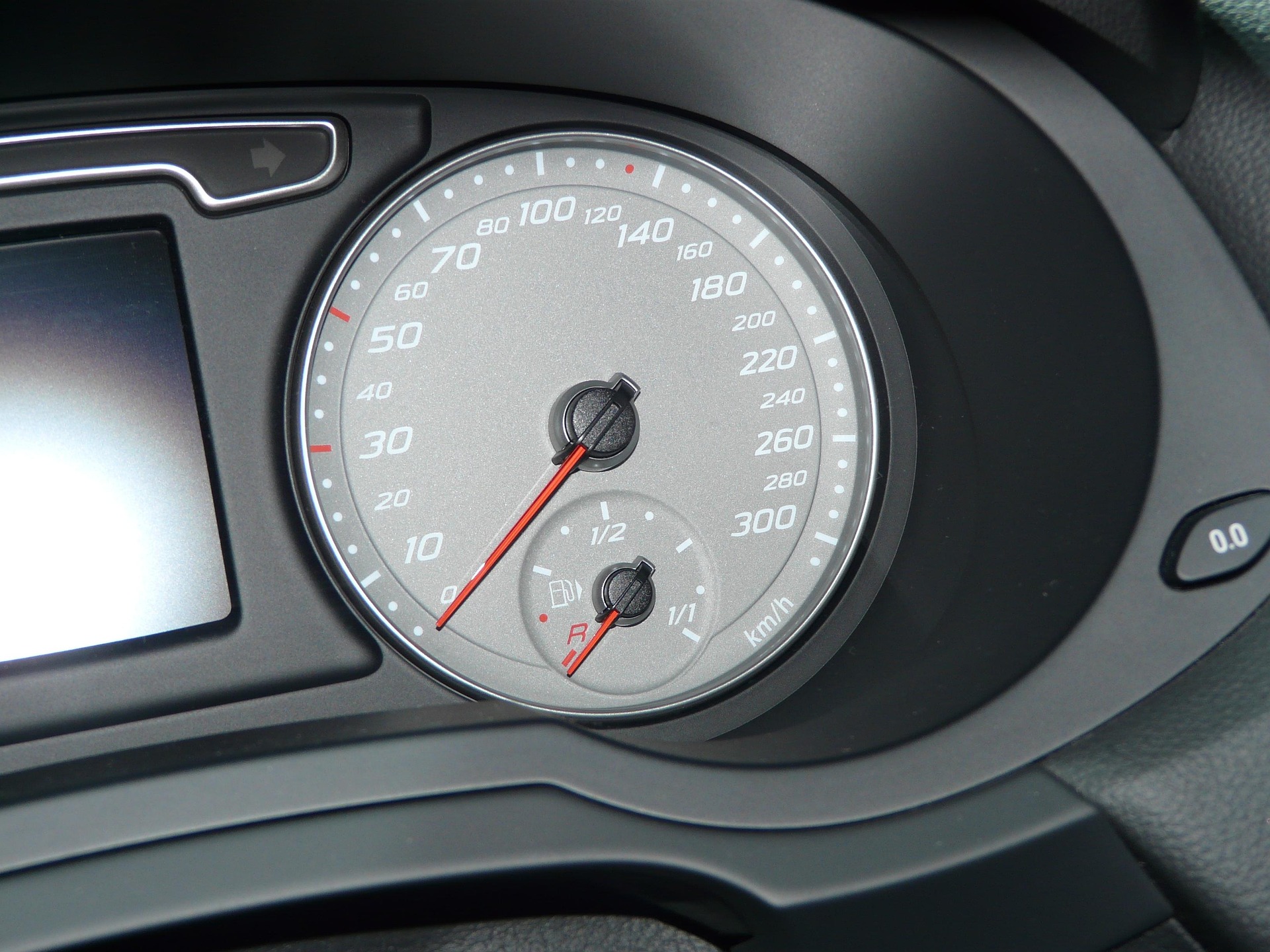
Understanding the difference between miles versus kilometers is essential for anyone traveling internationally or working with global data, since these two units of distance measurement remain the standard in different regions around the world. One mile equals approximately 1.6 kilometers, yet this simple conversion masks a fascinating history rooted in entirely different measurement philosophies.
The choice between miles versus kilometers reflects divergent historical paths that continue to influence how we measure distance today. These two systems represent fundamentally different approaches to standardization – one rooted in ancient traditions, the other in Enlightenment-era scientific principles.
Table of Contents
What is a Mile?
A mile is a unit of distance equal to 5,280 feet, or approximately 1.609 kilometers. The term comes from the Latin word “milia,” meaning thousand, as the ancient Romans measured one mile as a thousand paces of their soldiers. In England, the modern mile was formally defined in 1593 when lawmakers standardized it based on the furlong, a unit that represented one-eighth of a mile.
This definition became deeply embedded in British imperial culture and spread throughout the British Empire. The United States, United Kingdom, and Liberia remain the only countries that officially use miles as their standard unit of distance measurement, though the U.S. military and scientists use kilometers extensively.
The mile developed through centuries of practical necessity rather than scientific planning. Ancient Roman soldiers marched great distances, and counting steps provided a natural way to measure terrain. The Latin “milia passus” became anglicized to “mile,” embedded in the English language by medieval times.
During the era of British naval exploration and colonization, miles became the standard measurement across vast territories. Road construction, land surveying, and maritime navigation all relied on miles versus kilometers in English-speaking regions. The unit’s deep historical roots made it extremely difficult to replace later, even as scientific measurement systems evolved.
Today, even though miles versus kilometers reflects an outdated measurement philosophy, the economic and infrastructure costs of conversion have kept miles entrenched in American and British daily life. Changing the system would require billions in investment and massive social disruption.
What is a Kilometer?
A kilometer is a metric unit equal to 1,000 meters, or approximately 0.621 miles. The term combines the metric prefix “kilo” with “meter,” reflecting the scientific standardization introduced by France in 1795. During the French Revolution, scientists sought to create a rational, decimal-based system of measurement that would be universal and independent of arbitrary historical definitions.
The kilometer was adopted as part of the broader metric system, which defined the meter as one ten-millionth of the distance from the Earth’s equator to the North Pole. This scientific basis made the metric system reproducible and objective, unlike the arbitrary historical origins of miles versus kilometers.
Today, the metric system and kilometers are used by nearly every country except the United States, Myanmar, and Liberia. The metric system’s global adoption reflects its logical structure and ease of use in scientific research and international commerce.
The metric system, including the kilometer, represented a revolutionary approach to standardization based on scientific principles rather than historical accident. French scientists in the 18th century realized that measurements needed a rational foundation tied to reproducible natural constants.
This approach meant kilometers versus miles could be compared objectively: kilometers could be subdivided into meters and centimeters using simple powers of ten, whereas miles require mental math with irregular fractions. The metric system’s decimal structure provides inherent advantages for calculation and scientific work.
The metric system spread globally through scientific communities, international trade, and colonial influence during the 1800s and 1900s. By the late 20th century, kilometers had become the global standard for road distances, scientific measurements, and international communication.
Key Differences Between Miles and Kilometers
While miles versus kilometers both measure distance, they differ fundamentally in origin, basis, and global adoption. Miles derive from ancient Roman traditions and English imperial standardization, whereas kilometers emerge from 18th-century scientific reform and the metric system.
The metric system uses a decimal base of 10, making kilometer conversions simple: one kilometer equals 1,000 meters. In contrast, the mile uses the imperial system, where one mile equals 5,280 feet divided into 8 furlongs.
These different mathematical bases mean that miles versus kilometers require more complex mental conversions, especially when comparing speeds or distances without a calculator. The decimal structure of kilometers makes quick mental math far easier for international users.
| Feature | Mile | Kilometer |
| Distance | 5,280 feet | 1,000 meters |
| Metric Equivalent | 1.609 kilometers | 0.621 miles |
| Origin | Ancient Rome, standardized England 1593 | France 1795, metric system |
| System | Imperial system | Metric system (decimal) |
| Primary Users | USA, UK, Liberia | 198+ countries globally |
| Speed Units | Miles per hour (mph) | Kilometers per hour (km/h) |
| Common Uses | Road signs, speedometers (US/UK) | Road signs, navigation, science |
| Conversion Formula | Miles à – 1.609 = Kilometers | Kilometers à – 0.621 = Miles |
Practical Everyday Distance Measurement
The difference between miles versus kilometers becomes immediately apparent when traveling between countries or working with international data. In the United States, road signs display distance in miles, vehicle speedometers show mph, and casual conversation about distances uses miles exclusively.
A visitor from Europe expecting 10 km might be surprised to learn that an American road sign indicating 10 miles means they have much farther to travel – about 16 kilometers. This nearly 60% difference can significantly affect travel planning and time management for international visitors.
Conversely, an American traveler in Europe sees speed limits in km/h and must mentally convert: a sign showing 100 km/h is roughly equivalent to 62 mph, noticeably faster than many American highway speed limits. This constant mental conversion makes the distinction between miles versus kilometers one of the most practical differences experienced by international travelers.
Running and fitness activities illustrate another important context where miles versus kilometers matters significantly. Marathon runners, for example, train for a 26.2-mile race in the United States, while most European marathons are measured as 42.195 kilometers – which is essentially the same distance but presented differently.
Athletes accustomed to one system must adjust their thinking when training in different countries. A runner who logs 5 miles per day in the U.S. is covering approximately 8 kilometers, but switching to kilometers and thinking “5 kilometers per day” feels quite different mentally.
Fitness trackers and running apps often allow athletes to switch between miles and kilometers, but the psychological difference of seeing larger numbers for kilometers versus smaller numbers for miles can affect motivation and goal-setting. The numerical presentation influences how athletes perceive their achievements.
Why Countries Use Different Distance Units
The persistence of miles versus kilometers across different countries reflects historical decisions rather than practical advantages. The United States separated from Britain before the metric system gained widespread adoption, allowing imperial units to remain entrenched in American infrastructure.
After the metric system spread through Europe and eventually the world during the 19th and 20th centuries, changing the entire U.S. measurement system would have required massive expense and disruption. The United Kingdom, despite inventing the imperial system, eventually adopted kilometers on road signs while maintaining mph for vehicle speedometers.
This compromise reflects their historical ties to both systems. Interestingly, American scientists, physicians, and military personnel routinely use the metric system and kilometers in professional contexts, demonstrating that miles versus kilometers is ultimately a matter of standardization rather than superiority.
The cost of conversion explains why miles versus kilometers remains contested in the United States despite global standardization. Converting America’s entire transportation infrastructure would require replacing millions of road signs, recalibrating vehicle speedometers, updating navigation systems, and retraining drivers.
Estimates suggest this conversion would cost between $40 billion and $100 billion, making it economically impractical even though it might be logically sensible. Political resistance adds another layer: Americans famously prioritize independence and local autonomy.
Mandatory adoption of the metric system has historically faced public opposition as “un-American” or imposed by distant bureaucrats. Meanwhile, Britain’s partial adoption reflects the same tension between metric and imperial standards, acknowledging practical benefits of kilometers versus miles while respecting historical convention.
Professional and scientific communities demonstrate that people can easily work with both systems when necessary. American engineers typically use metric measurements and kilometers in technical specifications, NASA missions operate entirely on metric units, and pharmaceutical dosages follow the metric system exclusively.
In aviation, pilots use kilometers for altitude and distance regardless of country, standardized for international safety. Weather services report temperatures in Celsius across most of the world but still use miles versus kilometers depending on local convention.
This dual proficiency shows that the choice between systems is driven by regulatory standards and cultural inertia rather than cognitive inability. A scientist from the U.S. can seamlessly convert between miles versus kilometers in research contexts, yet drive home on roads marked entirely in miles.
Converting Between Miles and Kilometers
Converting miles versus kilometers is straightforward once you memorize the basic conversion factor: one mile equals 1.609344 kilometers, or approximately 1.6 kilometers for practical purposes. To convert miles to kilometers, multiply the number of miles by 1.609.
For example, 10 miles equals 16.09 kilometers. Conversely, to convert kilometers to miles, multiply by 0.621 (or divide kilometers by 1.609). So 100 kilometers equals approximately 62.1 miles. Digital tools and smartphone apps now make instant conversion between miles and kilometers effortless.
Understanding the conversion factor remains useful for mental estimation when traveling internationally or reading global news reports. Mental conversion tricks help travelers quickly estimate distances without calculators.
For miles versus kilometers conversion, remember that miles are approximately 1.6 times larger than kilometers, so multiplying miles by 1.6 gives a quick approximation. Alternatively, some travelers use the rule of thumb that 5 miles equals 8 kilometers, which provides reasonable accuracy for smaller distances.
The reverse conversion – kilometers to miles – uses the rough estimate that 3 kilometers equals 2 miles. These approximations work well for everyday purposes; a traveler seeing a “10 km to destination” sign can quickly estimate “about 6 miles” using the 3:2 ratio.
Smartphone navigation apps have largely eliminated the need for mental math, automatically converting distances between miles and kilometers based on user settings. However, when driving and reading road signs in unfamiliar countries, quick mental estimation prevents confusion about remaining distances.
Understanding conversion between miles versus kilometers becomes particularly important when comparing speed limits and travel times across international borders. A 100 km/h speed limit on European highways is approximately 62 mph, moderately faster than typical American interstate speeds.
When calculating driving time, the kilometer distance must be converted to miles or the speed must be converted to properly estimate travel duration. GPS navigation systems automatically handle this conversion, but travelers who understand the mathematics can verify reasonableness.
Frequently Asked Questions
Why does the United States still use miles instead of kilometers?
The United States retained miles because it gained independence before the metric system became globally dominant. When the metric system spread internationally during the 19th century, converting America’s entire infrastructure – road signs, speedometers, surveys, and engineering standards – would have cost billions and disrupted commerce.
Inertia, combined with the expense of conversion, made switching from miles versus kilometers economically impractical for a nation already using imperial measurements extensively. Public resistance also played a role in preventing mandatory adoption.
Is a kilometer longer than a mile?
No, a kilometer is actually shorter than a mile. One mile equals 1.609 kilometers, meaning a mile is approximately 60% longer than a kilometer. This difference matters when comparing speeds: a car traveling at 60 mph is going faster than one traveling at 60 km/h.
Understanding that miles versus kilometers involves this length difference is crucial for travelers and anyone interpreting international data about distances or speeds. The distinction affects trip planning significantly.
Which system is more accurate for measuring distance?
Neither miles versus kilometers is inherently more accurate – both measure distance precisely when applied correctly. The metric system’s decimal structure makes kilometers easier for mathematical calculations and scientific work, since the meter is defined by a physical constant.
The mile, while less convenient for calculation, measures distance just as accurately in practical applications. The real advantage of the metric system lies in its universal adoption and ease of conversion between units, not in superior accuracy.
The Global Divide in Distance Measurement
The difference between miles versus kilometers represents a rare modern divide where historical momentum outweighs practical standardization. Nearly 200 countries use kilometers, yet the three largest English-speaking nations continue using miles in everyday life.
Travelers moving between countries must mentally convert distances when reading road signs, navigation apps often display both measurements, and international sports sometimes report results in miles while others use kilometers. This dual-measurement reality is unlikely to change soon.
Neither system offers compelling advantages sufficient to justify the massive disruption required to standardize globally. Understanding both miles versus kilometers has become an essential skill for international citizens and anyone engaging with global information.
The future of miles versus kilometers will likely maintain the current divide indefinitely, barring a major economic or political shift. The United States shows no signs of abandoning miles despite the inconvenience it creates for international commerce, science, and diplomacy.
American cultural identity has, somewhat paradoxically, become intertwined with the preservation of imperial measurements even though most Americans understand and use metric units in professional contexts. Meanwhile, the rest of the world has settled into a comfortable understanding that kilometers dominate globally.
This compromise – where kilometers are standard but miles are respected – reflects pragmatism on both sides. For travelers and global citizens, mastering conversion between miles versus kilometers is not optional; it is an essential component of functioning in an interconnected world.

