

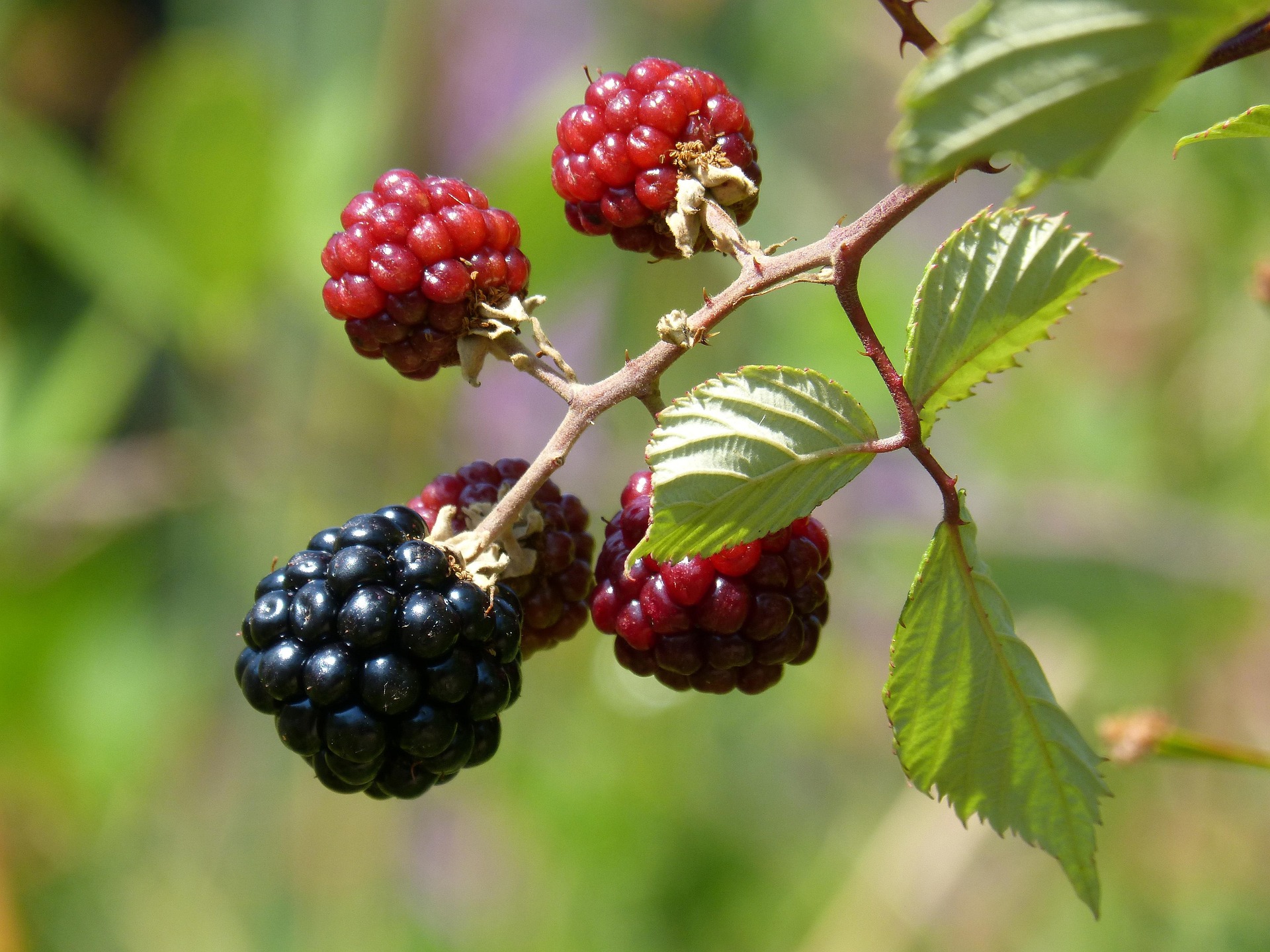
For home gardeners and berry enthusiasts, understanding the difference between blackberry vs boysenberry is crucial when planning berry patches or selecting fresh fruit at farmers markets. While both berries grow on thorny brambles and share deep hues when ripe, blackberry vs boysenberry reveals distinct flavor profiles, growing characteristics, and culinary applications. Learning about blackberry vs boysenberry goes beyond simple appearance – each offers unique qualities that influence how cooks and growers choose between them.
Table of Contents
What is a Blackberry? Comparing Blackberry vs Boysenberry Origins
Blackberries are berries produced by Rubus species, a genus of plants known for their thorny, woody canes and aggregate fruit structure. The berries form from clusters of drupelets – small, round fruits that cling together to create the characteristic bumpy texture. Blackberries grow wild across North America, Europe, and Asia, and cultivation occurs extensively in Oregon, California, and other regions with suitable climates. When fully ripe, blackberries are nearly black in color with a deep, rich flavor profile that balances tartness and natural sweetness. The distinction between blackberry vs boysenberry begins with origin: blackberries are naturally occurring; boysenberries are deliberately bred hybrids.
Several Rubus species produce what consumers call blackberries, including Rubus fruticosus and native North American species. Blackberries are highly adaptable plants, thriving in poor soil and spreading vigorously – sometimes aggressively in unmanaged areas. The canes are covered in sharp thorns, making hand-picking a challenge but also making the plants effective natural barriers. Blackberries are widely available in grocery stores year-round (both fresh and frozen), and in comparing blackberry vs boysenberry availability, blackberries dominate most markets.
What is a Boysenberry? Blackberry vs Boysenberry Genetics
Boysenberries are a hybrid berry created from a cross between blackberry, raspberry, and loganberry plants. This hybrid was developed in the 1920s by Rudolph Boysen in Southern California and patented in the 1930s, bearing his name. Boysenberries are medium to large berries – larger than most blackberries – with a distinctive deep maroon to burgundy hue when fully ripe, lighter than the darkest blackberries. The berries have a distinctive flavor profile described as a blend of raspberry tartness and blackberry richness, with more acidity and slightly less sweetness than standard blackberries. When examining blackberry vs boysenberry at the farmers market, boysenberries’ maroon color and larger size stand out immediately.
Unlike wild blackberries, boysenberries are not naturally occurring and require cultivation. They grow on thorny canes similar to blackberries but are more delicate and challenging to grow commercially. Boysenberries require specific climate conditions – cool but not freezing winters – and grow primarily in coastal California regions. The plants are more vulnerable to disease and pests than blackberries. Gardener’s Path offers detailed guidance on growing boysenberries and explains how they compare to blackberries and raspberries in cultivation difficulty. This is why, in blackberry vs boysenberry market comparisons, boysenberries remain seasonal and less common in mainstream markets.
Blackberry vs Boysenberry: Taste, Size, and Texture Comparison
The primary difference when comparing blackberry vs boysenberry lies in their flavor complexity and size. Boysenberries are distinctly larger – often twice the size of standard blackberries – with a maroon hue distinct from the darker blackberry, and display a more complex, tart flavor profile. Flavor represents the most noticeable contrast between the two. Blackberries are sweeter and more straightforward in taste, while boysenberries deliver a more sophisticated blend with pronounced raspberry tartness. When bakers face the choice between blackberry vs boysenberry for recipes, the tartness of boysenberries works beautifully in pies while blackberries suit straightforward jams.
Texture differs slightly as well – boysenberries tend to be softer and more delicate, while blackberries are firmer and hold their shape better during cooking. Availability is another practical difference: blackberries are available fresh year-round in most regions, while boysenberries are seasonal and primarily available in summer months and in frozen form. For anyone comparing blackberry vs boysenberry nutrition, both berries offer excellent profiles with similar vitamin C, fiber, and antioxidant content.
Growing Requirements and Culinary Applications: Blackberry vs Boysenberry
Blackberries are remarkably hardy and adaptable plants, thriving in diverse climates from USDA zones 5 through 10 depending on the variety. They tolerate poor soil, establish quickly, and produce abundant fruit with minimal management once established. Thornless blackberry varieties exist for easier harvesting. The plants grow vigorously and may require aggressive pruning to prevent overgrowth. In terms of practical home gardening, most gardeners choose blackberries over boysenberries because blackberry vs boysenberry shows that blackberries require far less specialized care.
Boysenberries are significantly more demanding, requiring specific conditions to flourish. They prefer cool coastal climates with moderate temperatures and specific humidity levels. Boysenberries need well-draining soil, consistent irrigation, and more careful pest and disease management than blackberries. The additional labor and specificity of growing conditions make boysenberries more expensive to produce commercially. Culinarily, the comparison between blackberry vs boysenberry matters significantly. Blackberries work well in applications where sweetness is desired – jams, smoothies, dessert toppings, and baked goods benefit from their straightforward flavor. Boysenberries shine in contexts where tartness adds complexity – pie fillings, coulis, and upscale pastry applications often showcase boysenberry’s more pronounced acid notes.
Frequently Asked Questions About Blackberry vs Boysenberry
Can I substitute boysenberries for blackberries in recipes?
Yes, generally. Boysenberries work in any recipe calling for blackberries, but the final dish will taste noticeably more tart. If tartness bothers you, reduce boysenberries by 20-30% or add a small amount of sugar to recipes. For baking, boysenberries work beautifully in pies, crumbles, and tarts. In smoothies, the tartness can be balanced with sweeter fruits or honey.
Are boysenberries actually a type of blackberry?
Technically, no. Boysenberries contain blackberry genetics (along with raspberry and loganberry), but they are a distinct hybrid, not a blackberry variety. All three parent fruits are Rubus species, so boysenberries are in the same genus but represent a separate cultivar created through deliberate breeding. This genetic difference explains why the comparison between blackberry vs boysenberry shows such distinct characteristics.
Why are boysenberries so much more expensive than blackberries?
Boysenberries command higher prices due to limited growing regions, shorter harvest seasons, higher production costs, more delicate plants, and lower overall supply. Blackberries are grown widely across North America and grow with less management required. The rarity and specific requirements for boysenberries reduce supply and increase cultivation expense, both reflected in retail pricing. When making the choice between blackberry vs boysenberry based on budget, blackberries win for value.
Final Verdict: Blackberry vs Boysenberry – Which Should You Choose?
Choosing between blackberry vs boysenberry depends on your taste preferences, intended use, and budget. For everyday eating, smoothies, and budget-conscious jam-making, blackberries are the practical choice – widely available, affordable, and consistently sweet. For special projects, upscale pastry work, or when you prefer tart, complex berry flavors, boysenberries are worth seeking out at farmers markets or specialty produce suppliers. Home gardeners in suitable climates can grow blackberries with minimal effort; boysenberry cultivation requires more commitment but rewards successful growers with their distinctive tartness and elegant appearance. The blackberry vs boysenberry comparison ultimately shows two excellent berries suited to different purposes – neither is objectively better, but each excels in specific contexts.

