

As fall approaches and allergy season peaks, many people wonder whether goldenrod or ragweed triggers their hay fever symptoms. Understanding goldenrod vs ragweed is crucial because a widespread misconception blames goldenrod for allergies when ragweed is the actual culprit. Learning about goldenrod vs ragweed helps allergy sufferers identify the true cause of their symptoms and understand why these plants are so frequently confused despite their significant differences.
Table of Contents
What is Goldenrod?
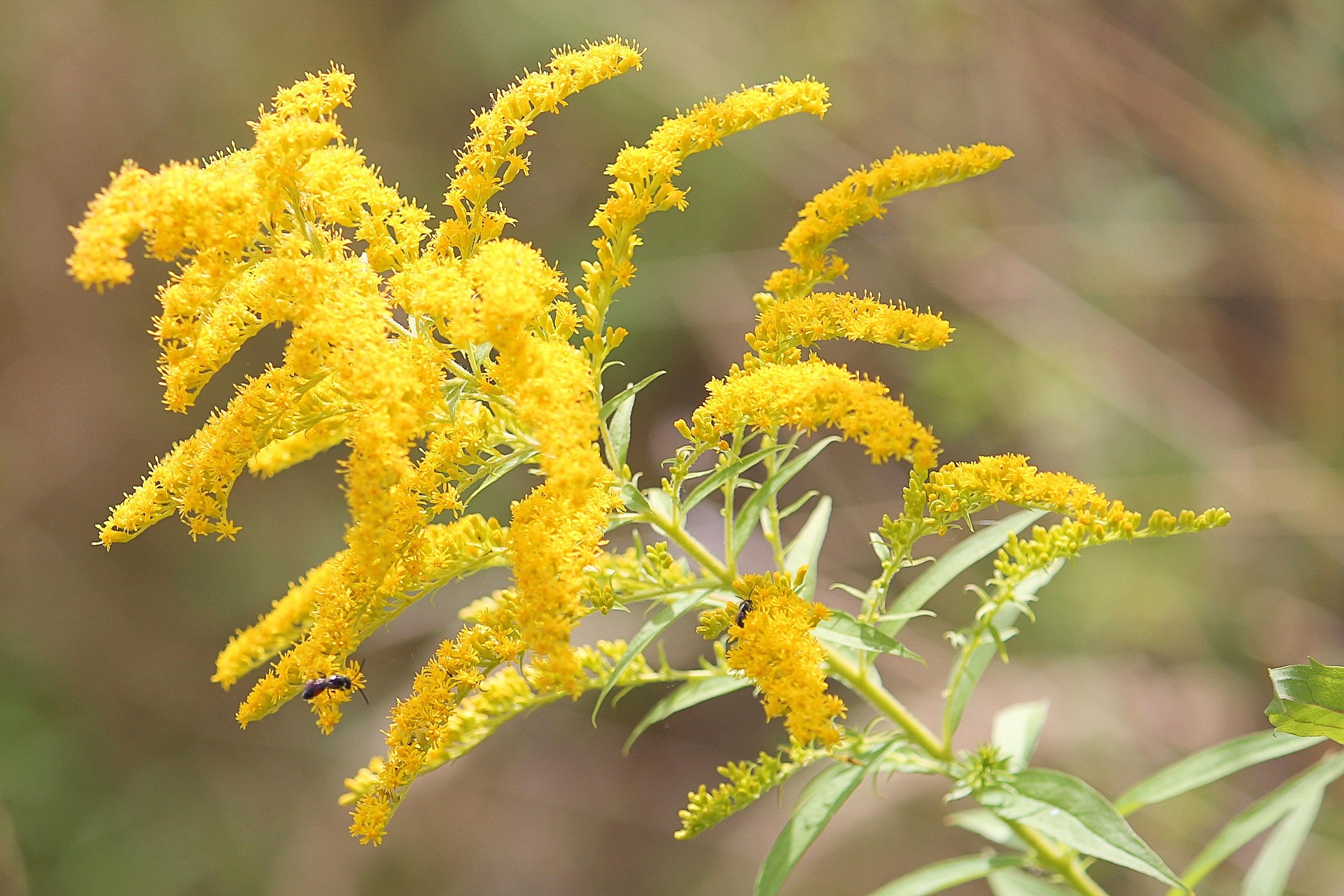
Goldenrod is a flowering plant that produces bright yellow flowers in late summer and fall, typically blooming from August through November depending on region and species. Goldenrod plants have tall, sturdy stems and distinctive clusters of small, bright golden flowers that make them unmistakable and ornamental. Many gardeners cultivate goldenrod specifically for its visual beauty and ability to brighten late-season landscapes. When comparing goldenrod vs ragweed, the most obvious distinction is the showy golden flowers of goldenrod versus the inconspicuous green flowers of ragweed. The genus Solidago includes over 100 goldenrod species found across North America and Europe.
Goldenrod pollen is heavy and sticky, designed to be transferred by insects rather than wind. This pollen doesn’t travel through the air efficiently and therefore rarely triggers allergic reactions. Despite the widespread myth that this plant causes hay fever, scientific evidence shows it causes clinically insignificant respiratory allergies. Oregon State University Extension clarifies that goldenrod is largely misidentified as an allergen when ragweed is actually responsible. Understanding these plants involves correcting this persistent misconception.
What is Ragweed?
Ragweed is a common plant that produces small, inconspicuous green flowers in late summer and fall, typically blooming from August through October. Ragweed plants are far less visually distinctive than goldenrod – they have ordinary green foliage and tiny flowers that most people don’t notice. There are several ragweed species, with common ragweed (Ambrosia artemisiifolia) and giant ragweed being the most prevalent in North America. When distinguishing goldenrod vs ragweed visually, ragweed appears almost nondescript compared to goldenrod’s showy flowers. However, this visual simplicity masks ragweed’s powerful allergenic properties.
Ragweed pollen is lightweight, easily airborne, and designed for wind distribution. A single ragweed plant can produce approximately one billion pollen grains per season – pollen that travels great distances through the air. This is the critical distinction in goldenrod vs ragweed: ragweed pollen becomes airborne and enters respiratory systems, triggering allergic reactions. Ragweed causes approximately 15-20% of Americans’ hay fever symptoms, making it one of the leading causes of fall allergies. When comparing goldenrod vs ragweed as allergens, ragweed is unquestionably the villain that goldenrod is incorrectly blamed for.
Why They’re Confused Despite Clear Differences?
The confusion between goldenrod vs ragweed stems primarily from timing – both bloom simultaneously in late summer and fall. When people notice their allergies worsening and see goldenrod blooming prominently, they naturally assume the visible plant is responsible. However, the goldenrod vs ragweed distinction is clear once you understand pollen mechanics: goldenrod’s heavy insect-dispersed pollen doesn’t float through air; ragweed’s light wind-dispersed pollen does. The comparison between goldenrod vs ragweed shows that visual prominence doesn’t indicate allergenicity. Ragweed’s inconspicuous appearance belies its powerful allergenic impact.
The overwhelming majority of people who blame goldenrod for their fall allergies are actually reacting to ragweed pollen. When examining goldenrod vs ragweed scientifically, testing shows that ragweed pollen frequently triggers positive allergy tests, while goldenrod rarely does. The goldenrod vs ragweed confusion has persisted for so long that many allergy sufferers accept the false association without questioning it. Understanding goldenrod vs ragweed correctly – recognizing ragweed as the actual allergen – helps people take appropriate allergy management steps and appreciate goldenrod’s beauty without unfair blame.
Appearance, Growth, and Ecology: Goldenrod vs Ragweed Distribution
Goldenrod vs ragweed occupy similar ecological niches but appear completely different. Goldenrod plants typically reach 1-6 feet tall with dense clusters of golden flowers at the top. Ragweed plants are more variable in height but typically appear as ordinary green plants without obvious flowers until examined closely. When observing goldenrod vs ragweed in fields or yards, goldenrod demands visual attention with its golden display; ragweed blends into the background. The contrast between goldenrod vs ragweed appearance is striking once you know what to look for.
Both plants thrive in disturbed areas, roadsides, and open fields. Goldenrod vs ragweed can coexist in the same habitat, which contributes to the confusion about which plant causes allergies. Gardeners can eliminate the allergen problem by removing ragweed while keeping goldenrod for its ornamental value. When considering goldenrod vs ragweed management for allergy sufferers, removing ragweed should be the priority since it’s the actual allergen. Understanding goldenrod vs ragweed ecology helps people manage their environment more effectively for allergy control.
Frequently Asked Questions
Does goldenrod actually cause allergies at all?
Extremely rarely. The overwhelming scientific consensus shows that goldenrod is not a significant respiratory allergen. While some individuals with pollen allergies might theoretically react to goldenrod pollen if exposed to massive amounts, this is not a practical concern. The distinction between goldenrod vs ragweed regarding allergies is definitive: ragweed is a major allergen; goldenrod is essentially allergen-free for respiratory purposes. Anyone with fall allergies can safely assume goldenrod is not the cause and should focus on ragweed exposure and management.
Why is the goldenrod allergy myth so persistent?
The goldenrod vs ragweed confusion persists because goldenrod is highly visible and ragweed is not. People see goldenrod blooming magnificently and experience allergy symptoms simultaneously, creating an obvious cause-and-effect assumption. Additionally, ragweed pollen travels long distances, so people can have allergic reactions far from visible ragweed plants – they see goldenrod growing nearby and blame it. Once this misconception became widespread, it perpetuated through generations. Understanding goldenrod vs ragweed correctly requires overcoming intuitive but incorrect assumptions about visual prominence and allergic causation.
How can I tell goldenrod and ragweed apart?
The goldenrod vs ragweed distinction becomes obvious once you examine the flowers: goldenrod has bright yellow flowers in prominent clusters; ragweed has tiny, green, inconspicuous flowers barely noticeable without close inspection. Goldenrod leaves are typically smooth with simple leaf shapes. Ragweed leaves are finely divided, almost feathery in appearance. When comparing goldenrod vs ragweed stem structure, goldenrod has sturdy, substantial stems; ragweed appears more delicate. Once you learn goldenrod vs ragweed visual characteristics, distinguishing them becomes automatic, helping you appreciate goldenrod without blame while identifying and removing ragweed allergen sources.
Clearing the Confusion: Allergy Management
The comparison between goldenrod vs ragweed reveals one of nature’s most persistent misunderstandings – goldenrod is blamed for allergies it doesn’t cause while ragweed causes allergies in virtual invisibility. By understanding goldenrod vs ragweed distinctions – visual appearance, pollen type, and allergenicity – allergy sufferers can make informed decisions about environmental management and stop wrongly accusing an innocent plant. Whether you’re an allergy sufferer, a gardener, or simply curious about these fall-blooming plants, knowing goldenrod vs ragweed facts helps appreciate goldenrod’s beauty while taking appropriate steps to manage ragweed’s genuine allergenic threat. This goldenrod vs ragweed distinction matters for your health and for giving goldenrod the recognition it deserves.

