

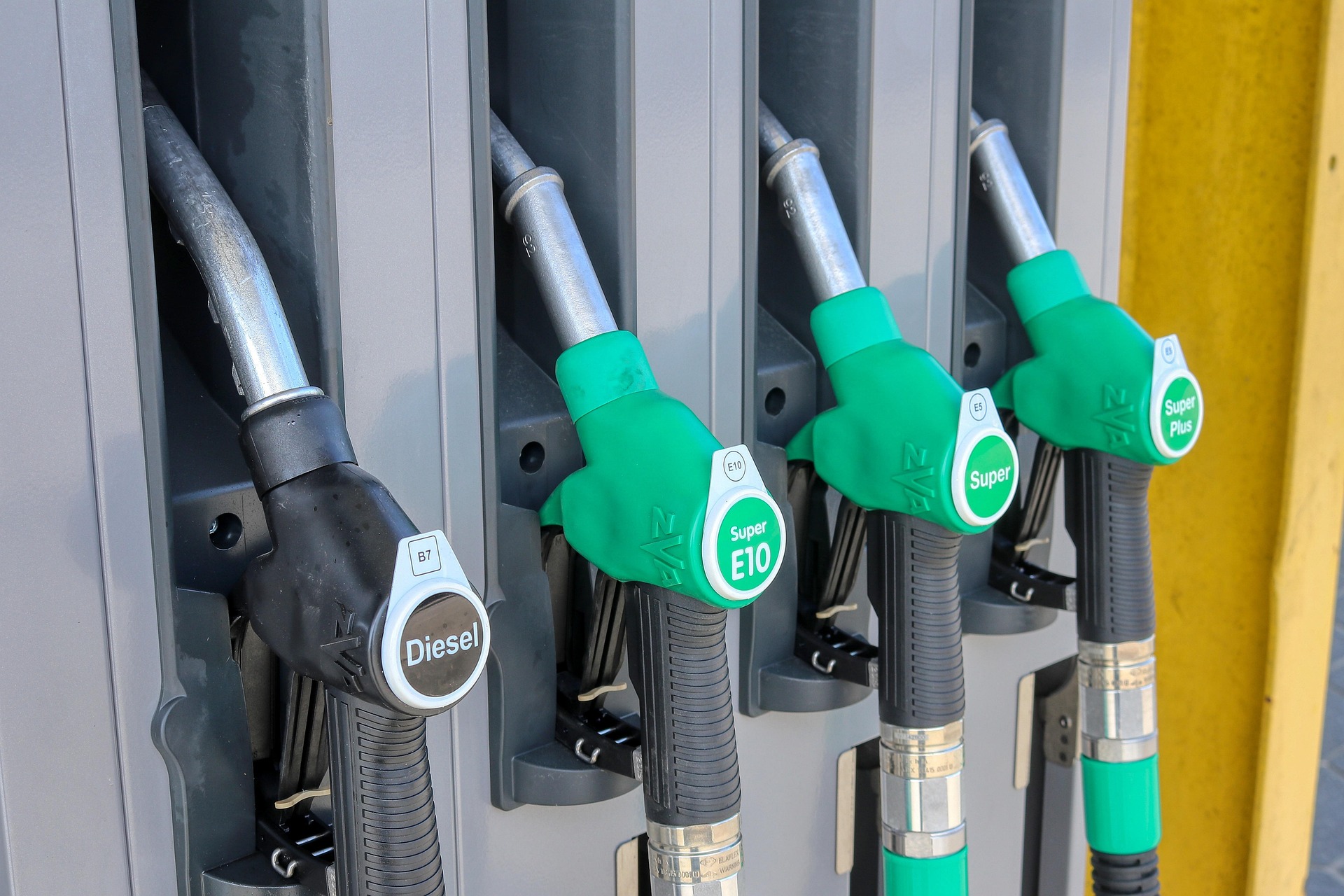
For vehicle buyers evaluating fuel types and engine efficiency, the diesel vs gasoline decision shapes both operating costs and driving experience. Both fuels power internal combustion engines, yet diesel vs gasoline differ in combustion chemistry, efficiency, torque delivery, and long-term durability. Understanding these 5 core differences helps consumers select the fuel type matching their driving patterns, budget, and performance priorities.
Table of Contents
What is Gasoline?
Gasoline is a refined petroleum fuel consisting of volatile hydrocarbons designed to ignite readily when exposed to an electrical spark. Gasoline engines operate on Otto cycle combustion – a fuel-air mixture is compressed in the cylinder, then a spark plug ignites it at precise timing. This spark-induced combustion drives the piston downward, creating the power stroke that turns the crankshaft. Gasoline’s volatility makes it ideal for spark-ignition engines requiring rapid combustion.
Gasoline ignites at relatively low temperatures and pressures, requiring less compression force than diesel. Modern gasoline engines operate at compression ratios of approximately 10:1 to 12:1, meaning fuel-air mixture compresses to about one-tenth its original volume before ignition. Gasoline engines rev quickly and reach maximum power at higher RPMs, making them responsive for acceleration. This characteristic makes gasoline engines preferred for passenger vehicles prioritizing quick acceleration and highway performance.
What is Diesel?
Diesel is a refined petroleum fuel composed of heavier hydrocarbons than gasoline, designed to ignite under extreme pressure and heat. Diesel engines operate on Diesel cycle combustion – air alone compresses to extreme pressure (15:1 to 20:1 compression ratios), heating to approximately 900-1000 degrees Fahrenheit. Once air reaches this temperature, diesel fuel injects directly into the cylinder chamber where it spontaneously ignites through compression alone, requiring no spark plug. This compression-ignition design requires robust engine construction.
Diesel engines produce substantially greater torque at lower RPMs compared to gasoline engines. Delayed combustion and heavy hydrocarbons enable diesel engines to burn fuel more completely, extracting more usable energy from each gallon. Diesel’s higher energy density means each gallon contains approximately 12-16% more energy than gasoline, directly translating to superior fuel efficiency. Consumer Reports explains fuel economy advantages across diesel vehicle classes.
5 Core Differences Between Diesel and Gasoline Engines
| Factor | Gasoline | Diesel |
| Ignition Method | Spark plug ignition | Compression ignition |
| Compression Ratio | 10:1 – 12:1 | 15:1 – 20:1 |
| Fuel Efficiency | ~25-35 mpg typical | ~30-50+ mpg typical |
| Peak Torque RPM | High RPM (3,000-5,000+) | Low RPM (1,500-3,000) |
| Engine Lifespan | 120,000-150,000 miles average | 300,000+ miles possible |
| Fuel Energy Content | Baseline | 12-16% higher |
| Towing Capacity | Moderate | Superior for heavy loads |
| Emissions Complexity | Simpler systems | Complex emission controls required |
Efficiency and Torque: Why Diesel vs Gasoline Matters for Fuel Economy
The most significant diesel vs gasoline difference is fuel efficiency. When comparing diesel vs gasoline engines, diesel consistently delivers 20-40% better fuel economy than comparable gasoline engines. A modern diesel sedan achieves 50+ mpg highway while an equivalent gasoline model reaches 30-35 mpg. Over a vehicle’s lifetime, diesel vs gasoline efficiency differences accumulate substantially – a diesel vehicle driving 150,000 miles consumes roughly 3,000 gallons while a gasoline equivalent consumes 4,500 gallons. Diesel engines achieve superior efficiency through complete fuel combustion and higher energy density.
Torque delivery differs dramatically between diesel vs gasoline engines. Diesel engines produce maximum torque at low RPMs – typically 1,500-2,500 RPM – meaning pulling power is immediately available from standing starts. This makes diesel engines ideal for towing and hauling heavy loads. Gasoline engines generate peak torque higher in the RPM range, requiring higher engine speeds to access maximum pulling power. This characteristic explains why commercial trucks and heavy-duty pickup trucks almost exclusively use diesel engines – low-RPM torque makes them superior work tools. A diesel truck towing a 10,000-pound trailer operates at low engine speeds, improving fuel economy even under load, while a gasoline truck revs higher to access towing torque.
Engine Durability and Longevity: Diesel vs Gasoline
Diesel engines are notably more durable than gasoline engines, with lifespan differences representing perhaps the most important long-term consideration in the diesel vs gasoline comparison. Gasoline engines typically show cylinder wear beginning around 120,000 miles, with most owners replacing or rebuilding engines by 150,000-200,000 miles. Diesel engines routinely exceed 300,000 miles with proper maintenance, and many reach 400,000-500,000 miles. This longevity difference stems from diesel construction – heavier-duty internal components, thicker cylinder walls, stronger crankshafts, and reinforced bearings accommodate compression forces twice as high as gasoline engines experience.
Maintenance requirements differ between diesel vs gasoline engines. Diesel engines require oil changes at longer intervals – typically 7,500-15,000 miles – compared to gasoline’s 5,000-7,500 mile intervals. However, diesel oil costs significantly more due to specialized formulation. Diesel engines require emissions equipment including diesel particulate filters and selective catalytic reduction systems, adding maintenance complexity and cost. Gasoline engines have simpler maintenance but fail sooner. Over a lifetime of ownership, diesel engine durability often justifies higher purchase prices and more complex maintenance.
Purchase Price and Operating Costs: The Diesel vs Gasoline Calculation
The diesel vs gasoline equation involves purchase price, fuel cost, and maintenance expenses. Diesel vehicles typically cost $3,000-$8,000 more than equivalent gasoline models due to engine complexity. However, diesel fuel efficiency reduces long-term operating costs. If diesel fuel costs the same as gasoline, superior mileage makes diesel fuel cheaper per mile. But diesel fuel often sells for $0.10-$0.30 more per gallon than gasoline, sometimes negating efficiency advantages.
Overall economics favor diesel for high-mileage drivers exceeding 15,000 miles annually or those towing regularly. A diesel vehicle accumulating 200,000 miles benefits substantially from superior efficiency and durability. For typical commuters driving 12,000 miles yearly, fuel efficiency advantages may not justify higher purchase and maintenance costs. Fleet operators operating vehicles intensively almost universally choose diesel because maximum longevity and minimum fuel consumption compound across hundreds of vehicles. Modern emissions regulations increasingly challenge diesel appeal – diesel particulate filters and selective catalytic reduction systems add cost and complexity. Some regions restrict diesel vehicle registration or impose higher fees, shifting the calculus. The diesel vs gasoline decision ultimately depends on specific driving patterns, vehicle retention length, and towing or hauling needs.
Making Your Diesel vs Gasoline Choice
Choosing between diesel vs gasoline depends on four key factors. First, consider annual mileage – diesel makes sense at 15,000+ miles yearly. Second, evaluate driving pattern – highway driving maximizes diesel efficiency; city driving reduces the advantage. Third, assess towing or hauling needs – if you regularly tow, diesel’s low-RPM torque is invaluable. Finally, calculate total cost of ownership including purchase price, fuel costs, maintenance, and expected vehicle lifespan.
For consumers evaluating trucks specifically, diesel vs gasoline becomes a more compelling comparison. If choosing between truck styles, understanding whether Crew Cab vs Quad Cab layouts better suit your needs works alongside diesel selection. Similarly, Crew Cab vs Super Cab decisions about cabin configuration pair with the diesel engine choice. For pickup truck buyers considering suspension design, Shocks vs Struts understanding helps evaluate overall truck capability. And for ongoing vehicle maintenance, recognizing Coolant vs Antifreeze differences ensures proper engine care regardless of fuel type.
Frequently Asked Questions
Can you put diesel fuel in a gasoline vehicle?
Absolutely not – this is a serious mistake causing engine damage. Diesel in a gasoline engine will not ignite properly, causing detonation, incomplete combustion, and severe internal damage. Repair costs often exceed $5,000. Modern fuel doors include different nozzle sizes to prevent this error, but accidental fueling still occurs. Modern electronic fuel management systems have safeguards but older vehicles require extreme care.
Are diesel engines louder than gasoline engines?
Yes – diesel’s compression ignition creates more explosive combustion than spark ignition, producing the characteristic diesel “knock” or “clatter” sound. Modern diesel engines are quieter than older generations thanks to improved sound deadening and combustion chamber design, but diesel still typically sounds rougher than comparable gasoline engines at idle. At highway speeds, the noise difference diminishes.
Which fuel is better for the environment: diesel or gasoline?
This is complex. Diesel engines produce more nitrogen oxides and particulate matter but less CO2 due to superior efficiency. Gasoline engines produce fewer particulates but more CO2 from lower efficiency. Modern diesel emissions systems significantly reduce particulates. The environmental calculus depends on your priorities – diesel wins on greenhouse gas impact, gasoline typically wins on local air quality. Electric vehicles eliminate this debate entirely.
The Diesel vs Gasoline Decision: Economics Meet Practicality
The diesel vs gasoline comparison ultimately hinges on your specific needs and economics. Diesel excels for high-mileage drivers, heavy-duty truck applications, and situations requiring maximum engine longevity. Superior fuel economy and low-RPM torque make diesel unmatched for towing and hauling. However, higher purchase costs, specialized maintenance, and regulatory complexity make diesel less attractive for typical commuters. Most consumers benefit from thoroughly calculating lifetime ownership costs before committing to either fuel type – the “best” choice depends entirely on your unique situation.

