

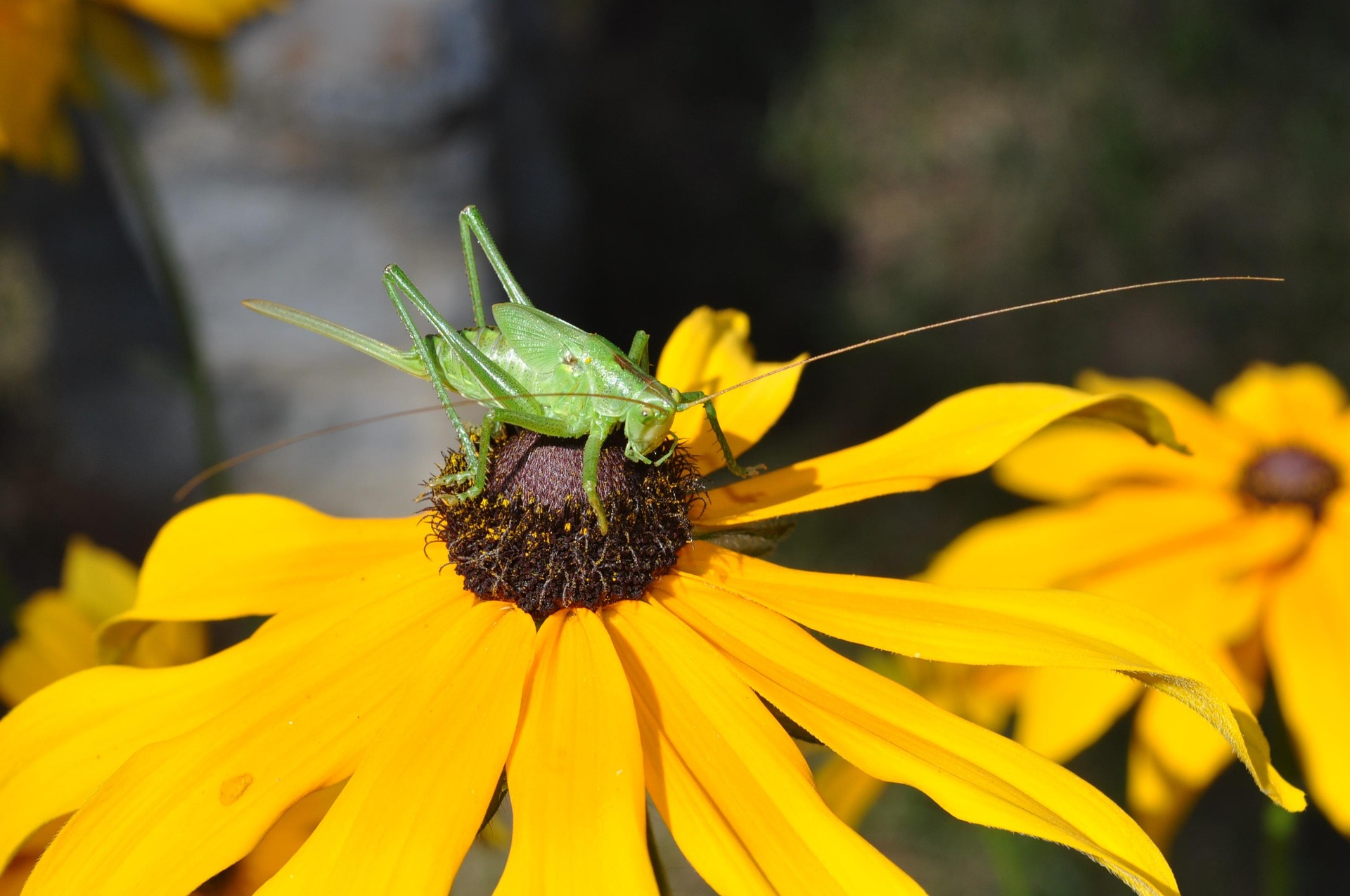
The question of grasshopper vs locust intrigues many people who wonder whether these insects represent different species or simply different behaviors of the same creature. In reality, a locust is a grasshopper – they belong to the same biological family and share identical genetics. The distinction between grasshopper vs locust lies not in taxonomy but in environmental response: certain grasshopper species undergo dramatic physical and behavioral transformations when population densities increase. Understanding grasshopper vs locust reveals a fascinating example of how environmental stress reshapes insects through density-dependent changes.
Table of Contents
What is a grasshopper?
A grasshopper is an insect belonging to the family Acrididae, commonly called short-horned grasshoppers due to their short antennae compared to other insect groups. Grasshoppers are found on every continent except Antarctica, filling ecological niches in grasslands, meadows, fields, and even deserts. They are primarily solitary insects, meaning they live independently rather than in groups, feeding on vegetation and minding their own business within their territories. Most grasshopper species number over 12,000 worldwide, making them among the most successful insects on Earth.
Grasshoppers feature powerful hind legs built for jumping, compound eyes providing excellent vision, and chewing mouthparts suited to consuming plant material. They produce sound through stridulation – rubbing their hind legs against their wings to create the familiar chirping associated with summer meadows. Most grasshoppers appear dull green or brown, providing camouflage in their native habitats. They have relatively short lifespans, typically a few months, and reproduce through eggs laid in soil. The solitary grasshopper, living independently and maintaining modest populations, is what most people encounter in nature.
What is a locust?
A locust is a swarming grasshopper – an insect that appears virtually identical genetically to solitary grasshoppers yet behaves entirely differently due to population density changes. When grasshopper populations increase dramatically in a localized area, individual insects undergo a process called density-dependent phenotypic plasticity, a scientific term meaning their physical form and behavior change in response to crowding. The solitary grasshopper transforms into a gregarious locust that seeks out other insects, forms massive swarms, and develops the drive to migrate across continents consuming everything in their path.
Not all grasshoppers can become locusts – only about 12-20 species out of the 12,000+ known species possess this transformation capability. These species include the desert locust, the migratory locust, and several others concentrated in Africa, the Middle East, and Asia. A single locust swarm can contain 400-600 million individuals per square kilometer and consume enough vegetation in one day to feed 35,000 people. Locusts are among history’s most destructive agricultural pests, mentioned in ancient texts as plagues that devastated civilizations. Understanding grasshopper vs locust is crucial for agricultural regions dealing with locust outbreaks.
Are locusts grasshoppers?
Yes – this is the crucial scientific insight that reframes the grasshopper vs locust question. Locusts are not a separate species; they are the same species as solitary grasshoppers, just in a different behavioral and physical state. No genetic modification occurs – a desert locust has identical DNA to its solitary grasshopper cousins. The only difference is environmental: crowding triggers physiological and behavioral changes that transform the insect. Grasshopper vs locust is therefore not a question of different creatures but rather different life expressions of the same creature responding to environmental pressure.
This understanding overturns a common misconception that has persisted for centuries – that locusts represent a distinct insect type separate from grasshoppers. Medieval texts describe locusts as if they were a separate plague species, and this misconception continues in popular media. Scientists only fully understood the grasshopper-to-locust transformation in the early 20th century. The discovery that a single species could exist in two radically different forms based on population density was revolutionary. Today, understanding that grasshopper vs locust is fundamentally about environmental response rather than taxonomy helps agricultural scientists predict and manage locust plagues.
Grasshopper vs locust: key differences
While grasshopper vs locust represent the same species, the physical and behavioral differences between solitary and swarming forms are dramatic. These transformations occur at multiple levels – morphological, physiological, and behavioral – creating what appears to be two entirely different insects despite identical genetics. Understanding grasshopper vs locust differences explains how one insect species adapts to radically different circumstances.
| Characteristic | Solitary Grasshopper | Swarming Locust |
| Behavior | Solitary, territorial, avoids other insects | Gregarious, seeks companions, forms swarms |
| Physical size | Smaller body size | Significantly larger, 30-40% bigger |
| Muscle development | Normal muscles for single jumping | Much stronger, more powerful muscles |
| Color and appearance | Dull green or brown, camouflaged | Bright vibrant colors, highly conspicuous |
| Reproduction drive | Normal mating behavior | Intensified reproductive urgency |
| Migration | Remain in native territory | Strong urge to migrate across continents |
| Feeding behavior | Selective, moderate feeding | Voracious, consume everything available |
| Genetic difference | – | None – identical DNA |
The transformation: grasshopper to locust
The mechanism triggering the grasshopper vs locust transformation involves a chemical cascade initiated by crowding. When solitary grasshopper populations reach critical density, physical contact between insects increases dramatically. This crowding stimulates the release of serotonin and other neurochemicals that fundamentally alter the insect’s physiology and behavior. The transformation can occur within hours or over a few generations, depending on species and environmental conditions. Grasshopper vs locust transformation is not instantaneous for individuals but rather a progressive change as populations consolidate and density increases.
Serotonin elevation triggers multiple cascading changes: color patterns darken and brighten dramatically, musculature enlarges and becomes more powerful, behavioral drives shift from territorial to gregarious, and feeding intensity increases exponentially. The locust loses all interest in avoiding others and instead actively seeks swarms. This behavioral reversal is complete – a newly-transformed locust will attract other grasshoppers to form larger groups, which triggers more transformations in those individuals. The cycle accelerates, creating exponentially growing swarms. Understanding grasshopper vs locust transformation explains why locust plagues can develop suddenly and why they prove so difficult to control – the insects are biologically driven to form and maintain massive groups.
Frequently asked questions
Can a locust transform back into a solitary grasshopper?
Yes, but only across generations. Individual locusts cannot transform back into solitary forms, but their offspring will revert to solitary grasshopper behaviors and physiology if population density decreases. When locust swarms disperse and surviving insects find themselves in low-density environments, their offspring will develop the solitary form rather than the gregarious locust form. This reversal takes a generation or two rather than occurring in individual insects. Understanding grasshopper vs locust shows that both forms represent adaptive responses to specific environmental conditions rather than permanent states.
Where are locusts found?
Locusts are primarily found in Africa, the Middle East, and parts of Asia, with desert locusts being the most economically significant species. Desert locust plagues affect approximately 20 percent of the world’s land surface and impact food security in some of the world’s poorest countries. The locust threat is not uniform globally – most grasshopper vs locust incidents serious enough to require agricultural intervention occur in a band spanning West Africa through Asia. Historical patterns show that El Nino cycles and climate patterns significantly influence when and where locust plagues occur, making prediction and prevention a major agricultural challenge.
How much can a locust swarm eat?
A single locust swarm containing 400-600 million insects per square kilometer can consume enough vegetation in one day to feed 35,000 people. The devastating impact occurs because locusts are indiscriminate – they consume crops, wild plants, and even tree leaves, leaving devastated landscapes behind. Grasshopper vs locust becomes an agricultural emergency when a small population in one location suddenly triggers swarming behavior, creating a plague that migrates across multiple countries consuming everything. One swarm can travel 140+ kilometers in a single day, making border control and agricultural defense extremely difficult.
Understanding the connection
The grasshopper vs locust distinction represents one of nature’s most remarkable adaptations – how a single insect species responds to environmental pressure by fundamentally transforming its physical form and behavior. This discovery fundamentally changed how scientists understand phenotypic plasticity and environmental influence on development. The realization that locusts were not separate insects but transformed grasshoppers revolutionized pest management strategies worldwide.
Recognizing grasshopper vs locust as expressions of the same species highlights the interconnectedness of ecology and development. Climate change, agricultural practices, and environmental conditions that trigger crowding in grasshopper populations directly influence whether locust plagues emerge. Preventing locust plagues requires understanding not just the insects themselves but the environmental conditions that trigger transformation. The study of grasshoppers, locusts, and their transformation continues yielding insights into how environmental stress reshapes living organisms at the physiological level, making this one of biology’s most compelling examples of nature’s adaptability.
Explore more about insect swarming behavior and locusts’ ecological impact at Scientific American’s exploration of locust transformation and swarming behavior for comprehensive scientific explanations and latest research.

