

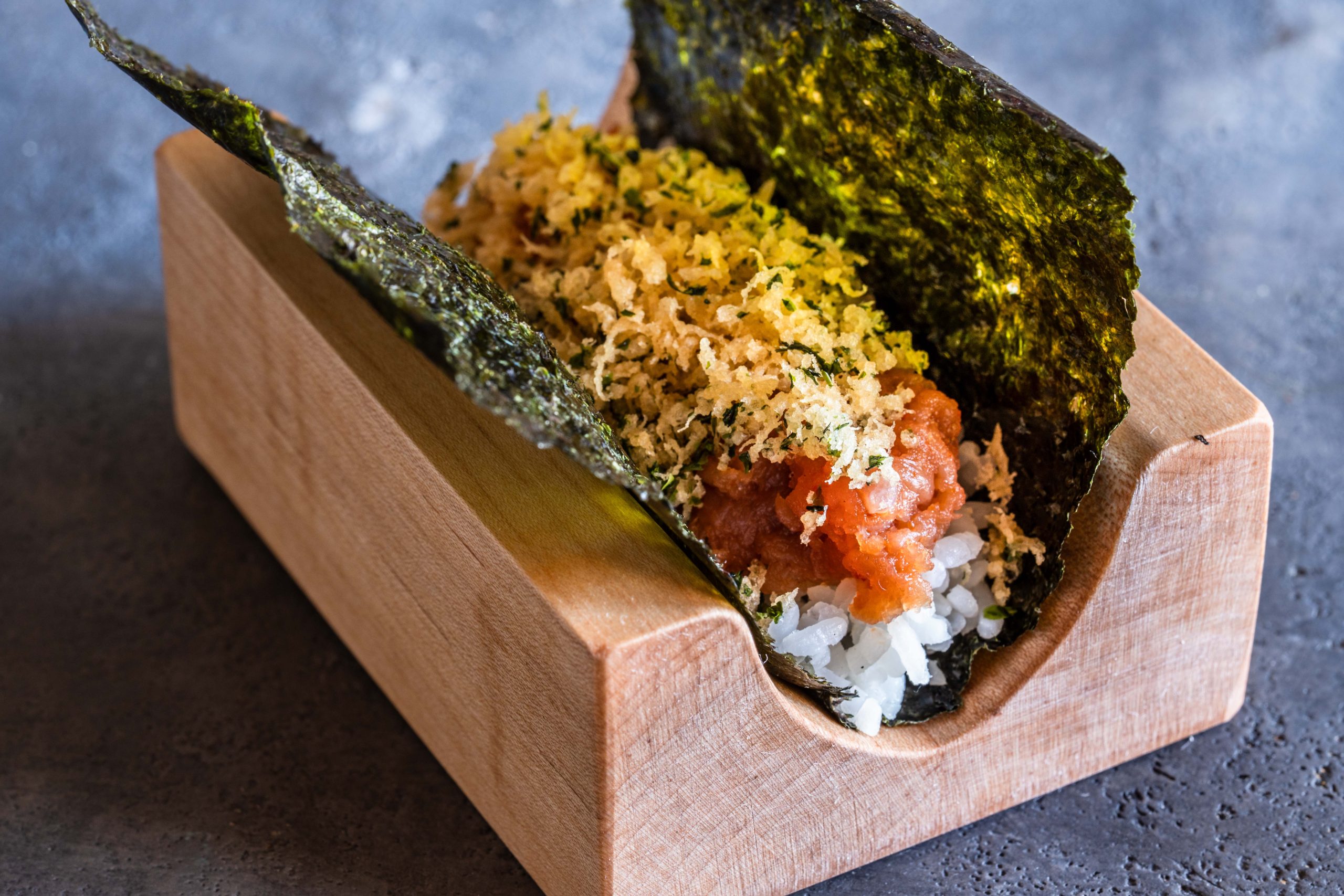
When exploring sushi options, understanding the difference between roll and hand roll sushi helps you order confidently and appreciate each preparation’s unique qualities. Roll sushi, known as maki, features ingredients wrapped in nori and sliced into individual pieces, while hand roll sushi, called temaki, is hand-rolled into a cone shape and eaten whole. The distinction between roll and hand roll sushi involves preparation methods, rice quantities, timing, and how the nori interacts with the rice – each factor affecting the eating experience significantly.
Table of Contents
What is roll sushi?
Roll sushi, or maki, is prepared by laying nori (seaweed sheet) on a bamboo mat, spreading vinegared rice across the nori, adding fillings in a horizontal line, and then using the mat to tightly roll the entire assembly into a cylinder. The resulting roll is firm and compact, perfect for slicing into 6-8 individual pieces that maintain their shape and presentation. Each piece displays the nori’s shininess on the outside and reveals the colorful cross-section of rice and ingredients when viewed from the end. Roll sushi’s cylindrical presentation makes it visually striking on a plate and represents what most people imagine when they think of sushi.
The roll sushi preparation offers several advantages: all pieces are uniform, the rice and nori stay intact through the slicing process, and the rolls can be prepared in advance and refrigerated until serving. Restaurants favor maki rolls because they can batch-prepare them, store them briefly, and serve them to multiple customers. The bamboo mat provides the structural support necessary for tight, consistent rolling that produces professional-quality results. Roll and hand roll sushi differ fundamentally in this respect – rolls prioritize uniformity and advance preparation.
What is hand roll sushi?
Hand roll sushi, or temaki, is prepared by hand without any equipment, creating a cone or tube shape rather than a cylinder. The chef places nori with the rough side facing inward, positions approximately one-quarter cup of rice on the upper-left corner at a 45-degree angle, adds fillings, and rolls the nori from the bottom-left corner upward and around to form a cone. The result resembles an ice cream cone – wide at the top, pointed at the bottom, uncut and impressive in its simple elegance. Hand rolls must be eaten immediately after preparation because the rice moisture begins softening the nori almost instantly.
The hand roll sushi experience is entirely different from maki rolls. The nori stays crispy and snappy because you eat it fresh, before the rice’s moisture compromises its texture. Hand rolls use significantly less rice than roll sushi – approximately one-third the rice coverage – making them lighter and allowing the nori’s flavor and texture to shine. The cone shape means you hold and eat it with your hands, adding a sensory and social dimension absent in the fork-and-chopstick experience of roll sushi. Hand roll sushi is fundamentally about immediacy and personalization.
Key differences: roll and hand roll sushi
The comparison between roll and hand roll sushi reveals distinctions in preparation, presentation, rice quantity, timing, and eating experience. These differences matter not just for restaurant service but for understanding how the fundamental sushi elements – nori, rice, and fillings – interact differently in each format. Roll and hand roll sushi both showcase Japanese culinary tradition but express it through contrasting approaches.
| Aspect | Roll Sushi (Maki) | Hand Roll Sushi (Temaki) |
| Shape | Cylindrical, sliced into 6-8 pieces | Cone-shaped, uncut, single piece |
| Preparation tool | Bamboo mat (makisu) | Hands only (no equipment) |
| Rice quantity | Full layer across entire nori sheet | ~1/3 coverage, concentrated on one side |
| Rice placement | Shiny side of nori faces outward initially | Rough side of nori faces inward; rice on upper corner |
| Nori condition when eaten | Slightly softened by rice moisture | Crispy and snappy (eaten immediately) |
| Eating method | Chopsticks or hands | Hands only |
| Preparation timing | Can be prepared in advance | Must be eaten immediately (within seconds) |
| Appearance | Colorful cross-section visible from end | Cone presentation, nori exterior showing |
| Availability | Widely available in all sushi restaurants | Common in Japanese restaurants; special orders elsewhere |
Preparation methods and timing
The preparation method is where roll and hand roll sushi diverge most dramatically. Roll sushi offers flexibility – a chef can prepare multiple rolls simultaneously, refrigerate them for up to several hours, and serve them to many customers. This scalability makes maki rolls ideal for restaurants managing volume service. Hand roll sushi requires immediate consumption, restricting how many can be prepared at once. Most sushi bars prepare hand rolls to order, one at a time, ensuring maximum freshness. The diner must eat each hand roll immediately – sushi chefs will tell customers that delaying even a minute compromises the nori’s satisfying crunch.
For home preparation, roll and hand roll sushi present different challenges. Maki rolls require a bamboo mat and practice developing the rolling technique that creates proper tension. Hand rolls require no equipment but demand speed and precision – the shape must be tight enough to hold while eating, which takes practice. Most home cooks find hand rolls simpler to start with since the learning curve involves fewer technical steps. Restaurants offer hand roll sushi as a dining experience because watching the chef rapidly hand-roll in front of you demonstrates skill and creates anticipation for the fresh product you are about to enjoy.
Nutritional considerations
Roll and hand roll sushi show measurable nutritional differences primarily due to rice quantity. A typical maki roll contains a full layer of rice – approximately 100-120 grams of cooked vinegared rice. A hand roll contains roughly 25-30 grams of rice, making it approximately 25-30 percent of a maki roll’s rice content. This difference matters significantly for people monitoring carbohydrate intake or calorie consumption. The comparison favors hand roll sushi for those seeking lighter portions, though both formats feature protein from fillings and beneficial minerals from nori.
The nori used in both formats provides iodine, calcium, and other trace minerals that make seaweed nutritionally valuable. Roll sushi typically conceals most of the nori inside the rice, while hand roll sushi displays nori prominently on the exterior, where you taste it directly. For nori flavor enthusiasts, hand roll sushi delivers stronger seaweed taste because the nori remains intact and uncovered. Both formats offer similar nutritional benefits from fillings like fish, vegetables, and avocado. The primary nutritional distinction between roll and hand roll sushi remains the rice quantity and resulting caloric difference.
Frequently asked questions
Why must hand roll sushi be eaten immediately?
The moisture from vinegared rice quickly softens nori, transforming the crispy texture into a chewy, limp sheet. Roll and hand roll sushi differ because maki’s tightly-packed structure and exterior rice layer provide some insulation, while hand roll’s direct rice-to-nori contact causes rapid moisture transfer. By eating a hand roll within 30-60 seconds of preparation, you experience the nori’s ideal texture – crisp, snappy, and satisfying. This textural requirement is why authentic sushi bars prepare hand rolls to order and why most restaurants offer them during high-traffic service periods when orders can be consumed immediately.
Can you prepare hand roll sushi in advance?
Technically yes, but the result deteriorates quickly. If you assemble hand rolls more than a few minutes before serving, the nori will begin softening and lose the textural contrast that makes hand rolls special. Roll and hand roll sushi represent opposite approaches to timing – maki improves or at least holds quality for hours, while temaki degrades within minutes. Home entertaining tip: prepare all components separately (cooked rice, fillings, nori cut into half-sheets) and let guests assemble hand rolls at the table, customizing to preference and eating immediately.
Which sushi type is more authentic?
Both roll and hand roll sushi are equally authentic Japanese preparations with deep historical roots. Maki rolls date back centuries in Japanese cuisine, as do hand rolls. Rather than debating authenticity, consider that each format serves different purposes. Roll sushi enables elegant plating and restaurant efficiency; hand roll sushi emphasizes craft, immediacy, and the eating experience. For more context on authentic sushi types and their histories, see Nigiri vs Sashimi: Sushi Types Explained for Beginners. Japanese restaurants offer both because they complement each other. Comparing roll and hand roll sushi’s authenticity misses the point – both represent legitimate, valued preparations in Japanese culinary tradition.
Choosing between roll and hand roll sushi
Your choice between roll and hand roll sushi depends on context and preference. For restaurant dining, order maki when you want elegant presentation and calm enjoyment. Order hand rolls when you want theater, craft-demonstration, and the experience of eating food at its absolute peak freshness. The two are not competing options – they are complementary experiences that showcase sushi in different ways. Understanding roll and hand roll sushi distinctions allows you to order intentionally, appreciating what each format offers rather than defaulting to one out of habit.
For home preparation, start with hand rolls since they require no special equipment and teach you how rice, nori, and fillings interact. Once comfortable, try maki rolls with a bamboo mat. Both skills deepen your appreciation for Japanese culinary technique. The comparison of roll and hand roll sushi ultimately celebrates the flexibility and sophistication of sushi as a craft – one ingredient set (rice, nori, fillings) creates entirely different experiences depending on technique and approach.
Learn more about sushi fundamentals and traditional Japanese preparation at Serious Eats’ comprehensive sushi guide covering all sushi types and techniques for detailed preparation instructions and cultural context.

