

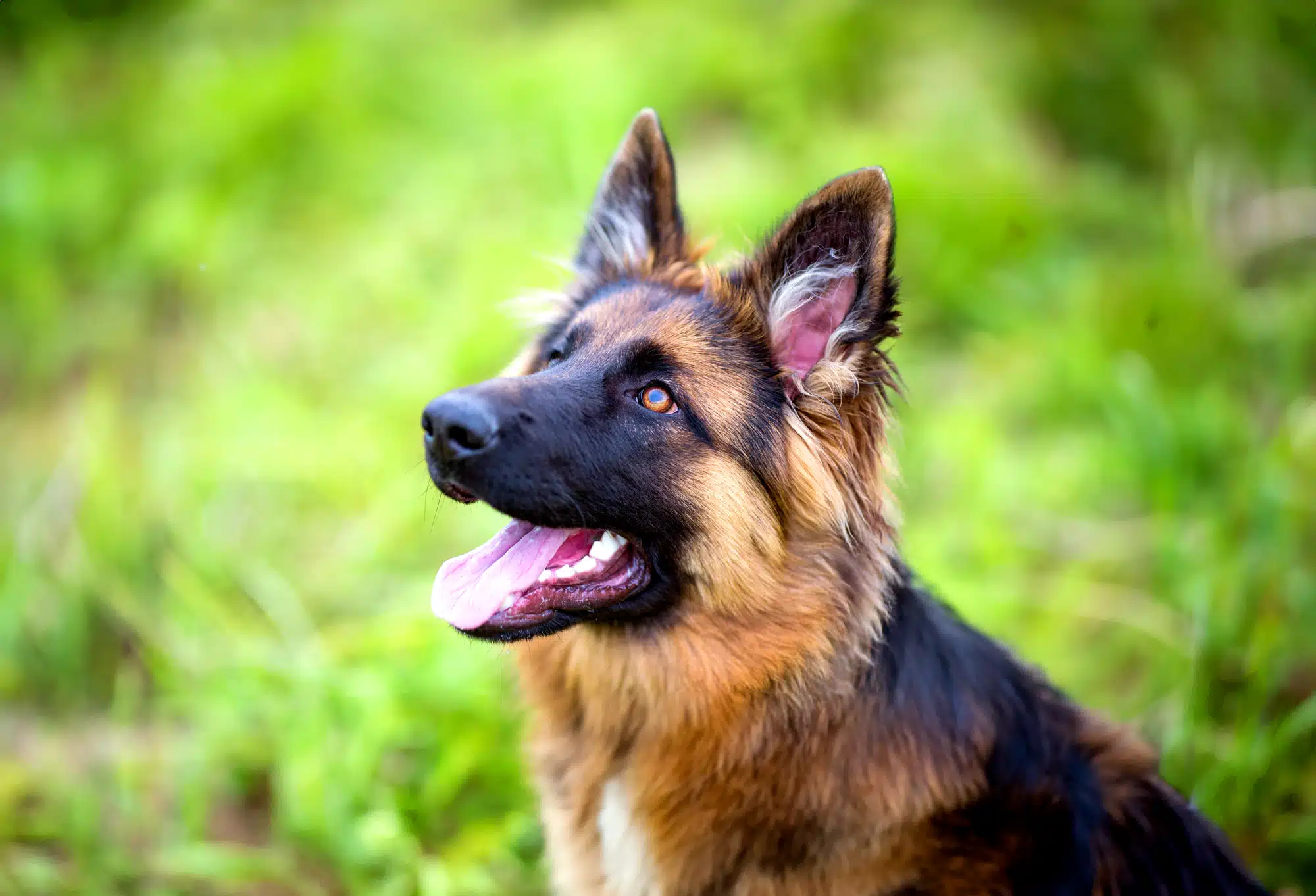
If you have ever wondered how the German Shepherd and Alsatian differ, here is the direct answer: they are one breed with two names. The German Shepherd Dog was founded in Germany in 1899, and “Alsatian” is the label British breeders adopted after the First World War to avoid anything that sounded German. A dog registered as an Alsatian in London and a German Shepherd in Chicago descended from the same foundation stock and was bred for the same type. What changed was politics, not the dog.
The confusion is understandable. Older relatives in the UK and Ireland still say Alsatian, while American owners, vets, and breed clubs almost always say German Shepherd. Search results mix German Shepherd and Alsatian listings freely, and some sellers even advertise “Alsatians” as if they were a separate, larger, or tougher dog. They are not, and a little history makes that clear.
Table of Contents
What is a German Shepherd?
The German Shepherd Dog, or Deutscher Schäferhund, is a large herding breed created in late 19th-century Germany. Its founder, Max von Stephanitz, was a former cavalry officer who admired the intelligence of local sheepdogs. In 1899 he bought a dog called Hektor Linksrhein at a show, renamed him Horand von Grafrath, and within a month co-founded the Verein für Deutsche Schäferhunde with Artur Meyer. The American Kennel Club’s history of the German Shepherd Dog explains how von Stephanitz blended Thuringian and Württemberg herding lines in pursuit of the ultimate German herder.
As industrial Germany needed fewer sheepdogs, von Stephanitz promoted the breed for police and military work. That flexibility is why German Shepherds now appear in search and rescue, detection, assistance roles, and ordinary family homes. Major standards describe a strong body slightly longer than it is tall, a double coat, erect ears, and a steady, confident temperament. In the United States, the American Kennel Club recognized the breed in 1908, and it has been one of the most registered breeds in the country for many years.
What is an Alsatian?
An Alsatian is a German Shepherd Dog under its former British name. After the First World War, anti-German feeling ran high, and breeders feared the word “German” would sink the dog’s popularity. In 1919 the UK Kennel Club registered the breed as the Alsatian Wolf Dog, borrowing the name of Alsace, the region on the border between France and Germany. The “wolf dog” part was later dropped, leaving plain Alsatian. So when people ask about the German Shepherd and Alsatian as if they were rival breeds, the honest reply is that the second name was a wartime rebrand of the first.
The Alsatian label spread through Britain, Ireland, and Australia, and it stuck in everyday speech for generations. Nothing about the dogs changed when the name did. Dogs registered as Alsatians descended from the same German foundation stock as their American and German cousins, with the same shape, coat, and working temperament. Today, “Alsatian” survives mainly as a colloquial or nostalgic word.
Why the German Shepherd and Alsatian names split
The split came from wartime decisions made on both sides of the Atlantic. In the United States, the American Kennel Club reacted to anti-German sentiment in 1917 by renaming the breed simply the Shepherd Dog, and the German Shepherd Dog Club of America became the Shepherd Club of America. By 1931, the AKC had restored the original name. Britain went further and held on far longer, which is why the German Shepherd and Alsatian naming gap is mostly a British story.
Hollywood polished the breed’s image in between. Rin Tin Tin, a puppy rescued from a First World War battlefield by American soldier Lee Duncan, became a film star in the 1920s, and Strongheart, another war veteran, also found fame on screen. Their success made the dog popular on both sides of the ocean, whatever it was called on paper.
In Britain, the Alsatian name held for decades. Breed enthusiasts campaigned for a return, and in 1977 the Kennel Club agreed to register the dogs as German Shepherd Dogs again. Even then, the word Alsatian stayed in parentheses in the official breed name until 2010. The body now operates as the Royal Kennel Club. That long overlap explains why the German Shepherd and Alsatian terms still coexist in British homes.
- 1899: Horand von Grafrath becomes the first registered German Shepherd Dog
- 1908: The American Kennel Club recognizes the breed
- 1917: The AKC renames it the Shepherd Dog
- 1919: The UK Kennel Club registers it as the Alsatian Wolf Dog
- 1931: The German Shepherd Dog name is back in use at the AKC
- 1977: The UK returns to the German Shepherd Dog name
- 2010: “(Alsatian)” is removed from the UK breed name
German Shepherd and Alsatian traits compared
Because the German Shepherd and Alsatian are the same animal, a comparison table mostly shows where the names differ, not the dogs. The size, coat, colour, and health rows below apply equally to both labels. Heights combine the Royal Kennel Club ideal with the typical ranges found across major breed standards.
| Feature | German Shepherd | Alsatian |
| Name origin | Translation of Deutscher Schäferhund | Named after Alsace, a French-German border region |
| Name introduced | 1899, Germany | 1919, UK Kennel Club (as Alsatian Wolf Dog) |
| Where the name is common | United States, Germany, most of the world | UK and Ireland, older usage in Australia |
| Official status today | Registered breed name | Informal or historical term only |
| Height (males) | About 60-65 cm (24-26 in), UK ideal 63 cm | Identical |
| Height (females) | About 55-60 cm (22-24 in), UK ideal 58 cm | Identical |
| Weight | Males 30-40 kg, females 22-32 kg | Identical |
| Coat | Double coat, short or long variety | Identical |
| Standard colours | Black and tan, black and gold, sables, bi-colour, black, grey | Identical |
| Lifespan | Usually 10 years or more | Identical |
| Recommended health checks | Hip and elbow scores, degenerative myelopathy DNA test, eye screening | Identical |
If a seller tells you an “Alsatian” is bigger, calmer, or more protective than a German Shepherd, treat the claim with suspicion. Real variation among German Shepherd and Alsatian dogs comes from bloodlines, breeding goals, and the individual dog, not the word printed on the advert.
Myths that cling to the Alsatian label
The word “wolf” in the 1919 name did lasting damage, and the German Shepherd and Alsatian story took a darker turn because of it. Many people assumed the Alsatian Wolf Dog carried real wolf blood, and that belief travelled. In Australia, graziers feared the dogs would breed with dingoes and produce a clever sheep killer, and the federal government banned imports of the breed in 1929. The ban was suspended for a 12-month trial from November 1972 and lifted for good in 1974.
None of those fears had a basis in the breed’s history. Von Stephanitz built the German Shepherd from domestic German herding dogs, not wolves. The difference between the German Shepherd and Alsatian was never genetic, yet the scarier-sounding name shaped public opinion for half a century. Some of that reputation still lingers in the idea that an Alsatian is a guard dog first and a family dog second.
Another myth is that a white Alsatian is a rarer purebred variety. White dogs do turn up in the breed, but the Royal Kennel Club lists white, blue, and liver as highly undesirable colours, and the AKC standard disqualifies white dogs from the show ring. The colour is not a sign of special breeding under either name.
What really varies in German Shepherd and Alsatian dogs
If the names do not separate the dogs, what does? Mostly breeding purpose. Show lines are bred to match a conformation standard and do well in the ring, while working lines are selected for drive, nerve, and trainability in police, protection, and dog sport work. The breed’s outline, especially the slope of the back and the angle of the hindquarters, has been debated among breeders for decades.
These differences matter for owners. A high-drive working-line dog may need far more structured training than a calmer companion from a pet-focused breeder. Across all lines, the Royal Kennel Club suggests more than two hours of exercise a day and grooming more than once a week, since the double coat sheds heavily. Hip dysplasia is a known problem, affecting close to one in five dogs in some studies, so ask for hip and elbow scores and a degenerative myelopathy DNA result.
That is where the German Shepherd and Alsatian question becomes practical. Whichever name a breeder uses, your checklist should stay the same: health test results, the temperament of both parents, and what the line was actually bred to do.
Frequently asked questions
Is an Alsatian bigger than a German Shepherd?
No. Size depends on sex and bloodline, not the name. The Royal Kennel Club’s ideal height is 63 cm (25 in) for males and 58 cm (23 in) for females, with 2.5 cm (1 in) tolerated either way. The German Shepherd and Alsatian share that single standard, so no size gap exists between them.
Why do British people call German Shepherds Alsatians?
After the First World War, the UK Kennel Club renamed the breed the Alsatian Wolf Dog in 1919 to escape anti-German feeling. The German Shepherd Dog name returned in 1977, but “(Alsatian)” stayed in the official name until 2010, so several generations grew up with it. That is why the German Shepherd and Alsatian names are both still heard across the UK.
Are Alsatians part wolf?
No. Despite the old “wolf dog” name, the breed was developed from German herding dogs by Max von Stephanitz starting in 1899. The wolf association came from a wartime naming choice, and it fed fears such as Australia’s 1929 import ban, which stayed in place until 1974.
Calling the dog by either name
Think of the German Shepherd and Alsatian as one breed with two histories. Use “German Shepherd” for registration papers, vet records, and breed club searches, since it is the official name almost everywhere. Accept “Alsatian” as a friendly regional or older term, but never as proof of a different size, temperament, or bloodline.
When you are choosing a puppy, a simple framework works: ignore the label, check health scores, meet both parents, and match the line’s energy to your lifestyle. Do that, and the German Shepherd and Alsatian debate settles itself, because the dog in front of you matters more than the word on its paperwork.

