

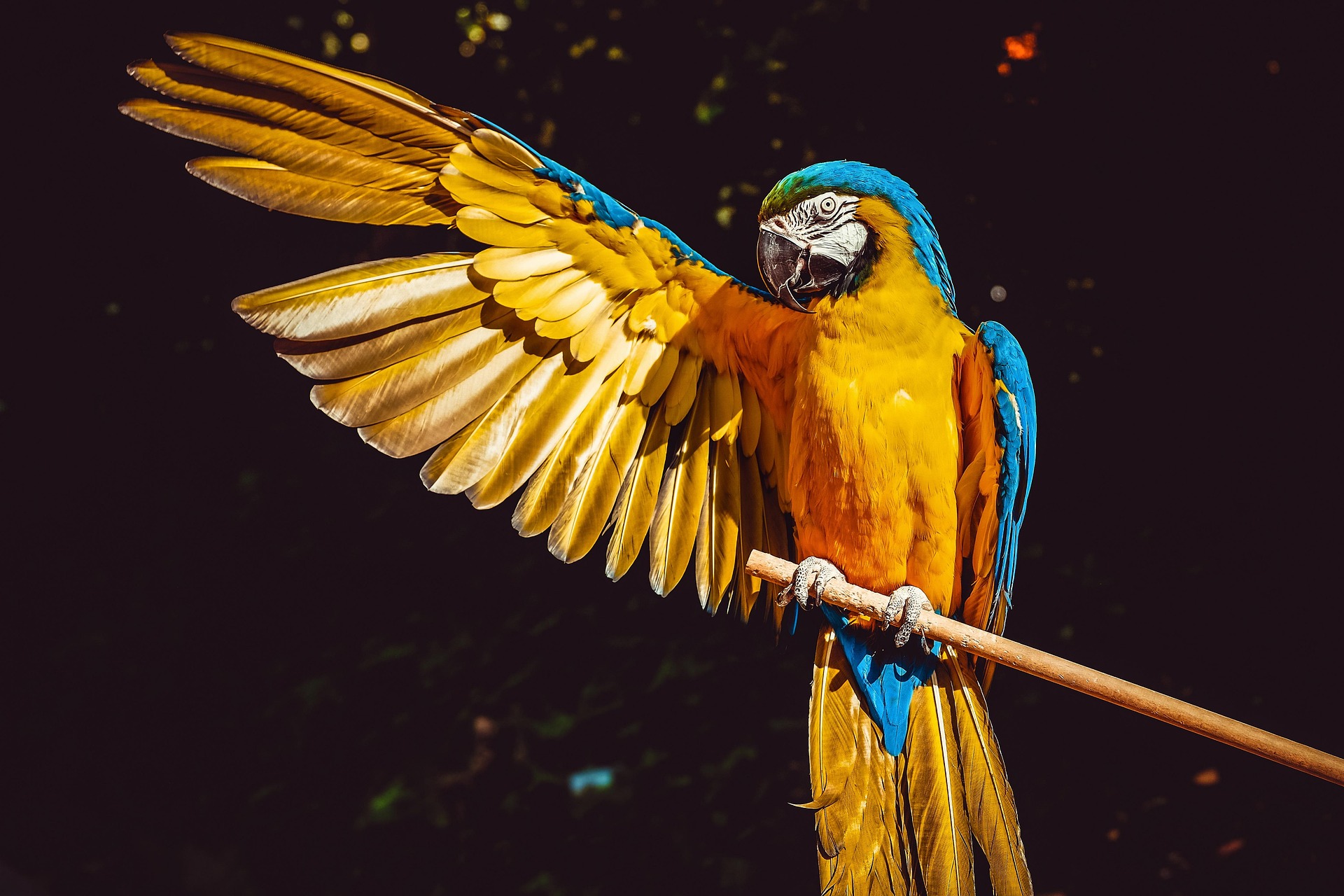
The question of macaw or parrot often confuses bird enthusiasts because macaws are technically a type of parrot, not a separate species. Understanding whether you’re looking at a macaw or parrot involves recognizing that all macaws are parrots, but not all parrots are macaws. This distinction matters significantly for potential bird owners, wildlife observers, and anyone curious about avian diversity. Learning the characteristics that define macaw or parrot will help you identify these birds correctly and understand their unique care requirements and behaviors.
Table of Contents
What is a Parrot?
A parrot is any bird belonging to the order Psittaciformes, with the largest family being Psittacidae, which contains approximately 333 species. The parrot family encompasses tremendous diversity, including macaws, cockatoos, parakeets, lovebirds, lorikeets, and true parrots. All members of this order share distinctive characteristics: a strong, hooked curved beak where the upper mandible extends over the lower, short necks, a stocky build, and remarkable intelligence. Parrots inhabit tropical and subtropical regions worldwide, with particularly high diversity in Central and South America, Africa, Southeast Asia, and Australia.
Parrots are predominantly omnivorous, with diets varying by species. Most eat seeds, nuts, fruits, flowers, buds, and occasionally insects. Some species like pygmy parrots specialize in lichens and fungus. All parrots possess exceptional cognitive abilities and vocal talents, making them popular in both wild observation and captive settings. Their lifespans vary considerably by species, ranging from 20 to 40 years for smaller parrots, though some species live considerably longer.
What is a Macaw?
A macaw is a large, colorful parrot belonging to specific genera within the family Psittacidae, classified among six genera: Ara, Anodorhynchus, Cyanopsitta, Primolius, Orthopsittaca, and Diopsittaca. Approximately 18 macaw species exist, making them a relatively small subset of the broader parrot family. According to National Geographic, macaws are brilliantly colored members of the parrot family found primarily in Central and South America, where they inhabit tropical rainforests, river edges, and woodland canopies.
The most distinctive feature separating a macaw or parrot involves the presence of bare facial patches in macaws – areas of skin without feathers around the eyes and face that vary in size and pattern between species. This characteristic helps identify macaws instantly among other parrots. Macaws range dramatically in size, from small Hahn’s macaws at about 12 inches to hyacinth macaws reaching 40 inches in length. Weight ranges from 130 grams in the smallest species to 1.7 kilograms in the largest. All macaws are highly social, typically pair-bonded within flocks of 10 to 30 individuals, with loud vocalizations that echo through forest canopies.
How Macaws Differ from Other Parrots
| Feature | Macaw | Other Parrots |
| Family Classification | Specific genera within Psittacidae | Broader Psittacidae family (333 species) |
| Size Range | 12 – 40 inches, 130g – 1.7kg | Highly variable, many under 12 inches |
| Distinctive Feature | Bare facial patches around eyes | Fully feathered faces (most species) |
| Tail Length | Extremely long, colorful tail | Varies by species, often shorter |
| Geographic Origin | Central and South America exclusively | Tropical/subtropical worldwide |
| Lifespan | 30 – 50+ years, up to 70-80 in captivity | 20 – 40 years (varies by species) |
| Cage Size Requirement | Minimum 30″ x 40″ recommended | Size-dependent, generally smaller |
| Dietary Needs | Higher fat requirements | Varies by species |
| Vocalization Level | Extremely loud, high-pitched | Loud to moderate, species-dependent |
| Social Structure | Highly social in flocks of 10-30 | Highly social, size varies |
| Beak Strength | Exceptionally powerful, can crack nuts | Strong, but less crushing power |
The distinction between macaw or parrot becomes clearer when examining specific traits. Macaws consistently rank among the largest parrots, while many other parrots remain small enough to fit in a human hand. The bare facial skin patches are unique to macaws and have no equivalent in other parrot types. Macaw or parrot comparisons regarding lifespan show macaws as exceptional long-lived species, often reaching 50 years or more in the wild and occasionally 70-80 years in captivity, contrasting with the 20-40 year range for most other parrots.
Size, Appearance, and Physical Traits
Macaws display the most dramatic size range within the parrot family, from the delicate Hahn’s macaw weighing just over 4 ounces to the massive hyacinth macaw weighing nearly 4 pounds. This variation exceeds that of most other parrots, where size differences among species are more modest. Their plumage represents some of nature’s most vibrant color combinations – brilliant blues, reds, yellows, and greens adorn different species in spectacular patterns. The characteristic bare facial patches vary by species: some display bright white skin with minimal markings, while others show colorful bare areas adding to their striking appearance.
Another key identifying trait involves their long tail feathers, which can extend for 18 inches or more on large species. This tail-to-body ratio surpasses that of most other parrots, creating the dramatic silhouette people recognize instantly. Their beaks are exceptionally powerful, capable of cracking the hardest nuts and seeds. When comparing macaw or parrot physical characteristics, the strength difference becomes apparent – macaw beaks are broader and more powerful than those of smaller parrot species, reflecting their specialized diet and ecological role as seed dispersers in tropical rainforests.
Care Requirements and Lifespan Considerations
For potential pet owners, understanding macaw or parrot requirements proves essential before purchase. Macaws demand significantly larger housing than most parrots – a cage at least 30 inches deep by 40 inches wide is the minimum recommendation, with larger being preferable. They require substantial out-of-cage time, ideally several hours daily for flight and mental stimulation. Their diet differs from many other parrots in requiring higher fat content, with nuts and seeds comprising a larger portion than for smaller parrot species.
The lifespan difference between macaw or parrot ownership represents one of the most significant considerations. Acquiring a macaw means committing to potentially 50 years or more of care – longer than many human relationships. This surpasses the 20-40 year commitment required for most other parrots. Additionally, macaws are exceptionally loud, with calls reaching 130 decibels, making them unsuitable for apartment living or noise-sensitive neighborhoods. Their intelligence rivals that of a four-year-old child, demanding extensive mental enrichment through puzzles, toys, and social interaction. Neglecting these needs leads to behavioral problems including feather plucking and aggression.
Frequently Asked Questions
Are all macaws parrots or are all parrots macaws?
All macaws are parrots, but not all parrots are macaws. Macaws represent a specific, smaller subset of the broader parrot family. The relationship is hierarchical: parrots are the larger category containing macaws and many other bird types including cockatoos, parakeets, and lories.
What makes a macaw or parrot identifiable in the wild?
The most reliable identifier is size and the distinctive bare facial patches on macaws. If you see a large, colorful bird with bare skin around its eyes and a very long tail, you’re likely observing a macaw or parrot of the macaw type. Most other parrots are smaller and fully feathered on the face.
Can you keep a macaw or parrot as a pet with similar requirements?
Not really. While both are parrots and share some care basics, macaw or parrot pet ownership differs significantly. Macaws require more space, higher fat diets, more social interaction, and result in longer commitments. Smaller parrots are often more suitable for first-time bird owners due to lower space requirements and shorter lifespans.
Choosing Between a Macaw or Parrot as a Pet
Deciding between a macaw or parrot as a companion bird requires honest self-assessment regarding space, time, noise tolerance, and long-term commitment. Macaws suit experienced bird owners with spacious homes, high noise tolerance, and the financial resources for specialized veterinary care and diet. Their intelligence and social needs demand active engagement. Other parrots offer more flexibility for apartment dwellers or those wanting shorter time commitments. Regardless of macaw or parrot choice, all parrots are highly intelligent social animals requiring years of dedicated care, enrichment, and attention for optimal wellbeing and happiness.

