

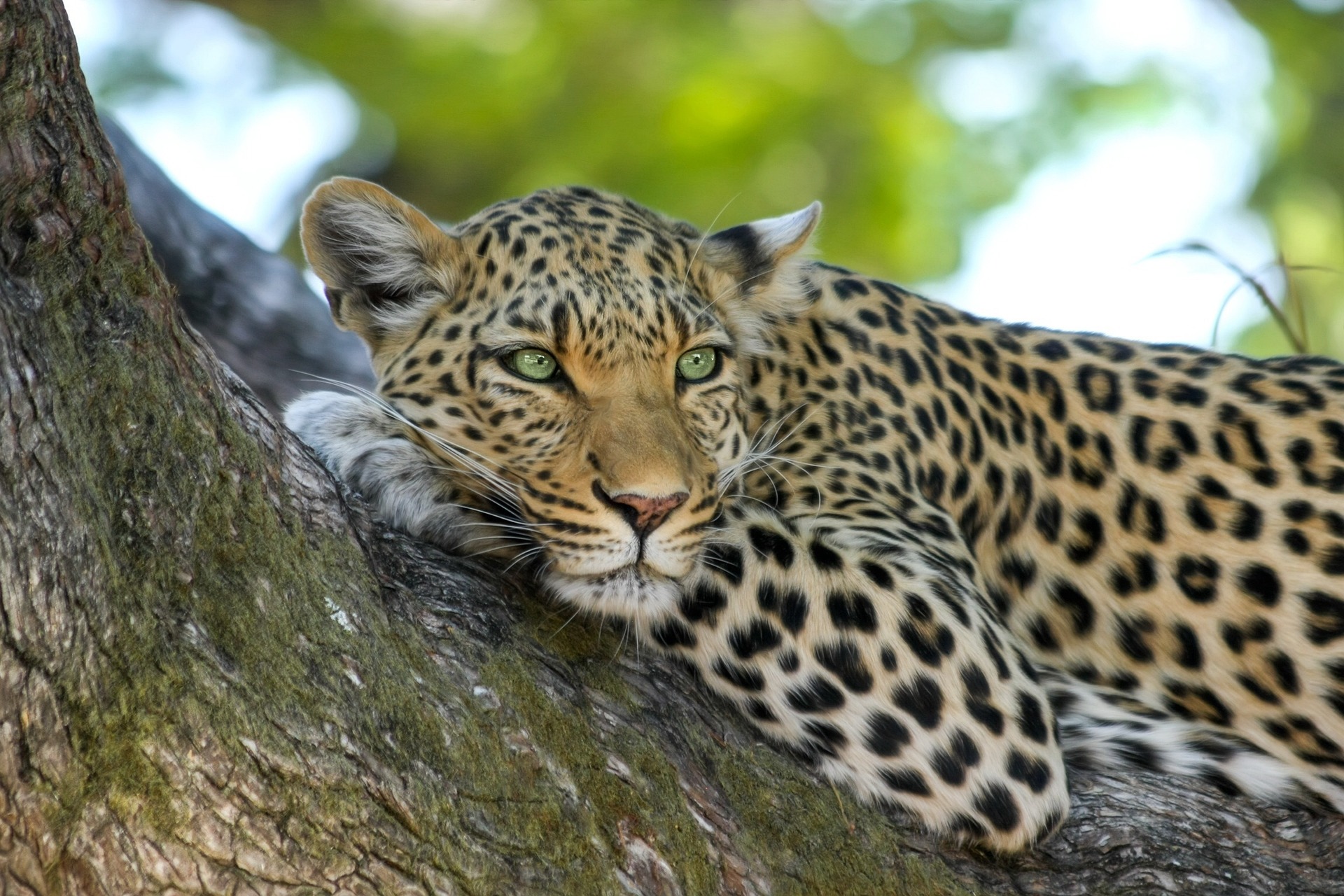
Cheetah vs leopard is one of the most common wildlife identification questions, and one of the most understandable to get wrong. Both cats live in Africa, both have spotted coats, and both are graceful predators. But they belong to different genera, hunt in completely different ways, and behave differently once you know what to look for. Understanding the cheetah vs leopard distinction is easier than most people expect.
Table of Contents
Two big cats often confused: cheetah vs leopard
Cheetah vs leopard is fundamentally a comparison between speed and power. Cheetahs are the world’s fastest land animals, built for short explosive sprints across open grassland. Leopards are the more powerful of the two per pound of body weight, built for stealth, ambush, and climbing trees while carrying prey heavier than themselves.
The physical similarities that cause the confusion are limited to the surface: both have tan or yellow coats with dark spots, both are lean big cats, and both live in overlapping parts of Africa. Once you know the specific markers to check (tear marks on the face, spot pattern, body build, and behavior), the cheetah vs leopard identification takes about two seconds. Zoologists use the same handful of features every time, and no serious observer confuses the two once they know what to look for.
What is a cheetah?
A cheetah (Acinonyx jubatus) is a large cat native to sub-Saharan Africa, with a small isolated population in Iran. It is famous for one specific superlative: the cheetah is the fastest land animal on Earth, capable of reaching speeds of 70 to 75 miles per hour (112 to 120 km/h) in short bursts of about 20 to 30 seconds before overheating.
Every physical feature of a cheetah has been shaped by that need for speed. The body is slender and lightweight (85 to 140 pounds), with a small round head, a deep chest, long legs, and a flexible spine that bows and extends like a spring during full sprints. The claws are semi-retractable, unlike most cats, giving the cheetah traction like a runner’s cleats. The face has distinctive black “tear marks” running from the corners of the eyes down to the mouth, thought to reduce glare from the sun during high-speed daytime chases.
Cheetahs are diurnal hunters (active during the day, unusual among big cats) and rely almost entirely on the sprint to catch prey. In the cheetah vs leopard comparison, the cheetah is the specialist runner, not the generalist survivor.
What is a leopard?
A leopard (Panthera pardus) is a large cat with the widest range of any big cat outside of humans: Africa, the Middle East, and much of Asia including India, Sri Lanka, Iran, China, and the Russian Far East. It is a member of the Panthera genus, which also contains lions, tigers, and jaguars, meaning the leopard can roar (though it does so less than lions or tigers).
A leopard’s build is muscular and stocky rather than aerodynamic: 66 to 176 pounds, with powerful shoulders, a broader head, and shorter, thicker legs than a cheetah. The claws are fully retractable, and the leopard uses them for climbing as well as for gripping prey. The spot pattern is not solid dots but rosettes: clusters of small spots arranged in a rough ring around a lighter center. National Geographic’s animal profiles cover the full geographic range and subspecies detail for anyone interested in leopard variation across the world.
Leopards are primarily nocturnal or crepuscular (active at dawn and dusk), ambush hunters, and famously strong tree climbers. In the cheetah vs leopard comparison, the leopard is the stealth predator built for versatility across almost any habitat.
Cheetah vs leopard: physical differences
When you compare cheetah vs leopard in physical terms, several features distinguish them at first glance. This table lays out the identification checklist a wildlife guide runs through:
| Feature | Cheetah | Leopard |
|---|---|---|
| Genus | Acinonyx | Panthera |
| Weight | 85 to 140 lbs (40 to 65 kg) | 66 to 176 lbs (30 to 80 kg) |
| Body build | Slender, lightweight, aerodynamic | Muscular, stocky, powerful |
| Head | Small and round | Larger and broader |
| Face markings | Distinctive tear marks from eyes to mouth | No tear marks |
| Spot pattern | Solid round black spots | Rosettes (rings of spots around a lighter center) |
| Claws | Semi-retractable | Fully retractable |
| Top speed | 70 to 75 mph (112 to 120 km/h) | About 36 mph (58 km/h) |
| Can roar | No (only purrs, chirps, hisses) | Yes |
| Tree climbing | Poor | Excellent (hoists prey up trees) |
The tear marks alone are usually enough to settle the cheetah vs leopard question in one glance. If the cat has dark lines running from its eyes down to its mouth, it is a cheetah. If not, it is almost certainly a leopard.
Cheetah vs leopard: hunting, behavior, and habitat
Beyond the physical checklist, the cheetah vs leopard comparison plays out in every aspect of how the two animals live in the wild.
Hunting style. Cheetahs hunt by spotting prey from a distance, stalking to within 100 to 200 meters, and then launching a full sprint. The chase lasts 20 to 60 seconds and ends either with a successful catch or with the cheetah collapsing in exhaustion. Success rates are relatively high (around 40 to 50 percent), but the cost of failure is severe. Leopards hunt by stealth: they stalk to within a few meters of prey, then attack in a single explosive lunge and use overwhelming strength to bring the animal down. Leopards routinely kill prey heavier than themselves and drag it up into a tree to protect the kill from lions and hyenas.
Activity patterns. Cheetahs hunt primarily during the day, an unusual choice among big cats but one that helps them avoid direct competition with lions and leopards, both of which are more nocturnal. Leopards are active at dawn, dusk, and through the night, and rest during the hot midday hours. This basic split in activity time is one of the practical reasons cheetah vs leopard sightings on safari happen at different points in the day.
Habitat. Cheetahs prefer open grasslands and semi-arid savannah with room to sprint. Leopards adapt to almost any habitat: dense forest, mountain slopes, savannah, semi-desert, and even the edges of human settlements. This adaptability is why leopards have the widest range of any big cat and cheetahs have one of the narrowest.
Cheetah vs leopard in conservation terms
The cheetah vs leopard comparison looks very different from a conservation perspective. Both species are declining, but the pressures on each are different in kind and severity.
Cheetahs are classified as Vulnerable by the IUCN, with an estimated 7,100 individuals remaining in the wild. The species has already gone extinct across most of its historical Asian range; only a small population in Iran survives outside sub-Saharan Africa. Cheetahs face pressure from habitat loss, low genetic diversity (the entire species passed through a severe population bottleneck thousands of years ago), and conflict with farmers who lose livestock to them.
Leopards range across a much larger geographic area and are more populous overall, but several subspecies are critically endangered. The Amur leopard of the Russian Far East and northeast China has fewer than 100 individuals in the wild; the Javan leopard is critically endangered; the Arabian leopard is functionally extinct across most of its former range. African leopard populations are still relatively healthy in some regions but declining in most. In the cheetah vs leopard conservation picture, cheetahs are the more uniformly threatened species and leopards the more locally variable one.
Frequently asked questions
Can a cheetah kill a leopard, or vice versa?
In a direct fight, a leopard would almost always win. Leopards are heavier, more powerfully built, have full-strength retractable claws, and are much more experienced in close combat with other predators. Cheetahs are specialized sprinters with lightweight bodies and rarely fight if they can avoid it. In the wild, cheetahs actively avoid leopards specifically because a losing encounter would be fatal. The cheetah vs leopard mismatch in fighting ability is one of the reasons cheetahs prefer the daylight hunting window when leopards are less active.
Is a cheetah technically a big cat?
By popular definition, yes – cheetahs are usually included among the big cats along with lions, tigers, leopards, and jaguars. By strict taxonomic definition, no – “big cat” technically refers only to species in the Panthera genus (which can roar), and the cheetah belongs to Acinonyx. This taxonomic detail is one of the technicalities that emerges when discussing cheetah vs leopard classification, because leopards are true big cats and cheetahs are big-cat-like but genetically distinct.
How can I tell a jaguar from a leopard from a cheetah at a glance?
Three quick checks. First, tear marks: dark lines running from eyes to mouth mean cheetah, absent means leopard or jaguar. Second, rosette shape: leopard rosettes are ring-shaped and empty inside; jaguar rosettes are similar but often have small spots inside the ring. Third, geography: jaguars live only in the Americas, so if you are in Africa or Asia, it is not a jaguar. The cheetah vs leopard comparison is the tricky one because their ranges overlap in Africa; jaguars are always somewhere else on the map.
Recognizing them next time
The cheetah vs leopard question has a fast answer once you know the markers. Check the face: tear marks equal cheetah. Check the spots: solid means cheetah, rosettes mean leopard. Check the build: lightweight and slender equals cheetah, muscular and stocky equals leopard. Check the behavior if you can: sprinting in daylight is cheetah territory, ambushing from a tree at dusk is leopard territory. Any of these features alone usually settles the cheetah vs leopard identification, and taken together they are unambiguous. The two cats look similar only until you know what to look for.

