

Choosing between traditional lighting types often comes down to the classic debate of incandescent vs fluorescent bulbs. While both have lit our homes and workspaces for decades, they generate light through completely different physical processes that dramatically affect their efficiency, light quality, and lifespan.
Table of Contents
| Feature | Incandescent Bulbs | Fluorescent Bulbs (Linear & CFL) |
|---|---|---|
| Operating Mechanism | Heats a tungsten filament until it glows | Excites mercury vapor to make phosphor glow |
| Luminous Efficacy | 10 to 18 lumens per watt | 50 to 100 lumens per watt |
| Average Lifespan | 750 to 2,000 hours | 7,000 to 15,000 hours |
| Color Rendering (CRI) | 100 (Perfect natural rendition) | 70 to 90 (Varies by phosphor mix) |
| Dimming | Simple with standard resistive dimmers | Requires specialized ballasts and dimmers |
| Hazardous Materials | None (inert gas, glass, metal) | Contains toxic mercury vapor |
Incandescent vs Fluorescent: Core Differences at a Glance
When you evaluate incandescent vs fluorescent lighting, the central trade-off is light quality versus energy economy. Traditional incandescent bulbs produce a warm, continuous spectrum of light with flawless color rendering. However, they waste the vast majority of their electricity as radiant heat rather than visible light.
Fluorescent tubes and compact fluorescent lamps (CFLs) were developed specifically to address that energy waste. A fluorescent lamp converts electrical current into light far more efficiently than an incandescent bulb can. In contrast, fluorescent options introduce complexity: they contain hazardous materials, often require warm-up times, and can produce harsher light.
Understanding the incandescent vs fluorescent comparison requires looking past the fixture to see how each bulb converts electricity into illumination.
How Do Incandescent and Fluorescent Light Bulbs Actually Work?
The fundamental divide in incandescent vs fluorescent technology lies in thermal radiation versus gas discharge physics. One system relies on pure heat, while the other uses electrical excitation of gas atoms.
Incandescent Operation: Light Through Resistance and Heat
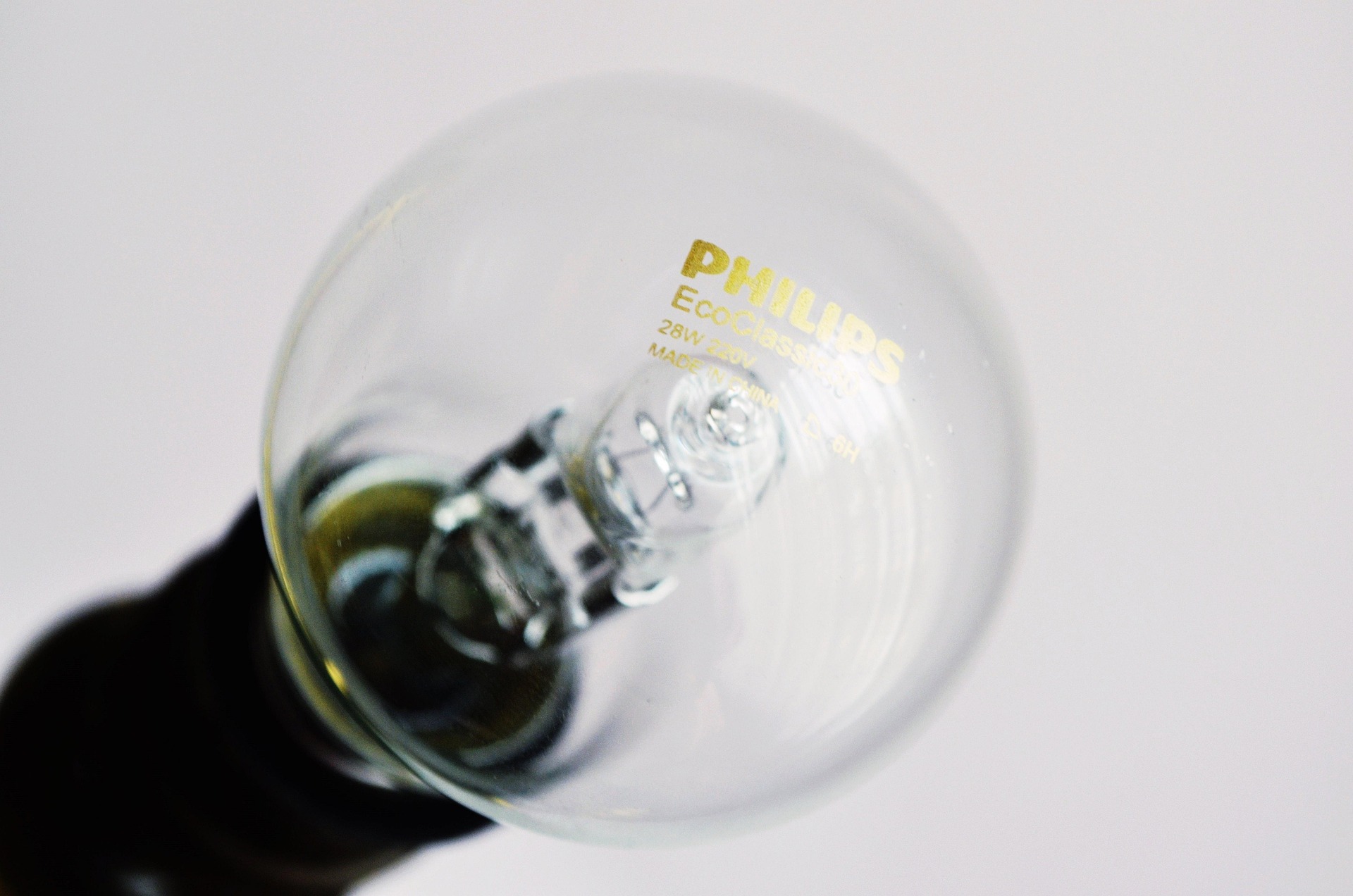
An incandescent light bulb works on the principle of incandescence, which is the emission of light caused by heating an object. Inside an airtight glass enclosure filled with an inert gas like argon or nitrogen, a thin tungsten filament connects to the electrical circuit.
When electric current flows through the filament, electrical resistance forces the tungsten to reach temperatures above 2,000 degrees Celsius. At this extreme temperature, the wire glows white-hot, casting off visible illumination. Because the metal is enclosed in an inert environment, it does not instantly combust. Yet, the intense heat gradually evaporates the tungsten over time, eventually causing the filament to snap and burn out.
Fluorescent Operation: Gas Excitation and Phosphor Conversion
Fluorescent lighting abandons resistive heating in favor of a two-step gas discharge method. A sealed glass tube contains a low-pressure mixture of noble gas and a small amount of mercury vapor.
An electric current flows through the gas, controlled by an internal or external ballast. This current excites the mercury atoms, causing them to emit invisible ultraviolet (UV) radiation. The interior of the glass tube features a specialized phosphor coating. When the ultraviolet rays strike this phosphor layer, the compounds fluoresce, absorbing the UV energy and re-emitting it as visible light.
Because the mechanism relies on atomic excitation rather than extreme heat, fluorescent tubes remain much cooler during operation. This fundamental difference explains why incandescent vs fluorescent performance curves diverge so sharply in efficiency.
Energy Efficiency and Long-Term Operating Costs
Energy efficiency highlights the most significant disparity in the incandescent vs fluorescent debate. Lighting efficiency is measured by luminous efficacy, which describes how many lumens of visible light a bulb generates for every watt of electrical power consumed.
Incandescent bulbs have a notoriously poor luminous efficacy, typically producing only 10 to 18 lumens per watt. Around 90% to 95% of the electrical energy supplied to an incandescent bulb escapes as infrared heat rather than visible light. For example, generating 800 lumens of light requires a standard 60-watt incandescent bulb.
Fluorescent fixtures achieve a luminous efficacy of 50 to 100 lumens per watt. A compact fluorescent lamp can produce the same 800 lumens using only 13 to 15 watts. As a result, running fluorescent fixtures cuts power consumption by roughly 75% compared to incandescent equivalents.
That efficiency gap dramatically alters operating costs over time. Even though incandescent bulbs historically carried lower upfront retail prices, their continuous electrical draw makes them much more expensive to run. In commercial settings with hundreds of fixtures, switching from incandescent to fluorescent ballasts resulted in massive utility savings.
Light Quality, Color Rendering, and Dimming Capabilities
While fluorescents easily win on power usage, light quality is an area where the incandescent vs fluorescent dynamic flips. Human eyes evolved under the sun, which provides a smooth, continuous light spectrum across all visible wavelengths.
Incandescent bulbs mimic this natural solar spectrum closely. They achieve a score of 100 on the Color Rendering Index (CRI), the highest possible rating. Skin tones, artwork, and natural materials look accurate and vibrant under incandescent illumination. Furthermore, standard incandescent bulbs provide a naturally warm color temperature of around 2,700 Kelvin.
Early fluorescent lamps struggled with light quality, producing spiky color spectrums with unnatural green and blue peaks. Modern fluorescent lamps use improved tri-phosphor blends that raise CRI scores into the 80 to 90 range. Fluorescent technology also offers diverse color temperature options, ranging from warm white (2,700K) to cool daylight (6,500K).
Dimming is another area where the technologies differ. Incandescent bulbs dim smoothly to zero using basic, inexpensive wall dimmers. Fluorescent lamps require dedicated dimmable electronic ballasts and specialized dimming switches. Without these compatible parts, fluorescent tubes will flicker, buzz, or fail to ignite when dimmed.
Lifespan and Durability Across Different Environments
Lifespan is another decisive factor in the incandescent vs fluorescent equation. A standard incandescent bulb lasts between 750 and 2,000 operating hours. For an average household fixture run three hours daily, that means replacing the bulb roughly once every year.
Fluorescent lamps offer a substantially longer operating life, usually rated between 7,000 and 15,000 hours. A commercial linear fluorescent tube can operate for several years before requiring maintenance. However, this longevity depends heavily on the operating environment.
Frequent switching cycles take a heavy toll on fluorescent cathodes. Turning a fluorescent light on and off degrades the emissive material coating the internal electrodes. If you install a CFL in a closet or bathroom where lights are switched repeatedly for short periods, its expected lifespan drops significantly. Incandescent bulbs handle frequent switching cycles with far less degradation, though their hot filaments remain fragile and vulnerable to mechanical vibrations.
Do Fluorescent Bulbs Pose Environmental and Health Risks?
Environmental impact presents a complicated picture when weighing incandescent vs fluorescent options. Fluorescent bulbs use less power, reducing greenhouse gas emissions from power plants, but they introduce direct chemical hazards.
Every fluorescent tube and CFL relies on an internal dose of toxic mercury vapor to function. While the mercury remains safely sealed inside the glass during normal operation, broken bulbs release vapor into indoor air. Cleaning up a broken fluorescent bulb requires opening windows, turning off HVAC systems, and avoiding vacuum cleaners that could disperse the mercury dust.
Because of this chemical hazard, fluorescent tubes cannot go into standard household trash. They require recycling through hazardous waste programs to recover the mercury. Incandescent bulbs contain no toxic chemicals, meaning they can be discarded in normal municipal waste streams, although they consume far more resources in power generation over their operating lifetimes.
Why Are Both Technologies Giving Way to Modern LEDs?
Today, the historic debate over incandescent vs fluorescent lighting has taken a back seat to solid-state light-emitting diodes (LEDs). Regulatory frameworks, including the Energy Independence and Security Act standards implemented by the Department of Energy, have gradually phased out inefficient legacy bulbs in favor of cleaner alternatives.
Solid-state LED lighting combines the greatest strengths of both older technologies while eliminating their key flaws:
- Supreme Efficiency: LEDs produce 90 to 150+ lumens per watt, outperforming even high-grade fluorescent tubes.
- Extended Lifespan: Quality LED bulbs last 25,000 to 50,000 hours without degrading from frequent switching cycles.
- High Color Quality: High-CRI LED chips match the warm, continuous color rendering of incandescent filaments.
- Zero Mercury: Solid-state components contain no toxic mercury vapor, simplifying safe disposal and recycling.
- Instant Startup: LEDs turn on instantly at full brightness without humming, flickering, or cold-weather delays.
Understanding the differences in incandescent vs fluorescent design shows why lighting evolved the way it did. If you still have working incandescent or fluorescent fixtures, replacing them with modern LEDs will lower your electricity bill and eliminate the maintenance hassles of older legacy systems.

