

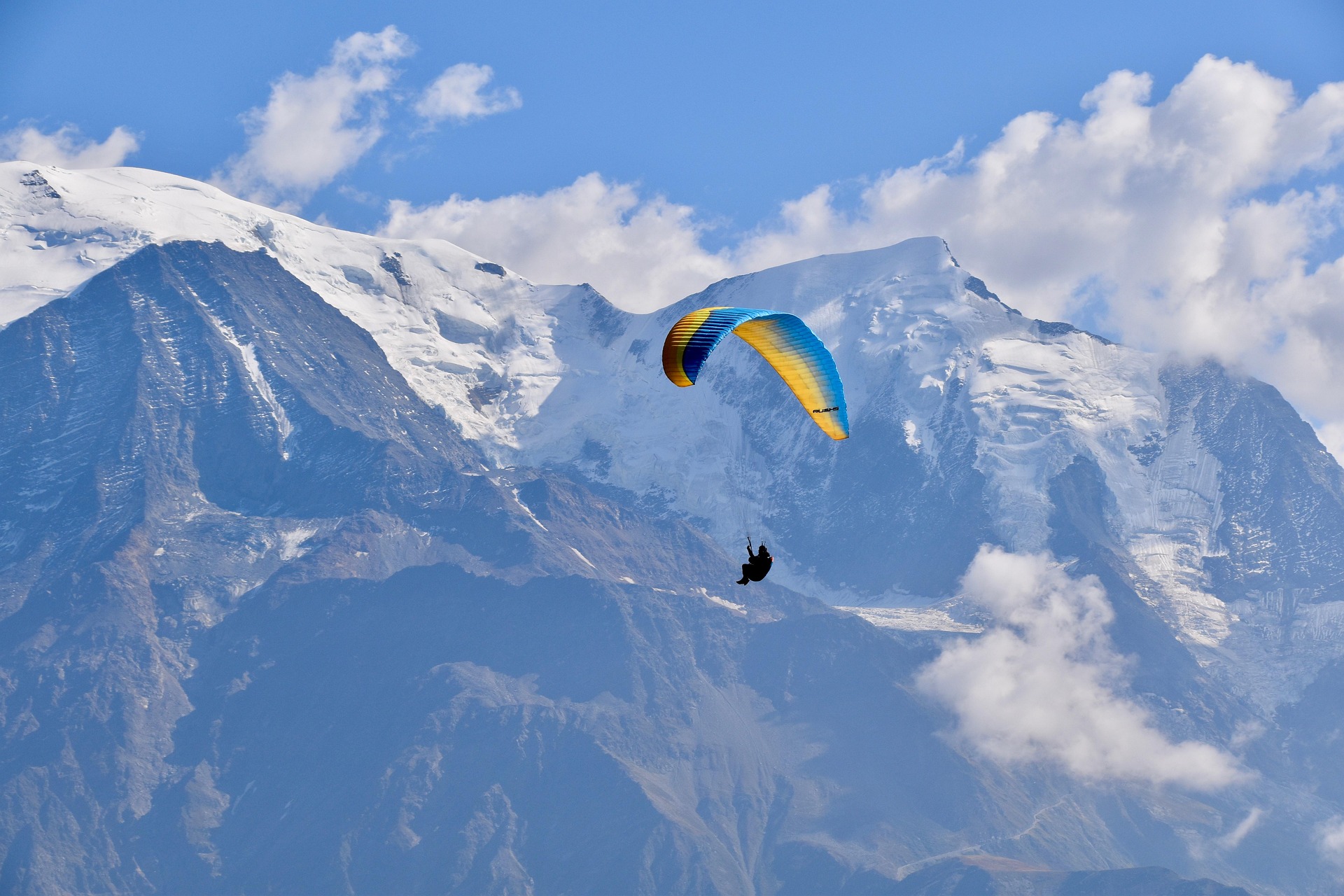
People confuse these two constantly, and it’s an easy mistake since both involve a canopy overhead and a view most folks never get otherwise. But paragliding vs parasailing comes down to one core difference: who’s actually flying. In paragliding, you are. In parasailing, someone else is doing all the work while you hang on for the ride.
Table of Contents
| Feature | Paragliding | Parasailing |
|---|---|---|
| Who controls flight | The pilot (you) | Boat operator |
| Launch method | Foot-launched off a hill | Towed behind a boat |
| Typical flight time | 1-3+ hours | 10-15 minutes airborne |
| Training needed | Weeks to months of certification | None, brief safety briefing only |
| Typical cost | $4,000-$5,000 for gear, or $150-$250 for tandem | ~$55 for a ride |
| Max altitude | Up to 15,000 feet | A few hundred feet |
Paragliding vs Parasailing: Understanding the Core Differences
Both activities put you under a canopy in the sky, but that’s about where the similarity ends. One is genuine aviation. The other is a guided tourist ride. Neither is “better” in some absolute sense – they’re built for different people wanting different things.
Paragliding: Free flight with pilot control
Paragliding is a free-flying, foot-launched aircraft that the pilot controls using air currents and thermal lift. There’s no motor, no tow line, no boat. You run off a slope, the wing inflates above you, and from that point on you’re reading the wind and steering the canopy yourself. Pilots use rising columns of warm air, known as thermal currents, to gain altitude and extend flight time well beyond what gravity alone would allow.
This is why experienced paraglider pilots can cover long distances in a single flight, a discipline called cross-country soaring. Paragliding is genuinely a form of aviation, not a novelty ride, and it’s treated that way by the people who do it seriously.
Parasailing: Towed flight with operator control
Parasailing works completely differently. A boat tows you aloft on a line, and you rise passively as the boat accelerates, then get reeled back in when the ride’s over. You don’t steer anything. The boat operator manages speed, direction, and altitude, and your job is to enjoy the view. Parasailing traces back further than most people assume – the first documented flight was Colonel Michel Tournier in 1961, towed behind a tractor rather than a boat, before the activity moved onto the water and became the beach-resort staple it is today.
Equipment and Gear You’ll Need
The gear each activity requires tells you almost everything about the skill and risk involved. When comparing paragliding vs parasailing, equipment differences reveal just how distinct these sports truly are. Paragliding equipment is aircraft-grade. Parasailing equipment is closer to amusement-park hardware, still solid, but not something you’d need to learn to operate yourself.
Paragliding equipment essentials
A paraglider wing is a parafoil – a ram-air airfoil that inflates into a rigid wing shape purely from airflow, no internal frame required. The wing needs a total surface area of 250 to 350 square feet, spans roughly 30 feet tip to tip, and weighs no more than 10 to 12 pounds so a pilot can actually carry and launch it solo.
Beyond the wing itself, essential equipment includes a harness, a reserve parachute, and a helmet. The reserve is your backup if the main wing collapses, and any pilot flying seriously – especially near thermal activity or at altitude – carries one without exception. Riser lines connecting the harness to the wing are typically kevlar for strength-to-weight ratio, and the canopy fabric itself is rip-stop nylon, chosen because a small tear won’t spread into a catastrophic failure mid-flight. Many pilots also fly with a variometer, a small instrument that tracks rate of climb or descent so they can find and stay in lift.
Parasailing equipment essentials
Parasailing gear is simpler by design. You’ve got a tow boat, a parachute canopy, and a tow rope connecting the two. The operator handles a winch system that lets line out to gain altitude and reels it back in to bring you down. Safe parasailing requires a boat with an engine of at least 90 horsepower – anything underpowered can’t generate the airspeed needed to lift and control a rider safely, which is part of why parasailing operations are regulated and typically run by licensed commercial outfits rather than solo enthusiasts.
How Much Control Do You Have?
This is really the heart of the paragliding vs parasailing question. Paragliding puts every decision in your hands: when to launch, which direction to turn, when to catch a thermal, when to land. That autonomy is the entire appeal for pilots, and it’s also why the sport demands real skill. You’re managing a foot-launched aircraft in changing air, not sitting back and watching scenery go by.
Parasailing hands you none of that responsibility. You clip into a harness, the boat pulls away, and the operator makes every call about speed, height, and timing. That’s not a knock on parasailing – it’s the point. It’s built as a relaxed, low-effort experience, and most riders wouldn’t want the extra responsibility even if it were offered.
Do you need training to parasail or paraglide?
Short answer: paragliding, yes, extensively. Parasailing, essentially no.
Paragliding training and certification
You can’t just buy a wing and jump off a hill. Reputable schools run new pilots through progressive certification levels, starting with ground handling and short training hills before moving to solo flights, then higher launches, then eventually thermal and cross-country flying. It typically takes weeks of instruction spread over multiple sessions to reach basic independent certification, and pilots keep building skill for years afterward. If you want the experience without the training curve, tandem paragliding is the move – you fly strapped in front of or beside a certified instructor who handles launch, navigation, and landing while you just take in the flight. Many beginners prefer tandem paragliding to start because it eliminates the steep learning curve.
Parasailing training requirements
Parasailing involves minimal skill from the participant, since the operator controls the entire flight from the boat. Most operations only require a short safety briefing on the beach or dock before you go up – how to sit in the harness, what to do if you land in the water, basic signals. There’s no certification process because there’s nothing to certify. You’re a passenger, not an operator.
How long can you stay airborne?
This is where the gap between the two activities gets dramatic. Paragliders routinely stay aloft for three hours or more, and skilled pilots working good thermal conditions can climb to elevations of 15,000 feet. That’s not a stunt figure – it’s a normal outcome for an experienced pilot chasing lift on a good-weather day. Cross-country soaring flights covering serious distance are built entirely on this ability to stay up for hours at a stretch.
Parasailing rides run far shorter. A typical outing lasts around an hour to an hour and forty minutes total, but that includes boat time, gearing up, and waiting your turn – actual time airborne per rider is usually just 10 to 15 minutes. Altitude tops out at a few hundred feet, controlled entirely by how much line the operator lets out. It’s a quick, scenic burst, not an extended flight.
Cost and Accessibility
Paragliding is the bigger investment, both in money and time. A paraglider setup – wing, harness, reserve, the works – typically costs between $4,000 and $5,000. That’s before training costs, which add up over the weeks it takes to get certified. If you just want to try flying once without committing to gear or a certification course, tandem paragliding flights are widely available and run far cheaper than owning your own setup, usually in the range of a guided tourist activity rather than an equipment purchase.
Parasailing is dramatically more accessible for a one-off experience. A one-hour-forty-minute ride costs around $55 in the US, no gear to buy, no training to complete, and you can usually walk up to a beachfront kiosk and be airborne within the hour. That accessibility is exactly why parasailing dominates at coastal resorts and tourist beaches, while paragliding stays concentrated around specific hill and mountain launch sites favored by pilots.
Which activity is safer for beginners?
Neither activity is risk-free, but the nature of the risk is completely different. Paragliding risk is mostly about pilot decision-making and weather judgment. Parasailing risk is mostly about equipment and operator competence, since you’re not making any decisions at all.
Paragliding safety considerations
Weather windows for paragliding are narrow and unforgiving. Pilots should never launch in winds exceeding 15 mph unless they’re highly trained, and nobody flies in winds of 25 to 30 mph regardless of experience level – that’s the kind of gust strength that collapses a wing or slams a pilot into terrain. This is precisely why training takes so long: reading wind, thermals, and terrain correctly is the actual skill being taught, more than the physical act of steering a wing. A reserve parachute is standard safety equipment for exactly this reason, and the U.S. Hang Gliding and Paragliding Association publishes detailed guidance on safe operating conditions that most training programs build their curriculum around.
Parasailing safety considerations
Parasailing tolerates far rougher conditions – operations generally shouldn’t run in winds exceeding 50 mph, a much wider safety margin than paragliding allows. That’s partly because a boat under power has more control margin than a foot-launched wing riding pure air currents. The real safety variable in parasailing isn’t weather judgment from the rider, since you’re not making any calls up there. It’s the boat’s horsepower, the winch equipment, and the operator’s competence managing the tow line and reading conditions on your behalf.
For a first-timer weighing risk tolerance against how much control they want, parasailing is the lower-commitment, lower-skill-ceiling choice. Paragliding asks more of you upfront – money, training time, weather patience – but it rewards you with actual flight, not just a scenic tow.
If you want a quick, cheap thrill on vacation with zero learning curve, book a parasailing ride and enjoy the fifteen minutes. If you want to genuinely fly – read the wind, catch a thermal, stay up for hours – start with a tandem paragliding flight and see if the training path is worth it to you. Understanding paragliding vs parasailing helps you choose based on what kind of experience appeals to you most. The two aren’t really competing for the same reader; they’re answering two different questions about what “flying” means to you.

