

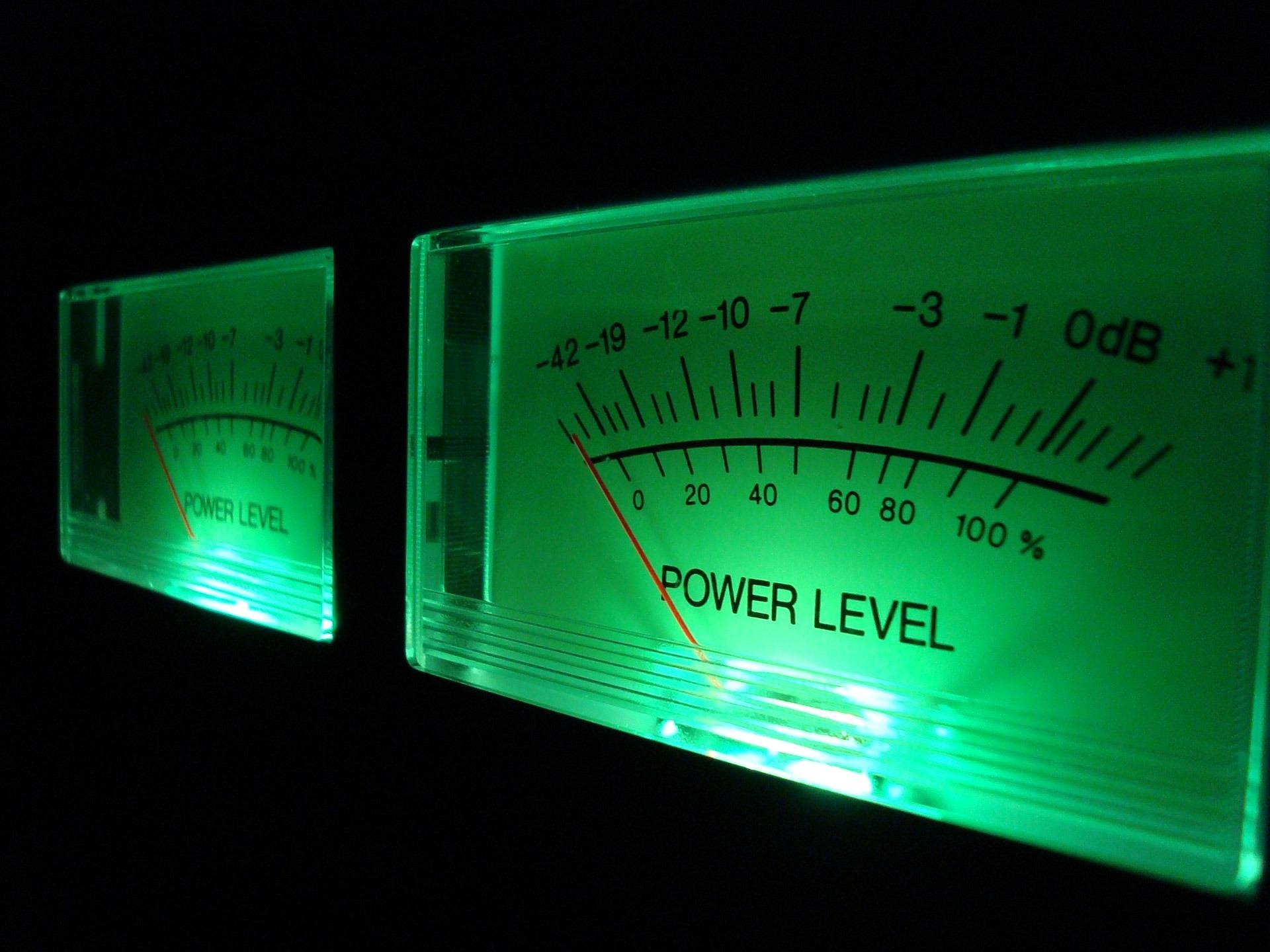
Understanding the difference between digital vs analog signal is essential in today’s technology-driven world, where both signal types power everything from smartphones to medical devices. An analog signal represents information using continuously varying values, while a digital signal encodes data as discrete values, typically represented as binary 1s and 0s. The choice between digital vs analog signal depends on the application, with each offering distinct advantages in speed, noise resistance, and data storage. This guide explores the fundamentals of both signal types, their key differences, practical applications, and why knowing the distinction between digital vs analog signal matters for anyone working with technology.
Table of Contents
What is an analog signal?
An analog signal is a continuous electrical signal that varies smoothly over time, mirroring the natural flow of physical phenomena like sound waves or light. The voltage or current of an analog signal can take on any value within a range, creating an infinite number of possible values. This continuity makes analog signals ideal for representing real-world measurements, as they accurately capture all the subtle variations of the original source without loss of intermediate values.
Analog signals use waveforms, typically represented as sine waves, to transmit information. When sound enters a microphone, the pressure waves convert into electrical voltage that varies proportionally to the sound’s amplitude. This continuous variation is what defines the analog signal – it never jumps between discrete levels but flows naturally from one value to the next. Historically, analog technology dominated communications, broadcasting, and audio recording for over a century.
The bandwidth of an analog signal equals the difference between its highest and lowest frequencies. Analog signals typically occupy a continuous frequency spectrum that may require filtering to limit bandwidth. However, this continuous nature makes analog signals inherently susceptible to noise and interference. As analog signals travel through cables or are amplified, environmental interference degrades the original signal, accumulating noise that distorts the message. Learn more about how analog audio signals are converted to digital form through sampling.
What is a digital signal?
A digital signal represents data as a sequence of discrete, distinct values rather than continuous ones. These values are typically expressed in binary form using only two states: 1 (high voltage) or 0 (low voltage). This discrete representation allows digital signals to encode information precisely and reliably, making them the foundation of modern computing and telecommunications.
Converting an analog signal to digital involves two main steps: sampling and quantization. Sampling captures the analog signal’s amplitude at regular intervals, measured in samples per second (Hertz). Common sampling rates include 44,100 Hz for CD-quality audio and 48,000 Hz for professional video. Quantization assigns each sample a discrete numerical value from a finite set of possibilities. For example, 16-bit audio offers 65,536 possible values per sample, providing sufficient precision for high-fidelity sound reproduction.
The Nyquist-Shannon theorem establishes that to accurately represent a signal, the sampling rate must be at least twice the highest frequency in the original analog signal. This principle is why 44.1 kHz became the standard for CD audio – it can accurately capture frequencies up to 22.05 kHz, covering the full human hearing range. Digital vs analog signal quality depends significantly on both sampling rate and bit depth. Higher sampling rates and deeper bit depths capture more detail but require more storage space and bandwidth.
Key differences between digital and analog signals
The distinction between digital vs analog signal determines how information is captured, transmitted, stored, and reproduced. Understanding these differences is crucial for selecting the appropriate signal type for any application. The comparison table below outlines the primary technical and practical differences.
| Characteristic | Analog Signal | Digital Signal |
| Signal nature | Continuous, infinite values | Discrete, finite values (0s and 1s) |
| Waveform | Sine wave or smooth curve | Square wave or pulse train |
| Bandwidth | Lower bandwidth requirement | Higher bandwidth requirement |
| Noise resistance | Highly susceptible to noise | Resistant to noise and distortion |
| Transmission distance | Degrades over long distances | Maintains quality over long distances |
| Storage efficiency | Requires substantial physical space | Compact digital storage (files) |
| Equipment complexity | Relatively simple, passive devices | Complex processing circuits required |
| Cost | Generally less expensive initially | Higher upfront equipment cost |
| Common application | Radio, telephone, audio amplifiers | Computers, smartphones, digital TV |
The digital vs analog signal debate centers on these fundamental differences in signal structure and robustness. Digital signals excel at long-distance transmission without quality loss, making them ideal for telecommunications and the internet. Analog signals maintain closer fidelity to their source but cannot be transmitted reliably over distance without active amplification and conditioning.
Advantages and disadvantages of each
Choosing between digital vs analog signal requires weighing specific strengths and weaknesses. Analog signals offer natural representation of real-world phenomena with minimal processing overhead. Vintage audio equipment and vinyl records still captivate enthusiasts because analog signals can capture subtle harmonic characteristics that early digital systems missed. The simplicity of analog circuits means lower power consumption in some applications, making analog desirable for battery-powered devices in earlier eras.
However, digital signals dominate modern technology because they solve the noise and distance problems inherent to analog transmission. Digital signals can be error-corrected, encrypted, and perfectly reconstructed after transmission, while analog signals accumulate degradation. Digital vs analog signal processing is vastly more flexible – a single digital system can handle audio, video, data, and communications through software changes alone. Digital storage is tremendously efficient: a three-minute digital audio file occupies roughly 35 megabytes, while recording the same content on analog tape requires substantial physical space.
Real-world applications
Modern technology increasingly relies on digital vs analog signal conversion. In audio production, microphones capture analog signals from instruments and voices, which are immediately digitized for recording, editing, and distribution. Smartphones convert incoming analog signals from microphones, sensors, and antennas into digital form for processing and transmission. Medical devices like electrocardiograms generate analog signals from the heart, but hospitals convert these to digital format for storage, analysis, and remote consultation.
The internet backbone depends entirely on digital signal transmission through fiber optic cables and radio frequencies. Television broadcasting has transitioned from analog to digital, offering better picture quality and channel capacity. Even traditional domains like electrical power grids are becoming “smart” through digital sensors and communication. Automotive systems increasingly convert analog sensor readings into digital data for real-time processing and autonomous decision-making. The evolution toward digital vs analog signal handling reflects the overwhelming advantages digital systems provide.
Frequently asked questions
Why can’t we just use analog signals everywhere?
Analog signals degrade over distance due to noise and attenuation, making them unsuitable for long-distance transmission. Digital vs analog signal transmission shows that digital signals can be regenerated and error-corrected, maintaining perfect fidelity across thousands of miles. Additionally, analog signals cannot be easily encrypted, compressed, or multiplexed for efficient network use, limiting their utility in modern communications.
What is the relationship between digital vs analog signal conversion and audio quality?
Audio quality in digital vs analog signal conversion depends on sampling rate and bit depth. CD-quality audio uses 44.1 kHz sampling and 16-bit quantization, representing frequencies up to 22.05 kHz – sufficient for human hearing. Professional studio recording often uses 48 kHz or 96 kHz with 24-bit precision, capturing more subtle details. Lower sampling rates or bit depths introduce quantization noise and lose high-frequency information, audible as reduced clarity.
Are vintage analog devices still relevant in a digital world?
Yes, some analog devices remain relevant despite digital vs analog signal technology evolution. Analog circuits require minimal power and produce no electromagnetic noise from switching. Audiophiles argue certain analog amplifiers and filters impart desirable characteristics to music. However, the vast majority of professional and consumer applications have transitioned to digital vs analog signal systems for reliability, efficiency, and capability. Analog devices are now primarily hobbyist and specialty equipment.
Why understanding digital and analog signals matters
Grasping the fundamentals of digital vs analog signal technology opens doors to understanding modern electronics, telecommunications, and computing. Engineers and technicians must comprehend the conversion process between signal types to design reliable systems. As technology professionals work with sensors, audio equipment, networking hardware, or medical devices, competence with digital vs analog signal concepts becomes essential. Even non-technical users benefit from understanding why their smartphone converts analog microphone input into digital data for storage and transmission.
The digital vs analog signal comparison illustrates a fundamental principle: different solutions suit different problems. Analog signals remain superior for some applications, while digital signals excel in most others. The future likely involves increasingly sophisticated hybrid systems that leverage the strengths of both. By understanding the distinction between digital vs analog signal types, their characteristics, and applications, you gain insight into the technology that powers modern civilization.

