

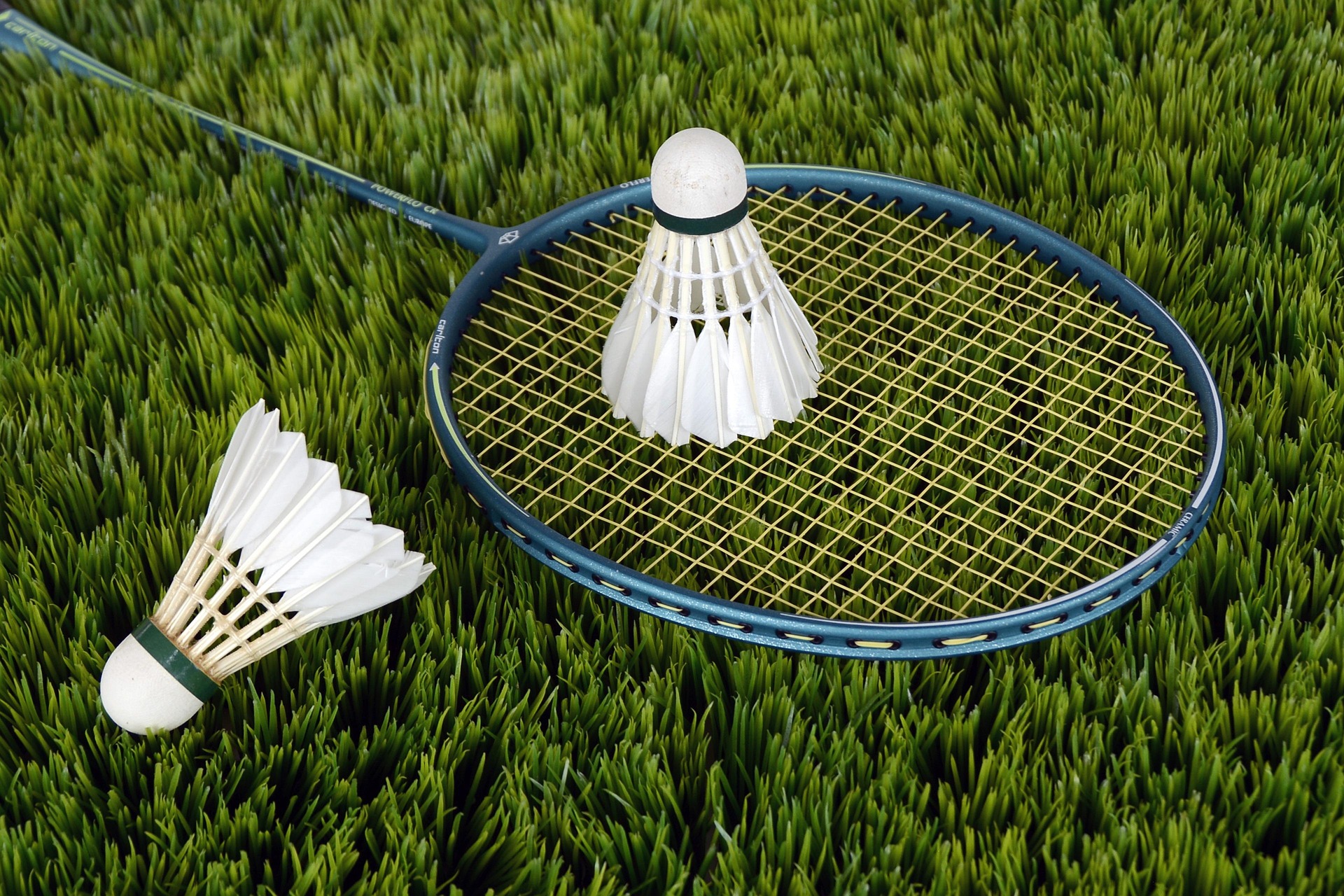
Picking up the wrong racket will ruin your swing within minutes, and comparing a badminton vs tennis racket shows why these two sports require completely different engineering. While both use strung frames to hit a projectile over a net, their weight, length, string tension, and balance cater to entirely distinct mechanics.
Table of Contents
| Feature | Badminton Racket | Tennis Racket |
|---|---|---|
| Average Weight | 70 to 95 grams (2.5 to 3.3 oz) | 280 to 340 grams (9.8 to 12 oz) |
| Total Length | 665 to 680 mm (up to 26.8 in) | 685 mm standard (27 in) |
| Head Size | Small, narrow oval (approx. 220-250 cm²) | Large oval (630 to 710 cm² / 98-110 sq in) |
| String Tension | 20 to 30 lbs (9 to 13.6 kg) | 48 to 60 lbs (21.7 to 27.2 kg) |
| Shaft Flexibility | Long, thin, flexible shaft | Short, thick throat; stiff frame |
Key Physical Differences: Weight, Size, and Materials
The most immediate difference between these two frames is weight. A standard tennis frame weighs around four times more than an adult badminton frame. Consequently, picking up a tennis racket feels like holding a substantial club, whereas a badminton racket feels almost weightless in the hand.
Weight and Balance
Modern badminton rackets generally fall between 70 and 95 grams without string or overgrip. Manufacturers categorize them using a “U” system, where 3U (85-89g) and 4U (80-84g) represent the most common options. In contrast, an unstrung adult tennis racket usually weighs between 280 and 340 grams. Players who swing a tennis racket rely on its mass to absorb impact from a heavy ball. Badminton players, meanwhile, need minimal mass to generate rapid whip-like acceleration.
Head Size and Frame Geometry
Tennis frames feature large string beds ranging from 98 to 110 square inches (630 to 710 square centimeters). This expansive surface area provides a forgiving sweet spot for off-center hits against a heavy, pressurized tennis ball. Badminton racket heads are significantly smaller and narrower. They are designed for aerodynamic efficiency to cut through the air during high-speed smashes.
Shaft Design and Flexibility
A badminton racket features a long, remarkably slender shaft that connects the handle directly to the head. This shaft flexes deliberately during the swing, storing kinetic energy like an archer’s bow before snapping forward at impact. Tennis rackets do not have a thin shaft. Instead, they transition from the grip into a wide, stiff throat (often a split open throat) that resists twisting forces during groundstrokes.
Strings and Tension: Power vs Shock Absorption
Stringing configurations between the two sports serve opposing goals. While tennis strings must withstand heavy ball compression, badminton strings focus on razor-thin precision and repulsion.
Tennis rackets use thick strings, typically 1.20mm to 1.35mm (16 to 17 gauge), pulled to tensions between 48 and 60 pounds. This high tension prevents the elastic ball from trampoline-launching uncontrollably past the baseline. Players looking for standard frame and equipment guidance often consult the International Tennis Federation equipment regulations to understand these exact frame and string constraints.
Badminton rackets use ultra-thin strings ranging from 0.61mm to 0.70mm in diameter. Typical recreational tension sits around 20 to 24 pounds, while advanced competitors string up to 28 to 32 pounds. Because a feathered shuttlecock weighs only about 5 grams, thin strings bite cleanly into the cork base to create spin and steep slicing angles without breaking the projectile.
How Racket Differences Change Technique and Gameplay
The mechanical differences between the equipment dictate how athletes move their bodies. Using a tennis swing on a badminton court—or vice versa—leads to poor control and potential injury.
In badminton, shot power comes primarily from pronation and supination of the forearm combined with quick finger power and wrist snap. Because the frame is light and the shaft is springy, players can change shot directions at the very last fraction of a second. The game emphasizes explosive reflex speed and rapid recovery.
Tennis mechanics depend heavily on full-body kinetic chaining. Players drive power upward from their legs, rotate the hips and torso, and execute a long, fluid follow-through with a stable, locked wrist. Attempting to snap your wrist while swinging a 300-gram tennis frame puts immense strain on the tendons and frequently causes tennis elbow.
Badminton vs Tennis Racket: Direct Comparison Summary
Understanding which tool matches your sport prevents bad habits before they start. Here is how their roles diverge across the court:
- Impact Mechanics: Tennis rackets absorb heavy shock from a moving 58-gram rubber ball; badminton rackets flick a lightweight 5-gram shuttlecock.
- Durability and Construction: Both sports use carbon fiber and graphite composites, but tennis frames use thicker walls to prevent frame collapse on heavy impacts.
- Stroke Length: Tennis requires long, looping swings with closed-to-open body rotation. Badminton favors short, compact, explosive swings.
- Grip Size: Tennis grips range from 4 inches to 4 5/8 inches in circumference to support firm palm contact. Badminton grips are noticeably thinner (G4 or G5 sizing) to enable rapid finger-tip adjustments.
Can You Use a Tennis Racket for Badminton (or Vice Versa)?
You cannot effectively use one racket for the other sport. A tennis racket is far too heavy and clumsy to react to a fast-flying shuttlecock, and its loose, wide string spacing can easily crush or mangle delicate feathers.
Similarly, hitting a heavy tennis ball with a badminton frame will snap the slender shaft or shatter the strings on the first solid strike. Each tool is built specifically for the mass of its target projectile. If you want to develop clean technique in either sport, invest in a dedicated starter racket tailored to that specific court.

