

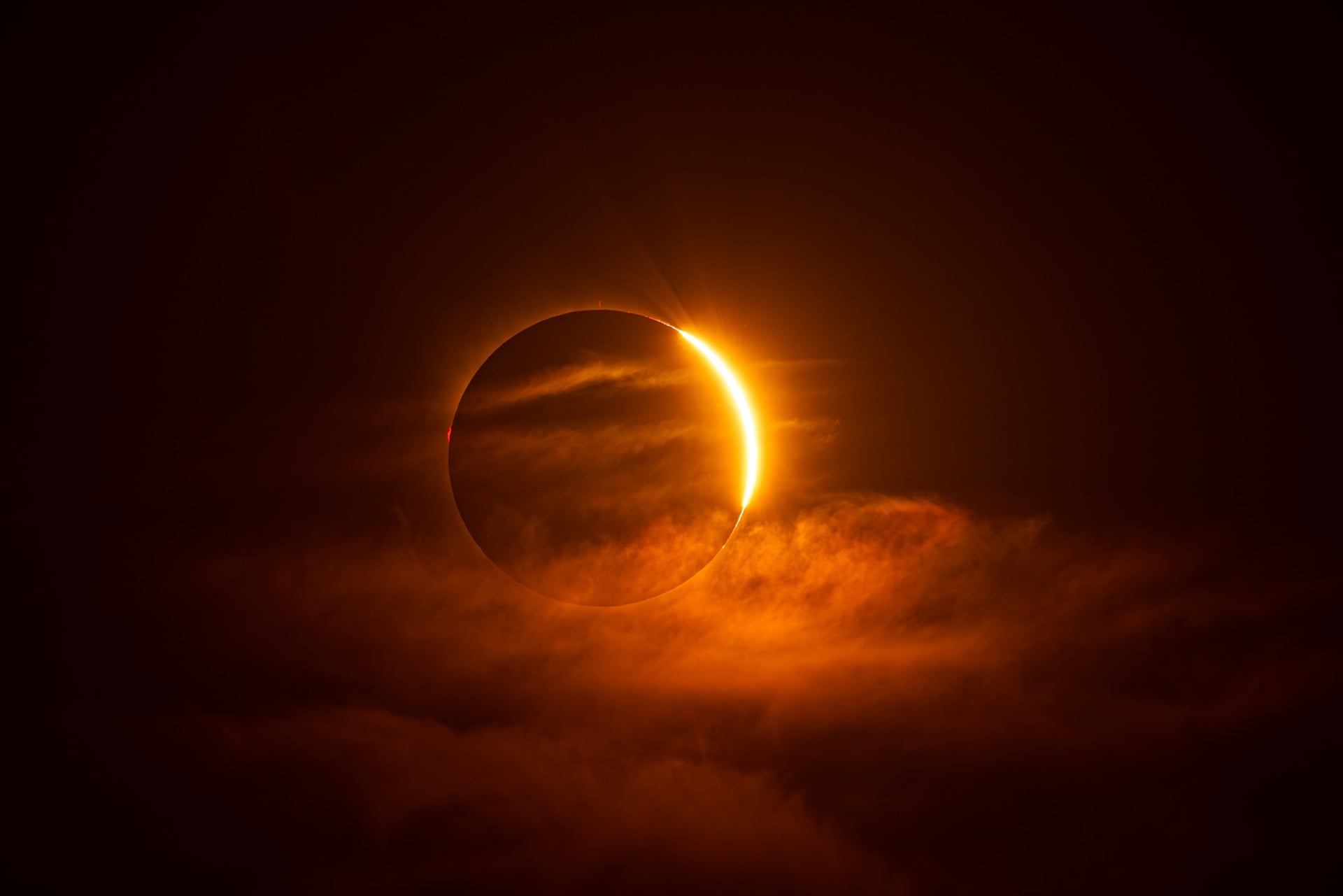
The main difference between solar eclipse and lunar eclipse events comes down to which celestial body gets blocked from our view on Earth. During a solar eclipse, the Moon moves directly between the Sun and Earth, blocking sunlight from reaching Earth’s surface. In contrast, a lunar eclipse occurs when Earth moves between the Sun and the Moon, casting Earth’s shadow over the Moon. Both events rely on unique celestial alignments, but they differ dramatically in visual appearance, safety requirements, and duration.
Table of Contents
| Feature | Solar Eclipse | Lunar Eclipse |
|---|---|---|
| Celestial Alignment | Sun – Moon – Earth | Sun – Earth – Moon |
| Moon Phase | New Moon | Full Moon |
| Duration of Totality | A few minutes (typically 2–7 minutes) | Can exceed an hour |
| Visibility Area | Narrow path across Earth | Entire night side of Earth |
| Viewing Safety | Requires ISO 12312-2 certified eclipse glasses | 100% safe for the naked eye |
Difference Between Solar Eclipse and Lunar Eclipse: Core Mechanics
Understanding the fundamental difference between solar eclipse and lunar eclipse mechanics starts with positional geometry. Astronomers refer to a straight-line alignment of three celestial bodies as syzygy. Depending on which body sits in the middle, the visual result on Earth changes completely.
How a Solar Eclipse Works
A solar eclipse occurs when the Moon passes between the Sun and Earth, blocking sunlight from reaching Earth. By cosmic coincidence, the Sun is roughly 400 times wider than the Moon, but it is also 400 times farther away. This ratio makes both objects appear almost identical in size in our sky.
Solar eclipses can only happen during the New Moon phase. Because the Moon’s shadow cone on Earth is relatively narrow, only people located within a thin geographic corridor witness totality. Furthermore, totality in a solar eclipse typically lasts only a few minutes at any given location. Recognizing this timing difference between solar eclipse and lunar eclipse phenomena helps skywatchers plan their observations accurately.
How a Lunar Eclipse Works
A lunar eclipse occurs when Earth moves between the Sun and the Moon, casting Earth’s shadow over the Moon. Instead of blocking sunlight from reaching us, Earth stops sunlight from illuminating the lunar surface directly.
Consequently, solar eclipses can only happen during the new moon phase, while lunar eclipses only occur during a full moon. When the Moon passes into Earth’s shadow, anyone on the nighttime side of the planet can see it. Another key physical difference between solar eclipse and lunar eclipse events is their lifespan. While solar totality passes quickly, totality in a lunar eclipse can exceed an hour, offering a prolonged viewing experience.
Types of Solar vs. Lunar Eclipses
Shadow geometry dictates the specific category of eclipse that observers experience on Earth. Shadows created by Earth or the Moon feature three distinct areas: the umbra (the dark inner shadow), the penumbra (the lighter outer shadow), and the antumbra (the region beyond the umbra).
Solar eclipses divide into four primary categories:
- Total Solar Eclipse: The Moon completely covers the Sun’s disk, revealing the faint outer atmosphere known as the solar corona.
- Partial Solar Eclipse: The Moon covers only a portion of the solar disk because the alignment is imperfect.
- Annular Solar Eclipse: The Moon is too far from Earth to cover the Sun fully, creating a distinctive “ring of fire” from the antumbra shadow.
- Hybrid Solar Eclipse: A rare transition event that shifts between an annular and total eclipse along its orbital track.
Lunar eclipses follow a different set of stages based on how deeply the Moon sinks into Earth’s shadow structure:
- Total Lunar Eclipse: The entire Moon enters Earth’s dark umbra, taking on a striking reddish hue.
- Partial Lunar Eclipse: Only a portion of the Moon enters Earth’s umbra, carving a dark notch out of its illuminated face.
- Penumbral Lunar Eclipse: The Moon travels exclusively through Earth’s faint penumbra, resulting in a subtle dimming that is often hard to notice.
Observing how these shadows interact highlights another practical difference between solar eclipse and lunar eclipse patterns across different calendar years.
Why Does a Lunar Eclipse Turn Red?
During a total lunar eclipse, the Moon does not vanish into blackness. Instead, it glows with a soft, reddish hue often called a Blood Moon. This vivid color shift results from a physical process known as Rayleigh scattering.
As sunlight travels from the Sun toward Earth, it passes through our planet’s thick atmosphere. Earth’s atmosphere scatters shorter wavelengths of light, such as blue and violet, in every direction. However, longer red wavelengths pass through the atmosphere with less disruption. Earth’s atmospheric layer acts like a lens, bending this filtered red sunlight into the umbral shadow cone. That warm red light hits the lunar surface, reflecting back toward observers on Earth.
The exact shade of red depends heavily on atmospheric conditions. Volcanic dust, smoke, and cloud coverage on Earth can make the Moon appear deep crimson or dull copper during totality.
Why Don’t Eclipses Happen Every Month?
Since a solar eclipse requires a New Moon and a lunar eclipse requires a Full Moon, you might expect two eclipses every month. However, eclipses remain relatively rare annual events.
The main reason stems from orbital inclination. The Moon does not orbit Earth in the exact same plane that Earth orbits the Sun. Instead, the Moon’s orbit features a 5-degree tilt relative to Earth’s orbital plane. Most of the time during a New Moon or Full Moon, the Moon passes slightly above or below the direct line between Earth and the Sun.
An eclipse can only occur when a New Moon or Full Moon happens near one of the two points where the orbital planes intersect. These intersection points are called orbital nodes. When syzygy occurs near these nodes, the shadows line up correctly, creating an eclipse season.
Viewing Safety and Observation Guidelines
Eye safety represents another vital difference between solar eclipse and lunar eclipse observation techniques. Taking proper precautions protects your vision from severe physical damage.
Looking directly at a solar eclipse without ISO 12312-2 certified protection can cause solar retinopathy, a permanent form of retinal damage. Standard sunglasses, dark glass, and unverified filters fail to block harmful ultraviolet and infrared radiation. The only safe moment to look without solar filters is during the brief window of absolute totality during a total solar eclipse. At all other times, certified eclipse glasses or indirect projection methods are required.
In contrast, lunar eclipses are entirely safe to view with the naked eye. Because you are simply looking at indirect sunlight reflected off the Moon, the light levels are harmless. You can safely watch a lunar eclipse using binoculars or telescopes without solar filters.
Understanding the practical difference between solar eclipse and lunar eclipse gear ensures that every skywatcher stays safe while enjoying these incredible orbital displays.
Recognizing the primary difference between solar eclipse and lunar eclipse mechanics turns every viewing opportunity into a memorable astronomical experience. Whether you prepare ISO 12312-2 certified protection for solar observations or simply step outside to watch a red lunar eclipse with the naked eye, these events remind us of the precise orbital choreography surrounding our world.
Reference: Difference Between Solar Eclipse And Lunar Eclipse – BYJU’S

