

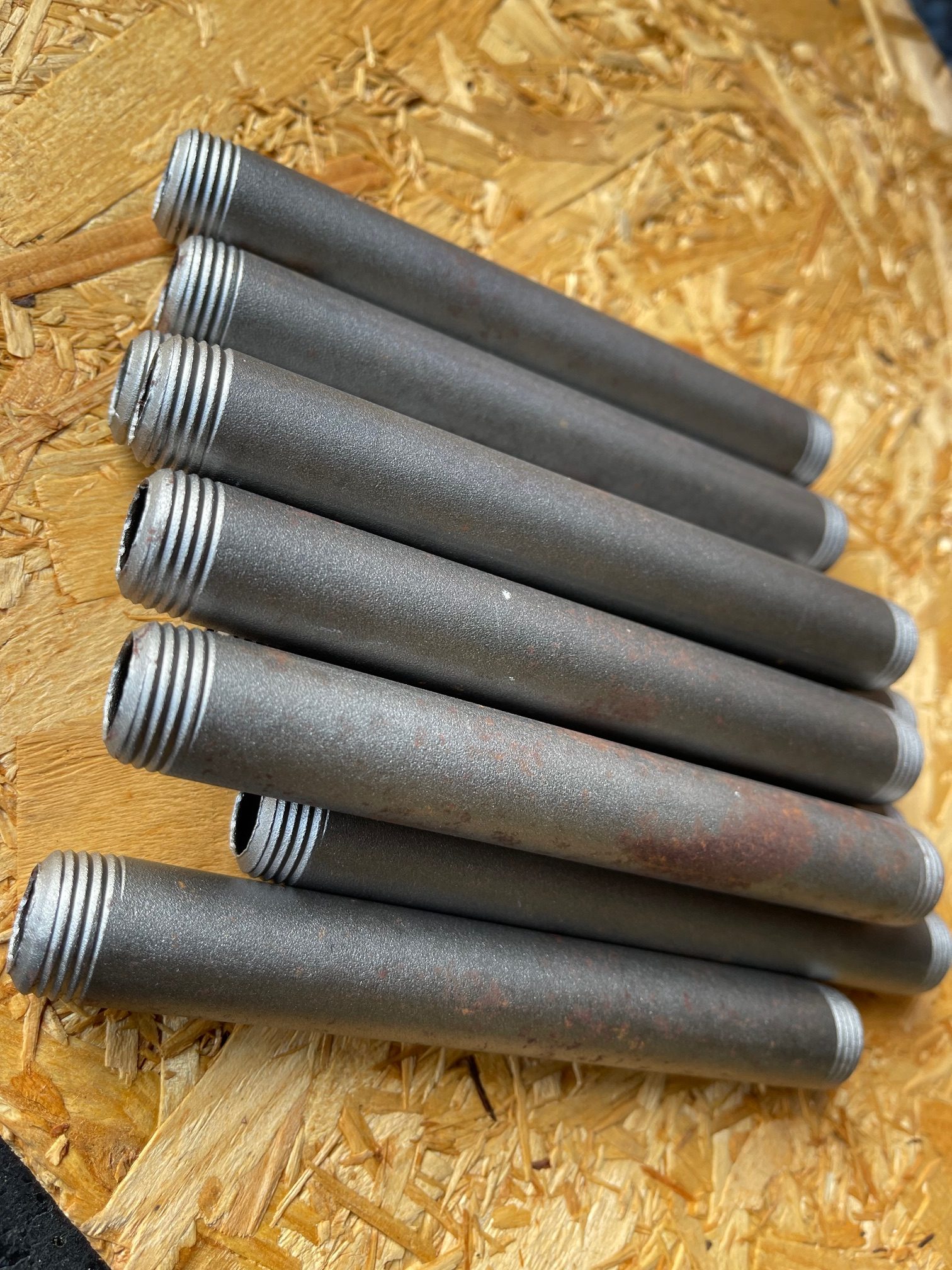
When shopping for plumbing fittings or air compressor lines, comparing mpt vs npt threads often creates unnecessary confusion. In short, MPT is simply the male version of the standard NPT pipe connection, meaning they use the exact same thread profile and fit together directly.
| Thread Type | Full Name | Gender | Standard & Profile | Compatibility |
|---|---|---|---|---|
| NPT | National Pipe Taper | Male or Female | ANSI/ASME B1.20.1 (Tapered, 60°) | Universal standard family |
| MPT (or M-NPT) | Male Pipe Thread | Male (External) | ANSI/ASME B1.20.1 (Tapered, 60°) | Mates with FPT or NPT female ports |
| FPT (or F-NPT) | Female Pipe Thread | Female (Internal) | ANSI/ASME B1.20.1 (Tapered, 60°) | Mates with MPT or NPT male ends |
Table of Contents
Understanding MPT and NPT Pipe Threads
Many DIYers and plumbers encounter part labels that mix these abbreviations on the same shelf. The core reason people search for mpt vs npt threads is that manufacturers use different naming shortcuts on their packaging. One brand might label a brass nipple as 1/2-inch MPT, while another calls it 1/2-inch NPT male.
Both labels describe the exact same physical fitting. Because National Pipe Taper encompasses both genders, MPT exists as a specific term to designate external threads. Once you realize MPT is just a branch of the NPT tree, resolving the mpt vs npt threads debate becomes straightforward.
What Is the Difference Between MPT, FPT, and NPT?
To fully grasp mpt vs npt threads, you need to understand the relationship between the governing standard and the two genders that make up a joint. Tapered pipe fittings rely on matching male and female parts to create a rigid, pressure-tight seal.
National Pipe Taper (NPT) as the Standard
NPT serves as the umbrella standard defined under ANSI/ASME B1.20.1 for general-purpose tapered pipe threads in North America. When someone mentions NPT without specifying gender, they are referring to the overall thread system. This standard governs everything from wall thickness tolerances to pitch diameters for both internal and external threads.
Therefore, discussing mpt vs npt threads is like comparing a specific car model to the manufacturer’s entire catalog. NPT covers the whole family, while MPT specifies one exact configuration within it.
Male Pipe Thread (MPT) Characteristics
Male Pipe Thread refers strictly to external threads cut onto the outside diameter of a pipe or fitting. You will often see this abbreviated on technical drawings and parts bags as MPT, M-NPT, or NPT(M). Because MPT fittings follow the NPT standard, their outer diameter narrows progressively toward the end of the fitting.
Understanding these external ridges clarifies why mpt vs npt threads discussions come up so frequently. An MPT fitting is simply an NPT male fitting, with no geometric differences whatsoever.
Female Pipe Thread (FPT) Characteristics
Female Pipe Thread, or FPT, refers to the internal threads cut inside a coupling, valve body, or elbow. These are also frequently labeled as F-NPT or NPT(F). Just like male threads, FPT connections taper, narrowing as they extend deeper into the component.
Every complete tapered connection requires an MPT fitting threading into an FPT fitting. Evaluating mpt vs npt threads alongside FPT shows that these terms work together to describe a mating pair under one single standard.
Thread Geometry: Angles, Taper Rates, and Sealing
The mechanical behavior of tapered pipe connections relies on precise geometry. NPT and MPT threads feature a distinctive 60-degree thread angle measured from flank to flank. Unlike straight machine screws that maintain a uniform diameter, tapered threads narrow at a standard rate of 1 in 16.
This 1-in-16 taper equals a diameter change of 3/4 inch per foot along the length of the threaded section. As you tighten an MPT component into a female port, the matching tapers pull the thread flanks into tight contact. This wedging action creates primary mechanical hold and structural rigidity.
However, the crests and roots of standard ANSI/ASME B1.20.1 threads do not form a perfectly continuous seal on their own. Tiny spiral gaps remain between the apex of one thread and the root of the mating thread. Evaluating mpt vs npt threads from an engineering standpoint highlights why thread geometry alone cannot stop pressurized fluid without a filler material.
Are MPT and NPT Threads Compatible?
Yes, MPT and NPT threads are 100% compatible because they are built to identical specifications. An MPT male fitting screws directly into any female NPT port of the same nominal pipe size. For example, a 3/4-inch MPT brass fitting threads seamlessly into a 3/4-inch NPT cast iron elbow.
Problems rarely arise from the thread design itself during an mpt vs npt threads installation. Instead, installation mistakes and material mismatches cause most joint failures.
Connecting MPT to Female NPT Ports
When threading an MPT fitting into a female NPT port, start by hand-tightening the connection. You should achieve roughly 2 to 3 full hand turns before the tapers engage firmly. After that, use a wrench to turn the fitting another 1.5 to 3 turns until it feels solid.
The biggest mistake beginners make is overtightening tapered joints. Because the taper acts as a wedge, cranking too hard can split the female fitting or stretch the male threads. Knowing how mpt vs npt threads interact helps you gauge proper wrench resistance without damaging the assembly.
Material Considerations: PVC, Brass, and Stainless Steel
Different materials handle the wedging stress of tapered threads differently. Consider these material behaviors before assembling your system:
- PVC and Plastic: Plastic female ports split easily under high hoop stress. Hand-tighten plastic MPT fittings, then add only 1 to 2 turns with a wrench. Never use heavy pipe wrenches on schedule 40 PVC fittings.
- Brass: Brass is relatively soft and forms a reliable, gall-resistant seal for water, oil, and gas lines. It tolerates moderate tightening torque well.
- Stainless Steel: Stainless threads are notorious for galling, where the metal friction welds together during tightening. Always apply a high-grade thread sealant designed for stainless steel to prevent threads from seizing permanently.
Material choices directly influence your success when working with mpt vs npt threads in high-pressure or corrosive environments.
Do MPT and NPT Connections Require Sealant or Tape?
Because ANSI/ASME B1.20.1 threads leave microscopic spiral clearances along the roots and crests, you must always use thread sealant. Without sealant, pressurized liquids or gases will seep along the spiral path and leak. This rule applies equally across all mpt vs npt threads applications.
You have two primary options for sealing tapered pipe joints: PTFE tape and liquid thread sealant (pipe dope).
- Clean the threads: Wipe away dirt, metal shavings, or cutting oil from both male and female threads using a clean rag.
- Apply PTFE tape: Wrap standard white or yellow PTFE tape 2 to 3 times around the male MPT threads in a clockwise direction (looking directly at the pipe opening). Wrapping clockwise prevents the tape from unraveling as you screw the pipe in.
- Optional liquid sealant: For critical or high-pressure gas connections, apply a thin coat of pipe dope over the taped male threads. The paste lubricates the threads and fills any microscopic voids the tape misses.
- Assemble the joint: Thread the male MPT end into the female port, hand-tighten, and finish with a wrench to the appropriate torque.
Proper sealant application ensures your mpt vs npt threads remain leak-free over years of continuous pressure.
NPT vs NPS: Tapered Threads vs Straight Threads
While resolving the mpt vs npt threads distinction is simple, mixing up NPT and NPS causes serious plumbing failures. NPS stands for National Pipe Straight. Unlike tapered NPT fittings, NPS threads feature a uniform diameter from start to finish.
Tapered MPT threads seal along the thread flanks using taper interference and sealant. Straight NPS threads cannot seal on the thread flanks; they rely entirely on an internal rubber gasket, O-ring, or compression washer. You frequently find NPS connections on shower heads, garden hose adapters, and water heater supply lines.
An MPT fitting might turn a couple of threads into a straight NPS female port, but it will quickly bind without forming a secure seal. Understanding the difference between mpt vs npt threads and straight NPS standards prevents cross-threading and catastrophic leaks.
When selecting plumbing or pneumatic parts, remember that comparing mpt vs npt threads is simply a matter of gender versus standard. An MPT fitting is merely an external male thread built to standard NPT dimensions. As long as you match nominal sizes, wrap the male threads with quality PTFE tape, and avoid overtightening, your tapered connections will hold solid pressure every time.
Reference: News – MPT VS NPT: A Head-to-Head Comparison

