

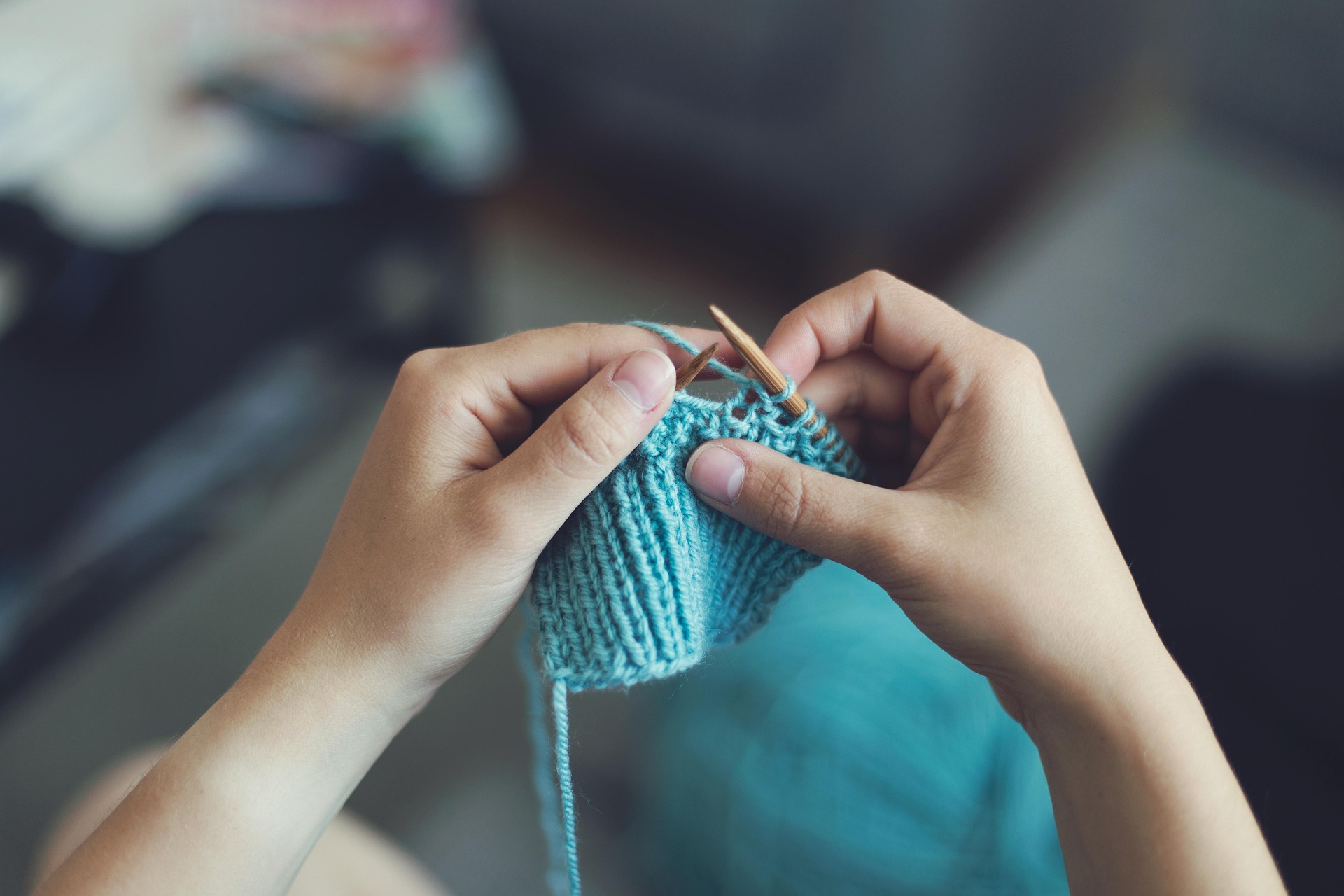
The difference between purl vs knit stitches is one of the first concepts knitters learn, yet it remains the foundation of nearly every knitting pattern. These two basic stitches are so fundamental that the difference between purl vs knit determines the entire texture, appearance, and hand-feel of your finished project. Understanding the difference between purl vs knit is essential before you can move beyond simple garter stitch and into ribbing, stockinette, or any decorative pattern. In this guide, we’ll break down what makes each stitch unique and show you how the difference between purl vs knit creates the visual effects you see in finished knitwear.
Table of Contents
What is a Knit Stitch?
A knit stitch (or “knit”) is the most fundamental stitch in knitting. To create a knit stitch, you insert your working needle through a loop on your left needle from left to right, wrap your yarn around the right needle, and pull it through to create a new loop. The knit stitch creates a smooth, vertical appearance on the front side of the fabric. When you look at the front of stockinette stitch (which is alternating rows of knits and purls), all you see are knit stitches creating those characteristic “V” shapes running up the fabric. Understanding these fundamentals connects you to centuries of knitting history and textile evolution.
The knit stitch is considered the “front” stitch because the difference between purl vs knit becomes immediately apparent when you flip your work. The back of a knit stitch looks like a purl, while the front looks distinctly different. Understanding this relationship between purl vs knit on the same piece of fabric is key to reading knitting patterns and troubleshooting tension issues.
What is a Purl Stitch?
A purl stitch is essentially the reverse of a knit stitch. To create a purl, you insert your needle from right to left (opposite direction), wrap your yarn around the needle, and pull it through. The purl stitch creates a bumpy, horizontal appearance that looks textured and raised. When you work purl stitches on the front of your fabric, they create those characteristic horizontal bumps that contrast with smooth knit stitches. The difference between purl vs knit is perhaps most obvious when you look at garter stitch, which is created by knitting every row—the bumps you see on both sides are actually purl stitches showing through from the back.
The purl stitch doesn’t create less fabric or require a different yarn weight; the difference between purl vs knit is purely in technique and appearance. Many beginners find purl stitches slightly harder to execute because the yarn starts in front of the needle rather than behind it, requiring a different hand position. However, once you understand the difference between purl vs knit at the mechanical level, purling becomes just as natural as knitting.
Purl vs Knit: Key Differences
| Feature | Knit Stitch | Purl Stitch |
| Needle Direction | Insert left to right | Insert right to left |
| Yarn Position Start | Yarn behind needle | Yarn in front of needle |
| Front Appearance | Smooth, “V” shapes | Bumpy, horizontal ridges |
| Back Appearance | Bumpy (purl-like) | Smooth (knit-like) |
| Ease for Beginners | Slightly easier | Slightly harder initially |
| Hand Position | Yarn in back | Yarn in front |
| Common Stitch Patterns | Stockinette, ribbing, garter | Stockinette, ribbing, garter |
| Visual Effect When Alternated | Stockinette (smooth front) | Reverse stockinette (bumpy front) |
| Fabric Density | Same as purl | Same as knit |
How the Difference Between Purl vs Knit Creates Patterns
The real magic of knitting comes from combining knit and purl stitches in different arrangements. The difference between purl vs knit is what allows you to create ribbing, cables, texture, and intricate Fair Isle designs. Ribbing, for example, alternates between columns of knit and purl stitches to create the stretchy cuffs on sweaters and socks. The difference between purl vs knit in a rib pattern creates vertical columns where knit stitches compress and purl stitches expand slightly, making the fabric more elastic.
Stockinette stitch, the most common stitch pattern, is created by knitting one row and purling the next row. The difference between purl vs knit in consecutive rows produces that characteristic smooth V-pattern on one side and bumpy reverse stockinette texture on the other. Garter stitch, by contrast, uses the same stitch on every row (usually knit), which means the difference between purl vs knit doesn’t apply—you get bumpy horizontal ridges on both sides because every knit row shows the purl side of the previous row.
Mastering Purl vs Knit: Tension and Speed
Many knitters notice that the difference between purl vs knit affects their knitting speed and consistency. Purl stitches are naturally slower for most right-handed knitters because the yarn position requires repositioning your fingers more frequently. This difference between purl vs knit in execution speed means that projects with heavy purl content (like reverse stockinette) take noticeably longer to complete. Additionally, the difference between purl vs knit in tension control can be tricky—purls tend to come out looser than knits if you’re not careful.
Professional knitters develop consistent tension by practicing the motions repeatedly until muscle memory takes over. Understanding that the difference between purl vs knit is purely mechanical helps you separate tension issues from stitch confusion. If one row comes out tighter than the next, it’s often because you’re holding the yarn differently for purls than for knits, not because the stitches themselves have different inherent properties. Once you match your yarn tension between the difference of purl vs knit, your fabric will look uniform and professional.
Frequently Asked Questions About Purl vs Knit
Why is learning the difference between purl vs knit so important?
Because every knitting pattern beyond garter stitch depends on the difference between purl vs knit to create its appearance. You cannot read a knitting chart or follow a written pattern without understanding what each stitch does. The difference between purl vs knit is literally the language of knitting—it’s as fundamental as letters in the alphabet.
Can I teach myself the difference between purl vs knit from online videos?
Absolutely. Many online platforms like YouTube have excellent slow-motion demonstrations of the difference between purl vs knit in action. Seeing the yarn positioning and needle movement from multiple angles is actually easier to learn from video than from still photographs. Most knitters find that video learning combined with practice resolves confusion about the difference between purl vs knit faster than reading written descriptions alone.
Building Your Foundation
Every expert knitter started exactly where you are, learning the difference between purl vs knit and practicing until the motions became automatic. The difference between purl vs knit may seem small, but it is the gateway to countless stitch patterns and techniques. From ribbing that hugs your wrists to intricate Fair Isle colorwork, from delicate lace to cozy cables, the difference between purl vs knit is the essential building block underneath everything.
Spend time practicing the difference between purl vs knit until you can switch between them without thinking. Make a practice swatch with alternating knit and purl rows. Feel how the difference between purl vs knit changes the fabric’s texture and appearance. Once this foundational difference between purl vs knit becomes muscle memory, you’ll be ready to tackle any pattern in your collection. Your future knitting projects will thank you for mastering these two essential stitches.

